Published by Best Fitness Routine. Editorial standards · Report a correction. Educational guidance; no individual clinical review is claimed unless a qualified reviewer is named.
A Practical Starting Point
As an Amazon Associate I earn from qualifying purchases. This guide includes paid Amazon links.
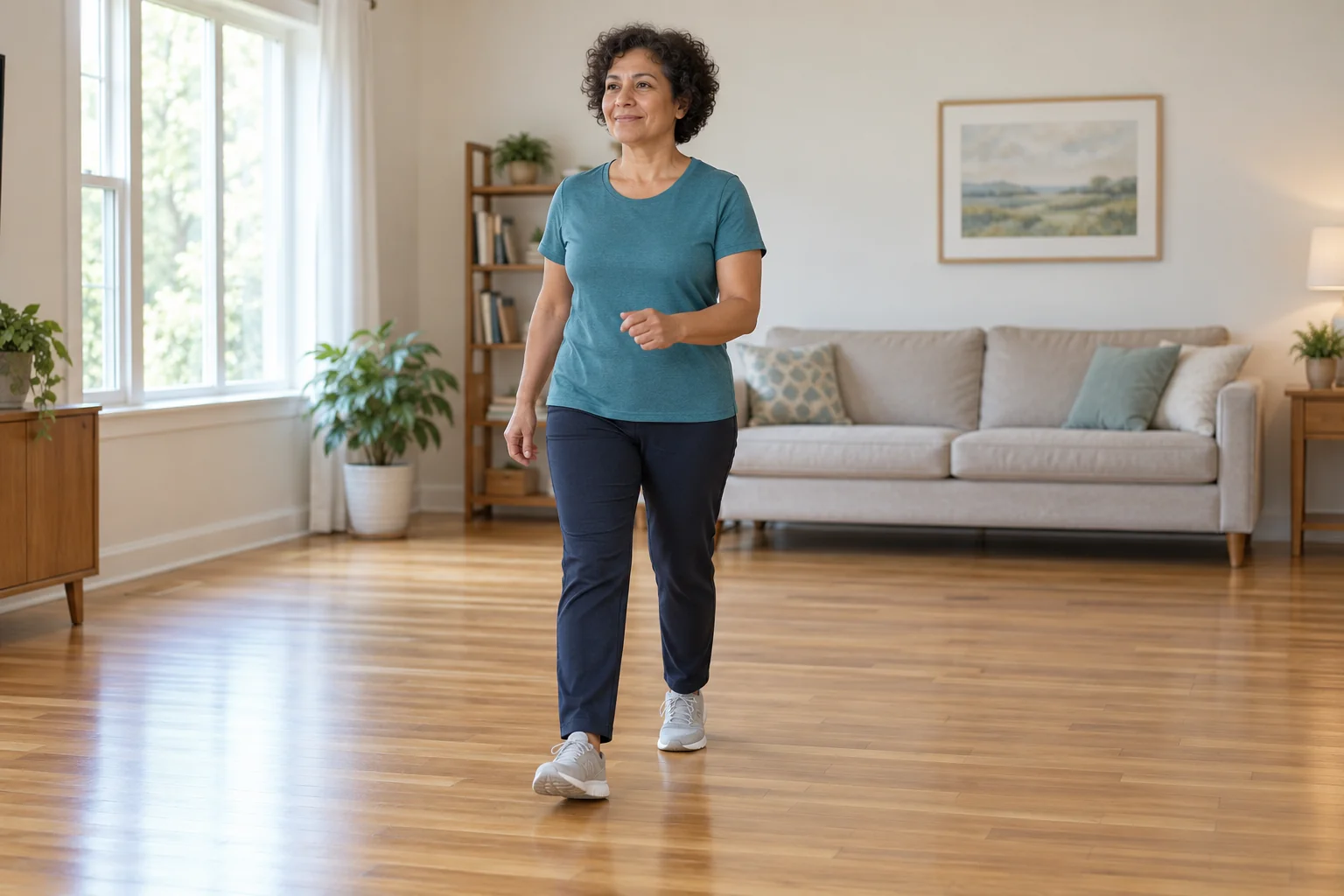
An indoor walking workout for beginners can start with a clear patch of floor and ordinary, comfortable steps. You do not need a treadmill, a fast soundtrack or a daily step challenge. The useful first task is finding a movement pattern that fits your room without rushing turns or stepping around furniture.
This guide explains how to prepare that space, choose between a short walking route and gentle steps in place, and try an adjustable ten-minute example. It is a home practice session rather than a six-week outdoor walking plan. If ten minutes is too much today, a shorter comfortable attempt is a sensible starting point.
Prepare a route before starting the timer
Choose a level, dry floor with enough lighting to see its edges. Remove loose rugs, cables, toys and items that could move underfoot. Check doorways, furniture corners and anything at head or arm height. Keep children and pets clear of the route during the session rather than assuming they will stay where you first saw them.
Walk the proposed route slowly once. There should be room to stop comfortably before each turn; a narrow gap that requires sideways squeezing is unsuitable. Keep the phone or screen outside the footpath. Use comfortable footwear with a secure fit and appropriate grip, checking the floor with ordinary steps. The NHS walking guide recommends comfortable, supportive shoes without requiring specialist footwear. A clear floor matters more than filling the room with workout equipment.
Use small steps and controlled changes of direction
Let your arms move naturally and keep your steps comfortable. Avoid reaching far forward with the foot or lifting the knees deliberately high. Indoor walking need not become a marching drill. If you prefer staying in one spot, lift and replace each foot lightly, with enough clearance to avoid catching the floor and without stomping.
For a short route, slow down before the end and take several small steps to turn. Move your feet with your body instead of twisting around a foot planted on the floor. Do not walk backwards to save turning, squeeze past furniture or look at a phone while changing direction. If the room cannot accommodate a comfortable turn, use gentle steps in place or choose another space. Stop if either version feels unsteady; a wall, rolling chair or nearby sofa is not a substitute for individual balance guidance.
Try one adjustable ten-minute practice session
Settle into the space for two easy minutes, using small steps along the route or in place. For the next six minutes, continue at a comfortable, repeatable effort. Finish with two easier minutes, allowing your steps to slow gradually. The example totals ten minutes: two plus six plus two. It contains no jumping, added weights or compulsory fast interval.
You can pause, shorten the middle portion or finish earlier. Rest time is extra; do not hurry to squeeze ten minutes of movement into a timer after taking a break. Some beginners will find two or three comfortable minutes sufficient for a first attempt. There is no need to complete the example to make the activity worthwhile. For a different purpose—several movement breaks spread across a day—use the existing exercise-snacks guide rather than stacking extra sessions onto this one automatically.
An optional simple interval timer (paid link) can signal the changes between easy and comfortable walking; use an existing phone timer if it does the job, positioned outside your route.
Judge effort by breathing rather than the video pace
Keep the first attempt comfortable enough to speak without struggling. If breathing becomes difficult to control, slow down or pause. A presenter, partner or music track cannot select the right pace for you. Low impact describes the lack of jumping or hard landings; it does not establish that an activity is easy for every person.
The CDC explanation of activity intensity describes the talk test: at moderate intensity people can generally talk but cannot sing. This is a rough effort cue, not a requirement to make this first indoor session moderate. Easy steps may remain light activity. A short hallway with frequent turns is also different from a continuous brisk outdoor walk. Do not force faster feet, longer strides or larger arm swings just to match a screen or make a tracker record more steps.
Repeat the comfortable version before adding more
After stopping, notice whether the floor setup worked, turns stayed controlled and the effort was manageable. Check how you feel later as well as immediately afterward. Brief notes about time actually moving, pauses and any discomfort can be more useful than an estimated calorie total. An easy first attempt is information, not a failed workout.
When the same version feels comfortable and your usual daily activities are unaffected, change one thing at a time if you want more activity. For example, add a little time to the middle portion while keeping the route and effort familiar. You do not need a fixed weekly increase. The longer beginner walking plan addresses a broader walking programme; do not import its outdoor distances or faster intervals into a cramped room. Repeat or shorten the indoor version when space, energy or recovery changes.
A small notebook (paid link) can hold a brief note about the session, although a phone note or existing diary is equally suitable and no purchase is required.
Fit indoor walking into a broader routine
This session can be a practical option when weather, travel or a busy day makes another walk inconvenient. It does not replace every part of fitness. The CDC activity overview recognises benefits from doing some activity and sitting less, while muscle-strengthening work has its own role. Our existing home workout plan can help organise that wider routine without creating another walking challenge.
Use ordinary movement that suits your circumstances. New pain that changes how you step, repeated dizziness, unusual breathlessness or unsteadiness calls for stopping and appropriate advice rather than another attempt at the timer. If a health condition, recent operation or individual care plan affects walking, ask what activity is appropriate before using this example. NIDDK guidance on starting activity explains the importance of advice relevant to existing health problems.
Movement and Session Checklist
- Clear and slowly rehearse a level route, including every turn.
- Choose ordinary short steps or comfortable steps in place; leave out jumping and high knees.
- If suitable, try 2 easy minutes, 6 comfortable minutes and 2 easier minutes, with rests or a shorter duration as needed.
- Keep breathing manageable and slow down before changing direction.
- Record what was comfortable before deciding whether to repeat, shorten or gradually extend the session.
Practical Options at a Glance
| Part of the example | Movement and purpose | Adjustment |
|---|---|---|
| First 2 minutes | Easy steps to settle into the room and rehearse turns. | Use less time or stop if the setup feels awkward. |
| Middle 6 minutes | Comfortable continuous steps along the route or in place. | Shorten this part, pause or use a slower pace. |
| Final 2 minutes | Easier steps with a gradual finish. | End comfortably; do not rush extra movement to recover paused time. |
| Any rest pause | Stand or sit safely as appropriate for you. | Rest is additional elapsed time, not a reason to move faster afterward. |
Common Mistakes and Better Replacements
Look where you are stepping; set controls before starting and pause to adjust them.
Slow down and turn with several small steps, or use a roomier space.
Learn the comfortable movement first; a tracker total does not determine a successful session.
Frequently Asked Questions
It involves movement, but its effort varies. Gentle steps may be light activity; do not assume every minute is equivalent to brisk walking outdoors or that a tracker will recognise every step.
No. This guide uses a clear floor route or steps in place. Motorised equipment has separate setup and safety instructions and is not needed for this example.
No. The ten-minute example is adjustable, not a minimum or test. Shorten it, pause safely or finish earlier when needed. Rest time does not need to be made up by rushing.
Do not assume that low impact makes the example suitable. Persistent pain, unsteadiness or an existing restriction needs advice specific to you. Stop movements that worsen symptoms rather than improvising support or pushing through.
Safety and Personal Needs
This guide offers general fitness education and an adjustable example, not a rehabilitation plan or individual exercise prescription. Choose a pace and duration you can manage comfortably, with rest whenever needed. Stop if you develop pain, dizziness or unusual symptoms. Chest pain, fainting or severe unexpected breathlessness needs urgent appropriate help. If a condition, recent injury or surgery, unsteadiness or advice from your healthcare professional affects walking, seek individual guidance before following an unfamiliar routine. Indoor space alone does not make an activity suitable for every reader.
Sources and Further Reading
- CDC: How to Measure Physical Activity Intensity
- CDC: Benefits of Physical Activity
- NHS: Walking for health
- NIDDK: Tips for Starting Physical Activity
Prepared by the Best Fitness Routine Editorial Team. Sources checked November 2, 2026. This educational example has not been individually assessed or clinically reviewed for each reader. The image is an AI-generated illustration, not evidence of a tested result.