General health education from our editorial team. Read our editorial policy.
As an Amazon Associate I earn from qualifying purchases. Optional equipment links are paid affiliate links; use suitable items you already own.
About This Guide
There is no single step count for a mile. The distance covered by each step changes with the person, walking speed, terrain and the way a device records movement. A measured route gives you a more useful estimate than borrowing someone else’s number. This guide shows the calculation in plain language and explains where the estimate stops being reliable.
A mile is fixed; your steps are not
For ordinary walking distances, one international mile equals 5,280 feet or 1,609.344 metres. NIST’s unit-conversion table gives those equivalents. The mile is a unit of distance. A step is a movement that can cover a different distance from one person or situation to another, so there cannot be one exact steps-to-mile conversion for everyone.
A shorter average step requires more steps to cover the same route; a longer average step requires fewer. Height may influence the estimate, but a height chart cannot capture your actual gait, footwear, balance needs or route. Instead of forcing a supposedly correct stride, walk naturally and measure what happens. Comfort and control matter more than matching an internet conversion.
Count steps rather than full strides
A step usually means moving from the contact of one foot to the contact of the other. A full walking stride returns to the same foot and normally contains two steps. Mixing these terms can create a large error before any calculation begins. When counting by hand, count each foot contact: left one, right two, left three, and so on.
If you count only one side for convenience, make that explicit and double the count at the end for a usual alternating walk. This shortcut is not suitable for every gait pattern. A device may also use its own labels or settings, so check its instructions rather than assuming a field called stride length asks for the distance of one step.
Use a known route for the clearest personal estimate
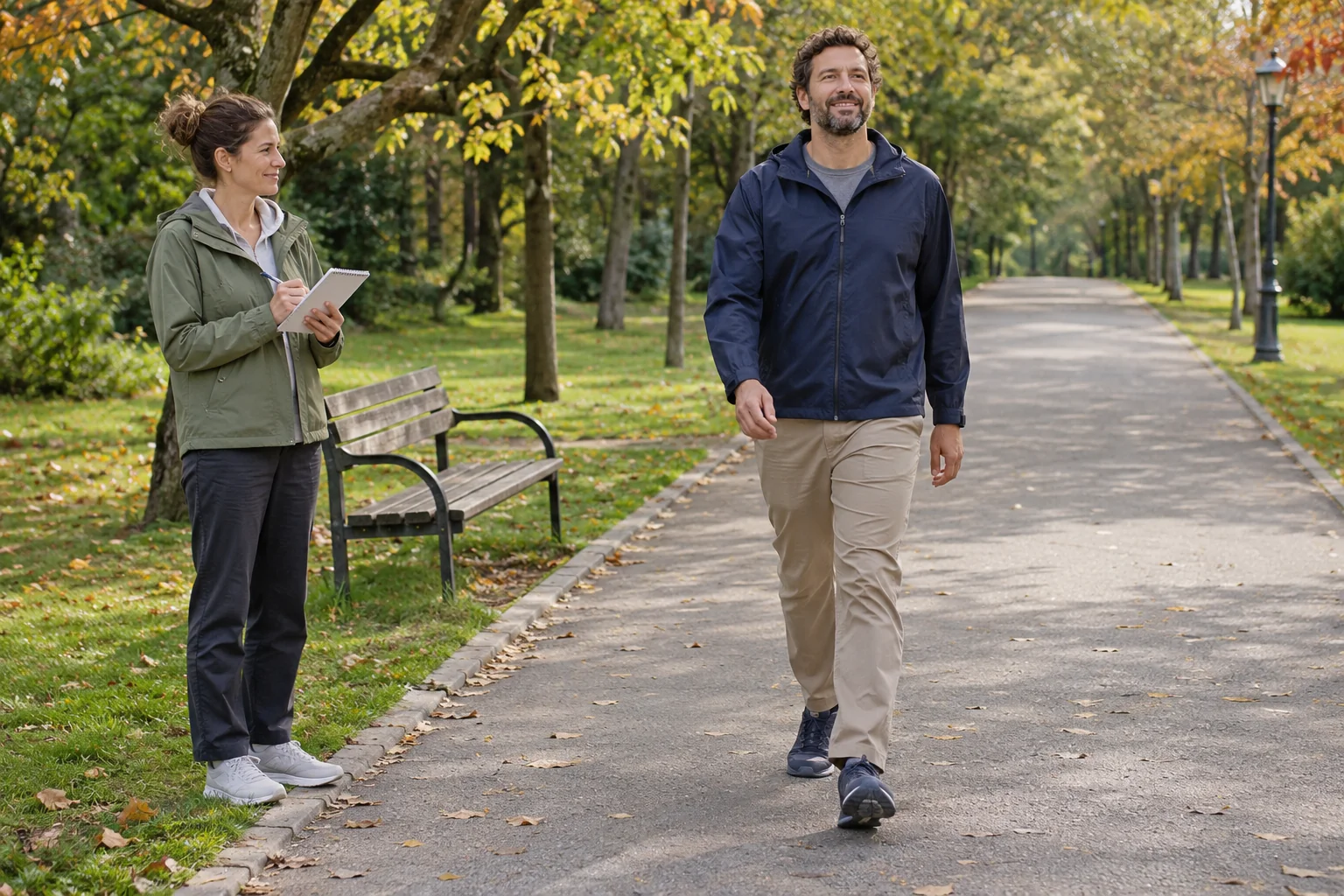
Choose a level, familiar route with a reliably known length and safe space to walk at your normal pace. A measured path is preferable to guessing the distance from how long the walk feels. Do not count while crossing traffic or navigating uneven ground; choose a route that lets attention stay on walking safely. Start with a manageable length rather than attempting a mile solely for the measurement.
Record the route length, your starting and finishing step totals and the walking conditions. Subtract the starting total from the finishing total. A full-mile route gives a direct observation for that particular walk. On a shorter route, scale the count to one mile and treat the result as an estimate. Note whether you carried the phone in the same place and whether you stopped or took extra steps outside the measured section.
Two worked examples with the units kept consistent
Suppose you count 1,080 steps over a measured half-mile. Doubling that count gives an estimated 2,160 steps per mile for a similar walk. This is an illustration of the method, not a claim that 2,160 is the right number for your body. A different route, pace or counting method can produce another result.
In metric units, suppose a measured 500-metre section takes 680 steps. Multiply 680 by 1,609.344 ÷ 500: the result is about 2,189. Multiplying by four instead would estimate steps over 2,000 metres, which is longer than a mile. Keep the route length and conversion in the same unit, then round the answer sensibly; an estimated walking count does not deserve several decimal places.
Use step length only when you have measured it
Another method divides the mile distance by average step length. If a person’s average step is 2.5 feet, 5,280 ÷ 2.5 equals 2,112 steps. With an average step of 0.75 metres, 1,609.344 ÷ 0.75 is about 2,146 steps. Those are two separate examples, because 2.5 feet and 0.75 metres are not exactly the same length.
To estimate an average, walk several natural steps over a known distance, then divide the distance by the number of steps. Do not measure one unusually long step and use it for every walk. Repeating a longer, safe measured section usually tells you more than trying to identify a single perfect foot placement. If measuring adds stress or is difficult with your mobility needs, use distance or time directly.
Why the number changes on another walk
Faster walking can change both the rate and length of your steps. A hill, crowded pavement, sharp turns or a slippery surface can make you shorten your steps even when the total route distance is unchanged. Treadmill walking and outdoor walking may differ, especially when holding the rails. There is no reason to stretch your stride unnaturally just to reduce the step count.
A count from one easy flat walk is therefore a reference, not a permanent conversion. If you regularly walk a very different route, measure that situation separately. Record the context in a short note such as “flat path, usual shoes, comfortable pace.” If pain, unsteadiness or a health condition changes how you walk, address that concern rather than trying to correct the number through a larger step.
Check what your tracker actually measured
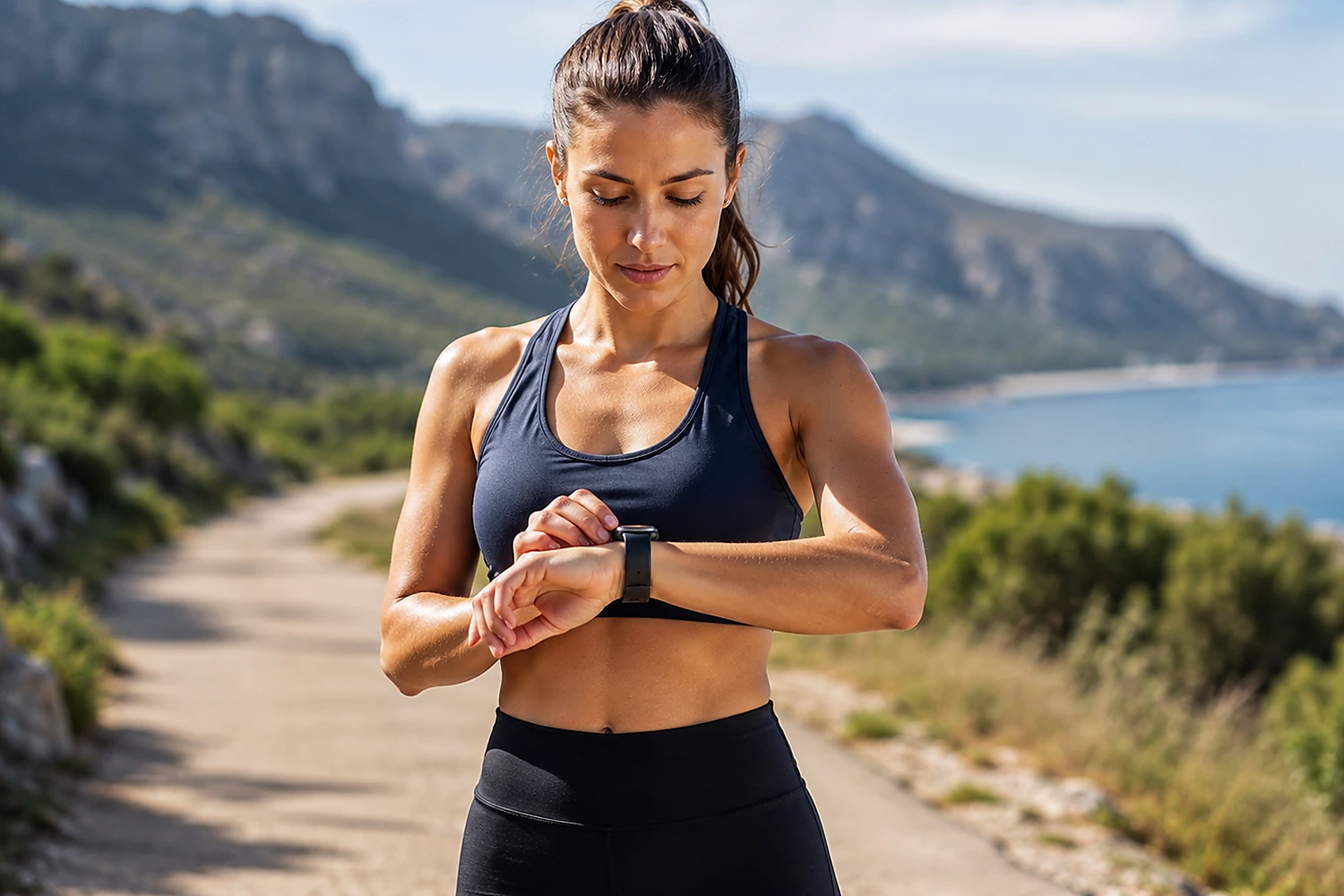
A wrist device infers steps from movement, while a phone depends partly on where and how consistently you carry it. Pushing a stroller, holding treadmill rails or walking without the phone can change the reading. GPS distance also has limitations around buildings, tree cover and short routes. Neither a watch nor a phone provides a perfect independent answer to every part of the measurement.
Compare the same device in the same position over a known route on more than one occasion. A manual count over a short, safe section can reveal an obvious mismatch. Follow the manufacturer’s setup and calibration instructions rather than trying to “fix” every discrepancy by editing your personal height. Our fitness tracker guide explains the wider limits of device data.
Use the estimate for planning, not as a required target
A personal conversion can help you understand a familiar route or translate a rough step total into distance. It cannot tell you exactly how far you travelled during a day containing stairs, household tasks, shuffling and outdoor walking. Nor does it measure intensity: the same distance can be easy for one person and demanding for another.
For building a routine, our walking for health guide focuses on manageable time, pace and progression. NIDDK’s practical activity advice discusses tracking as one way to support a routine. If counting makes a walk less enjoyable or pressures you to continue despite symptoms, choose a simpler measure such as time on a familiar route.
Keep measuring equipment optional
An existing phone or handwritten count may be enough. If a phone is inconvenient to carry, compare a simple clip-on pedometer (paid link) for display clarity, attachment and instructions. It still needs a real-world check; a product listing cannot establish your steps per mile. You do not need a premium watch to answer the basic distance question.
A small walking notebook (paid link) is optional for recording route length, count and conditions; ordinary paper works too. Before an outing, choose a visible route and suitable footwear. If you would like an indoor starting routine, our indoor walking guide offers a different way to plan activity without making mileage the main goal.
Frequently Asked Questions
No. It is a rough conversion sometimes used for convenience, not an exact value for everyone. Your average step length and the circumstances of the walk determine the count. Measuring your own steps over a known route is more useful.
Double the steps recorded only within the measured half-mile section. For example, 1,080 steps becomes an estimated 2,160 steps per mile under similar conditions. Do not include extra steps before or after the measured route.
Four 400-metre laps total 1,600 metres, which is slightly shorter than the international mile of 1,609.344 metres. Lane choice and where you start also affect the distance. Use the route’s actual measurement rather than assuming four laps is exactly a mile.
No. A lower count is not inherently a better walk. Keep a natural, comfortable gait and prioritize balance and suitable pace. If pain or a change in walking ability concerns you, obtain individual advice instead of changing your stride to meet a number.
Sources and Further Reading
- NIST: Revised unit conversion factors
- NIDDK: Tips to keep moving
- NIDDK: Your game plan to prevent type 2 diabetes
Prepared by the Best Fitness Routine Editorial Team. Sources checked November 4, 2026. This article provides general education and has not received individual clinical review. The image is an AI-generated editorial illustration. Follow qualified professional advice for your individual health needs.