
Overview
Hair loss can develop gradually or suddenly. Some causes are inherited, while others involve illness, medications, nutritional problems, autoimmune disease, tight hairstyles or physical stress on the hair shaft. The pattern matters because treatment that helps one type of hair loss may not help another.
Common Hair-Loss Patterns
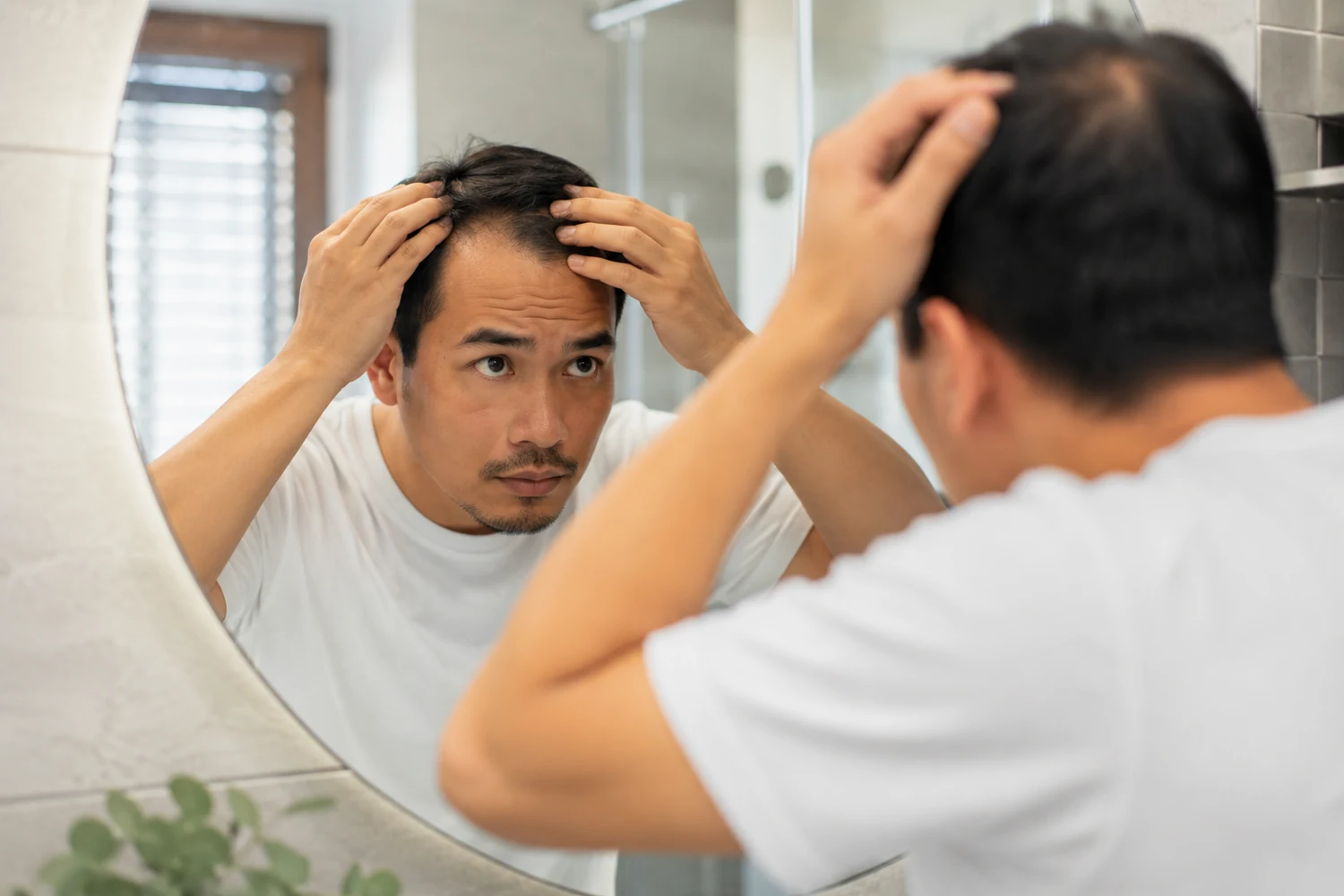
Gradual thinning at the temples, crown or part line often suggests pattern hair loss. Round smooth patches can occur with alopecia areata. Sudden heavy shedding across the scalp may occur after illness, surgery, childbirth, rapid weight loss or severe stress. Broken hairs and scalp irritation raise other possibilities.
Why Adults Lose Hair
Common causes include hereditary androgenetic alopecia, telogen effluvium, alopecia areata, traction alopecia, scalp disease and medication effects. Thyroid disorders and iron deficiency can also contribute in selected people. Our guides to thyroid health and iron deficiency anemia explain those conditions in more detail.
Warning Signs That Deserve Faster Assessment
See a clinician or dermatologist sooner for sudden patchy loss, scalp pain, pus, crusting, significant redness, scarring, loss of eyebrows or eyelashes, or hair loss with unexplained weight change, fever, rash or other systemic symptoms. Early assessment matters for some scarring conditions because permanent follicle damage can occur.
How Hair Loss Is Diagnosed
A dermatologist may review the timeline, family history, medicines, recent illness, diet and hair-care practices, then examine the scalp and hair shafts. Blood tests are not required for every person; they are chosen when history or examination suggests anemia, thyroid disease, nutrient deficiency or another condition.
Nutrition: Avoid Deficiency and Avoid Megadoses
Hair follicles need adequate energy, protein and micronutrients, but supplements do not fix every type of hair loss. Very restrictive diets and rapid weight loss can trigger shedding. At the same time, excessive doses of some nutrients can cause problems.
Build meals with the balanced plate guide rather than buying a long list of “hair vitamins” without a reason.
Reduce Breakage and Traction
Gentle hair care can reduce breakage even when it cannot change the underlying follicle condition. Avoid repeatedly pulling hair into very tight styles, limit harsh chemical processing when the scalp is irritated, and detangle carefully. Heat and friction can damage the hair shaft even when the follicle is healthy.
Treatment Depends on the Diagnosis
Evidence-based treatments vary. Pattern hair loss may be treated with topical or prescription options, alopecia areata may need anti-inflammatory therapy, and telogen effluvium often improves after the trigger resolves. A dermatologist can explain realistic timelines because hair growth is slow and visible change often takes months.
Use our medication safety guide before adding over-the-counter or prescription products to your routine.
What to Track Before Your Appointment
Note when the change started, whether shedding is sudden or gradual, which areas are affected, recent illness or surgery, major weight changes, new medicines and family history. Monthly photos in the same lighting can be more useful than checking the mirror several times a day.
What to Track Before You Seek Care
Keep the record short and decision-focused. Note when symptoms started, how often they occur, what makes them better or worse, new medicines or supplements, relevant medical conditions and any effect on sleep, work, exercise or daily function. Bring photos or home measurements only when they are relevant and reliable.
A two-week log can be useful for stable symptoms, but do not delay care to complete a diary when symptoms are severe or worsening.
Questions for Your Next Health Visit
- What diagnosis best explains this symptom pattern?
- Which tests are useful, and which are unnecessary?
- What can I safely do at home while we monitor it?
- What change would mean I should contact you sooner?
- Could any medicine, supplement or other condition be contributing?
Health information changes as evidence improves. When a claim promises a guaranteed cure, rapid fix or universal answer, compare it with guidance from major medical organizations and ask how the recommendation applies to your situation.
- “All shedding means permanent baldness.” False—some shedding patterns are temporary.
- “Biotin fixes most hair loss.” False—biotin deficiency is uncommon and high doses can interfere with tests.
- “Cutting hair makes follicles grow faster.” False—trimming changes the hair shaft, not follicle growth rate.
Common Myths and Better Context
Pick one or two meaningful outcomes instead of tracking every possible symptom. Good monitoring should reduce uncertainty and support decisions; it should not create compulsive checking or delay care.
Hair grows slowly, so visible improvement usually takes months rather than days. Early progress may show up as less shedding or stabilization before density improves. A treatment plan should define what counts as success and when it is reasonable to reassess rather than switching products every few weeks.
How to Judge Progress
Individual risk can also change with pregnancy, age, recent surgery, immune status and access to follow-up care. When several factors apply at once, use professional advice rather than combining several internet remedies.
People who are pregnant or planning pregnancy, people with autoimmune disease, those with eating disorders, and people using medicines that affect hormones or the immune system need special treatment planning. Some common hair-loss medicines are not appropriate during pregnancy, and high-dose supplements can interfere with laboratory tests.
Who Needs Extra Care
At the end of the week, keep the steps that are useful and easy to repeat. If symptoms are worsening, skip the experiment and contact a clinician sooner.
- Take baseline photos in consistent lighting once a month, not every day
- List recent illnesses, surgeries, childbirth, major weight changes and new medicines
- Use gentle hair care while the cause is being assessed
- Build adequate protein and energy intake instead of crash dieting
- See a dermatologist when loss is patchy, scarring, rapidly progressive or accompanied by scalp disease
Use a short plan to organize the next step without trying to solve everything in one day. This is not a treatment prescription; it is a way to collect useful information and make safer decisions.
A Practical One-Week Plan
- Starting several supplements before identifying the type of hair loss
- Changing shampoos repeatedly when the problem is coming from the follicle rather than the hair shaft
- Ignoring scalp pain, scarring or inflammation
- Using tight hairstyles while traction-related loss is developing
- Checking the mirror or counting shed hairs many times each day
Most problems become harder to manage when a reasonable self-care step turns into an extreme rule. Avoid these common mistakes:
Common Mistakes to Avoid
Healthy hair is supported by adequate energy, protein and micronutrients, but cosmetic appearance should not drive extreme dieting or supplement use. Sustainable nutrition, gentle hair care and realistic expectations are safer than chasing rapid-growth claims.
How This Fits Into a Healthy Lifestyle
Long-term outlook depends entirely on the cause. Telogen effluvium may recover after the trigger resolves, while hereditary pattern hair loss often needs ongoing treatment to maintain benefit. Scarring alopecias can permanently damage follicles, which is why early diagnosis matters when inflammation or scarring is suspected.
Long-Term Outlook
For a hair-loss visit, bring a timeline, monthly photos, a family history, recent illnesses, major stressors, pregnancies, surgeries, diet changes and new medicines. Tell the clinician whether hairs are shedding from the root, breaking along the shaft or disappearing in distinct patches. Scalp itching, scale, pain and redness are also important clues.
How to Prepare for an Appointment
Frequently Asked Questions
Yes. Daily shedding is normal, but a noticeable change in density, widening part, bald patches or unusually heavy shedding may deserve assessment.
Major physical or emotional stress can trigger telogen effluvium, a temporary shedding pattern, but other causes should be considered too.
Biotin deficiency is uncommon, and routine high-dose biotin is not a proven treatment for most hair loss. It can also interfere with some lab tests.
Repeated traction can damage follicles and may become permanent if it continues for a long time.
See one for sudden, patchy, scarring, painful or rapidly worsening hair loss, or when the cause is unclear.
Safety and Scope
Hair loss can occasionally be a sign of an inflammatory, autoimmune, endocrine or nutritional condition. Do not start high-dose supplements or prescription hair-loss medicines without checking for contraindications, pregnancy considerations and medication interactions.