Best Exercises to Get Fit: What This Guide Covers
Getting fit is broader than losing weight or lifting heavier. General fitness includes strength, cardiovascular endurance, mobility, balance, and the ability to handle everyday physical tasks without excessive fatigue. That is why the “best exercise” is really a short list of movement categories rather than one magic move.
A complete plan can stay simple: train foundational strength patterns, do regular cardio, walk often, and include enough mobility to move comfortably. The exercises below can be adapted for home or gym training.
For a related starting point, see our Best Fitness Routine: How to Build a Plan You Can Follow. Use it where it fits your current experience, equipment, and goals.
Key Priorities
The priorities above are deliberately simple. A plan becomes useful when you can repeat it, measure it, and recover from it. Resist the urge to add complexity before the basics are happening consistently for several weeks.
Start With a Realistic Baseline
Choose simple versions of each movement and test whether you can perform them with controlled range of motion. Also note how long you can sustain moderate cardio and how quickly your breathing recovers afterward.
Think of the baseline as information, not a test. Record what you can do with good control, how long the session takes, and how you feel later that day and the next morning. Those details make future changes easier to judge.
A Practical Weekly Structure
| Day | Focus | Practical Plan |
|---|---|---|
| Monday | Full-body strength | Squat, hinge, push, pull, carry, and core. |
| Tuesday | Cardio | 30–40 minutes moderate aerobic work. |
| Wednesday | Mobility + steps | Walking and short mobility session. |
| Thursday | Full-body strength | Repeat patterns with small variations. |
| Friday | Conditioning | Short intervals, circuit, or brisk hill walking. |
| Saturday | Recreation | Hike, bike, sport, swim, or longer walk. |
| Sunday | Recovery | Easy movement or rest. |
This schedule is an example rather than a prescription. Rearrange days around work, family commitments, weather, and recovery. Preserve the overall balance even when the exact calendar changes.
Squats and Hinges Build the Lower-Body Base
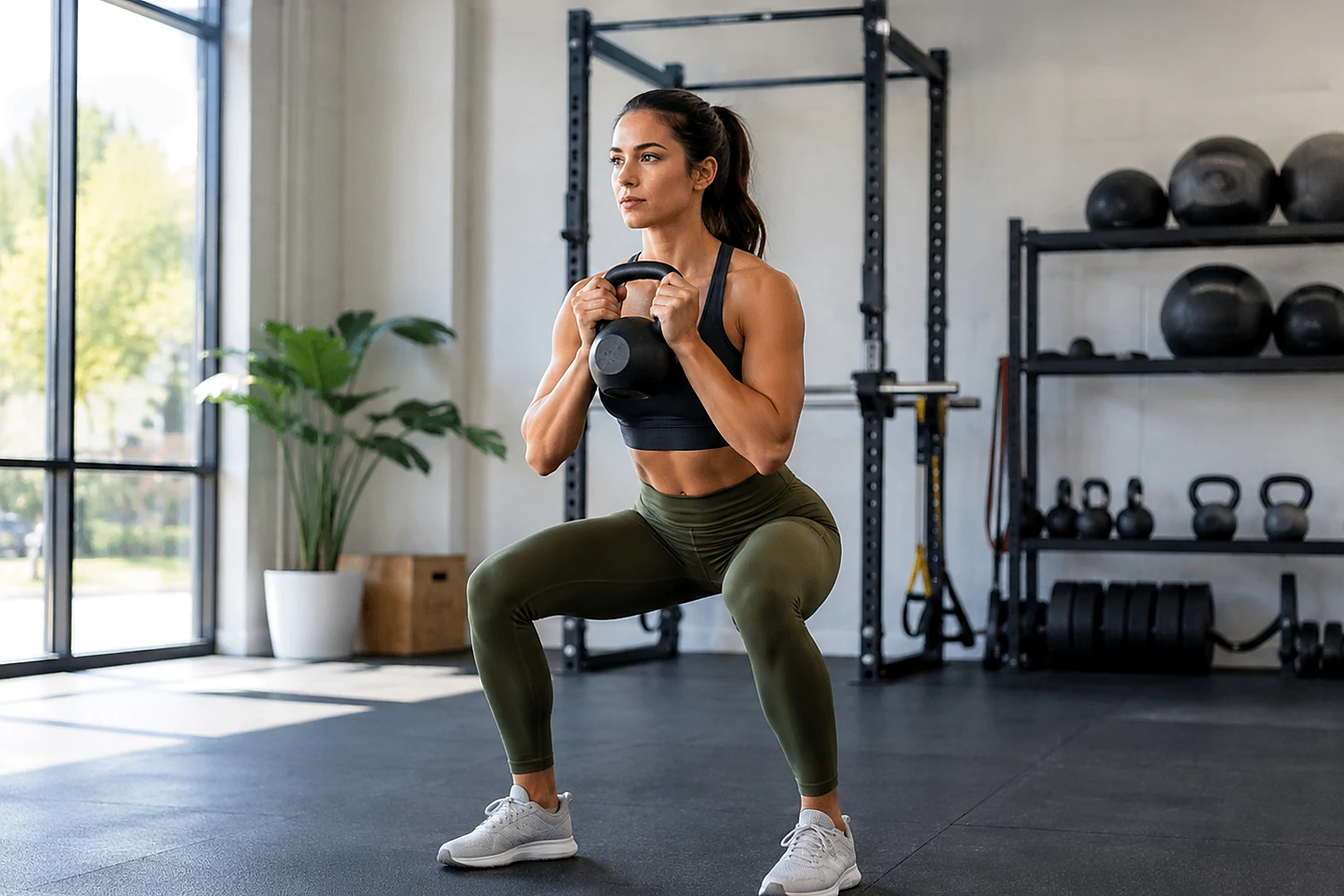
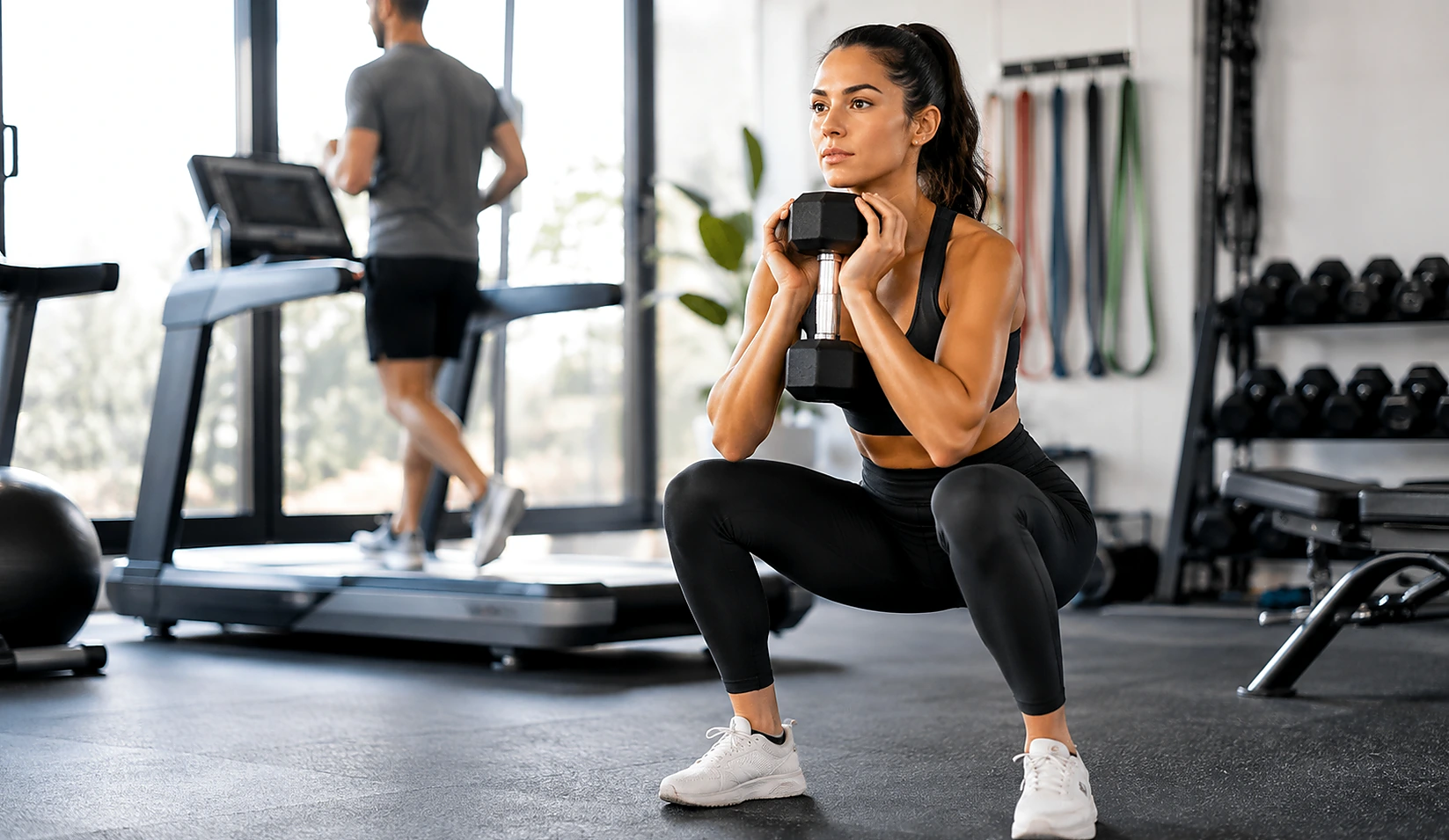
Squat patterns train knees and hips together, while hinges emphasize the glutes and hamstrings.
Use chairs, dumbbells, kettlebells, machines, or barbells depending on experience and equipment.
Pushes and Pulls Keep the Upper Body Balanced
Push-ups and presses train the front of the upper body; rows and pull-downs train the back.
Keeping both in the plan supports shoulder function and general strength.
Carries and Core Work Improve Real-World Control
Loaded carries, planks, dead bugs, and anti-rotation exercises teach the trunk to stabilize while the limbs move.
These patterns transfer well to everyday lifting and carrying.
Cardio Completes the Fitness Picture
Strength alone does not fully train aerobic capacity. Regular walking and cardio improve stamina and heart health.
A balanced cardio-and-strength week is a practical long-term structure.
How to Progress Without Losing the Purpose
Progress the strength movements by adding repetitions, load, or a set. Progress cardio by adding time, distance, or short periods of faster effort.
Do not progress every variable in the same week. Keep at least part of the schedule stable so recovery remains predictable.
Progress should make the plan slightly more demanding while keeping technique, sleep, and overall energy reasonably stable. When a small increase works, keep it long enough to adapt before adding another.
A Four-Week Implementation Roadmap
Week 1
Learn six foundational movement categories. Keep notes on what feels sustainable, because the purpose of this month is to discover a repeatable training rhythm—not to chase a perfect week.
Week 2
Add a small amount of cardio time and strength volume. Keep notes on what feels sustainable, because the purpose of this month is to discover a repeatable training rhythm—not to chase a perfect week.
Week 3
Make one or two exercises more challenging. Keep notes on what feels sustainable, because the purpose of this month is to discover a repeatable training rhythm—not to chase a perfect week.
Week 4
Repeat the strongest week and identify which fitness quality needs the next block of attention. Keep notes on what feels sustainable, because the purpose of this month is to discover a repeatable training rhythm—not to chase a perfect week.
Recovery, Hydration, and Sleep
General fitness improves when hard days and easy days alternate. Use walking and mobility on lower-stress days instead of trying to make every session equally intense.
Hydration needs vary with climate, body size, exercise intensity, and sweat rate. For ordinary recreational training, drink regularly through the day and pay attention to thirst and urine color rather than forcing extreme fluid targets. Sleep is equally important because it affects performance, recovery, mood, and the willingness to exercise again.
Track What Helps You Make Decisions
Track strength reps or loads, cardio duration, walking frequency, and a few real-life markers such as stair climbing, carrying groceries, or recovery after a brisk walk.
Do not collect data just because a device can display it. Pick a few measures that change your decisions. A simple notebook or phone note with sessions completed, loads, time, and perceived effort is often enough.
Common Mistakes and Better Replacements
- Chasing novelty instead of mastering basics.
- Training only one fitness quality.
- Skipping pulling exercises and lower-body work.
- Making every cardio session high intensity.
- Ignoring mobility restrictions that affect technique.
A useful replacement for most mistakes is to reduce the number of moving parts. Keep the exercise list clear, choose a realistic weekly target, and make one change at a time when the plan needs adjustment.
How to Adapt This for Different Ages and Ability Levels
Beginners can use machines, bodyweight, and short walking sessions. Older adults can use stable supports and lower-impact cardio. Experienced exercisers can use heavier resistance and more structured conditioning.
Exercise selection should match current ability, joint comfort, balance, and medical guidance. A modified exercise is not a lesser exercise if it allows you to train consistently and progress safely.
A Simple Decision Rule for Real Life
If your plan already has plenty of strength but little aerobic work, choose cardio. If you walk often but have no resistance training, choose strength. Balance the week instead of always doing your favorite type of exercise.
When motivation is low, use a shorter version instead of abandoning the day. Ten useful minutes can protect a habit and make the next full session easier to start.
If you want to compare this approach with another structure, read Functional Fitness Training: Exercises for Strength, Mobility, and Everyday Life and Cardio and Strength Training: How to Combine Both in One Weekly Plan. These guides can help you choose the version that best matches your current schedule and training level.
How to Use This Plan on a Busy Week
When the week becomes crowded, keep the two or three actions that matter most and shrink everything else. A shorter strength session, a brisk walk, or a reduced interval workout can preserve consistency without creating a backlog of missed exercise that you feel pressured to “make up” later.
Use a minimum version and a full version of the plan. The minimum version is what you can complete during travel, deadlines, family obligations, or low-energy days. The full version is what you do when time and recovery are normal. Both versions count toward the same long-term goal.
This approach is especially useful because real fitness is built across ordinary weeks, not only during ideal periods. A plan that survives busy seasons is usually more valuable than a more impressive plan that disappears as soon as life becomes difficult.
How to Make the Plan Work Long Term
Long-term results usually come from making the routine easier to repeat, not from finding a more dramatic workout. Keep a small number of training days that fit your real schedule, use a backup version for busy weeks, and avoid adding extra sessions simply because one week felt easy. A plan that survives travel, deadlines, family obligations, and lower-motivation days is far more useful than a perfect schedule that only works under ideal conditions.
Revisit the plan every four to six weeks and ask three questions: Are you still completing most sessions, are key exercises or cardio sessions gradually improving, and are you recovering well enough to continue? If the answer to all three is yes, the plan may not need a major change. Small progressions are often enough. If adherence is falling, simplify before you intensify.
Fitness also changes the way ordinary life feels. Notice whether stairs are easier, walks feel faster, you carry groceries with less effort, or you recover more quickly after activity. Those practical improvements are meaningful signs of progress and can keep motivation grounded when body-weight or appearance changes happen more slowly.
Frequently Asked Questions
Squats, hinges, pushes, pulls, carries, core exercises, and regular aerobic activity form a strong general-fitness base.
Many adults do well with two or three strength sessions plus regular walking and cardio.
No. Bodyweight, bands, dumbbells, and walking can cover a large part of general fitness.
Both matter for overall fitness because they train different qualities.
Many people notice better stamina and confidence within weeks, while larger changes continue over months.
Full-body routines are often efficient for beginners because they train the major movement patterns several times per week.
When Professional Guidance Is Worth It
General online fitness information is most appropriate for ordinary healthy activity. Individual guidance becomes more important if you have persistent pain, repeated fainting, chest symptoms, unexplained shortness of breath, a recent operation, pregnancy-related complications, medication effects, or a medical condition that changes exercise tolerance.
A qualified clinician, physical therapist, or appropriately credentialed exercise professional can help identify restrictions that a webpage cannot evaluate. Seek urgent medical care for severe or concerning symptoms.
Safety and Scope
This guide provides general educational health and fitness information. It does not diagnose injuries or medical conditions, replace medical care, or provide an individualized exercise prescription. Stop or modify activity that causes sharp, worsening, or concerning symptoms and seek qualified guidance when appropriate.