Published by Best Fitness Routine. Editorial standards · Report a correction. Educational guidance; no individual clinical review is claimed unless a qualified reviewer is named.
About This Heart-Healthy Recipe
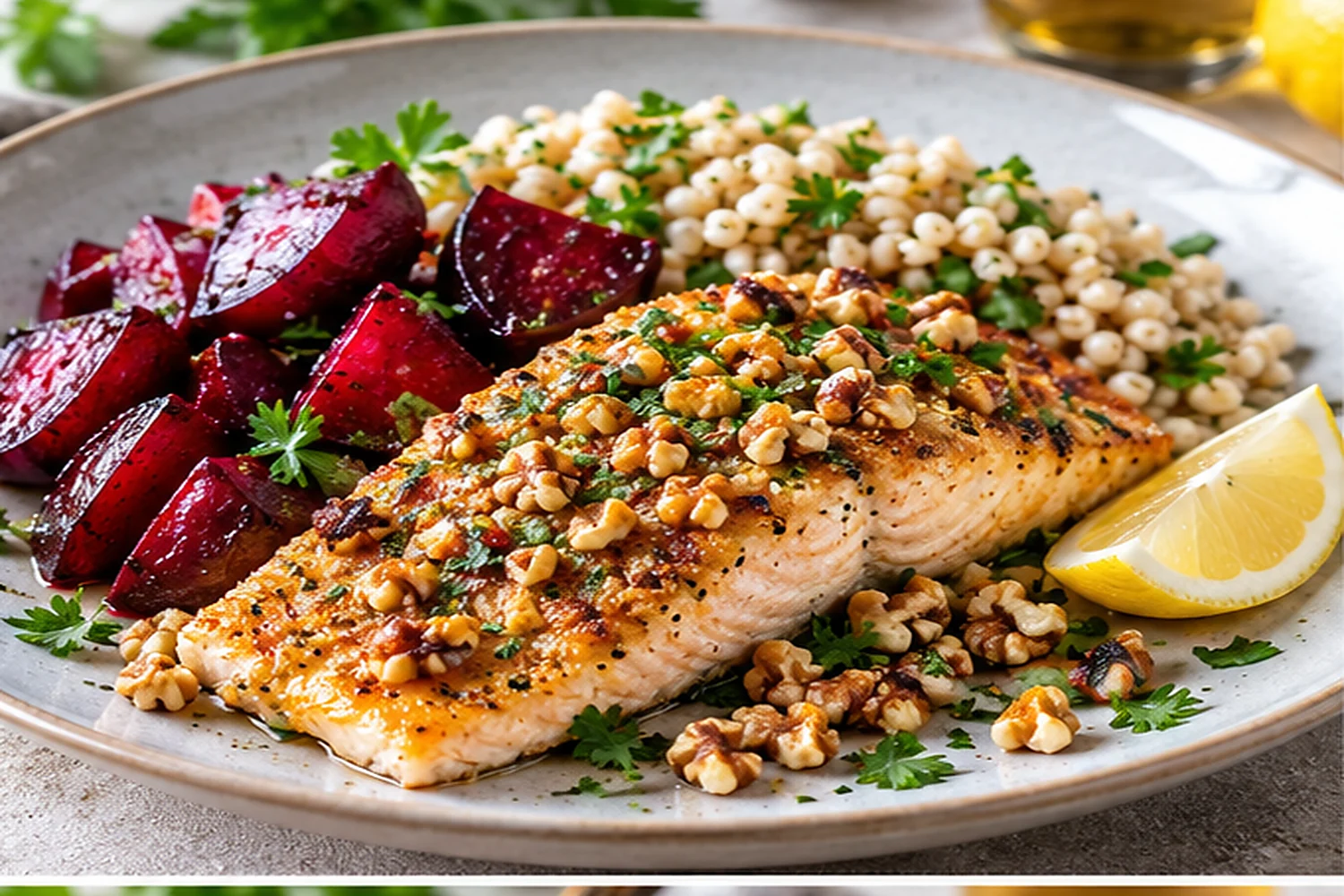
Tender trout with a crunchy walnut-herb topping, roasted beets, and chewy barley makes a colorful whole-food dinner with fish, whole grains, vegetables, and unsaturated fats. The recipe emphasizes minimally processed ingredients and practical portions rather than making a disease-treatment claim. It can fit into a broader eating pattern that includes fruits, vegetables, whole grains, beans, fish or lean proteins, nuts and seeds, and mostly unsaturated fats.
The American Heart Association’s 2026 dietary guidance emphasizes vegetables and fruits, whole grains, healthy protein sources, unsaturated fats, minimally processed foods, and lower sodium as part of a heart-healthy dietary pattern. This recipe uses those ideas as general food-pattern guidance, not as a medical prescription.
Why Readers May Like It
- 1Uses familiar whole-food ingredients.
- 2Includes measured portions and estimated nutrition.
- 3Offers practical substitutions without changing the overall style of the meal.
Recipe Summary and Estimated Nutrition
The values below are estimates for the exact ingredient amounts listed in the base recipe. Product labels, produce size, drained weight, and cooking loss can change the final numbers.
4 servings
Calculated from measured ingredients and divided by 4 servings. These values are estimates rather than laboratory-tested results.
Estimated energy per serving
Calculated from all listed ingredients
Includes fiber and naturally occurring sugars
Includes saturated and unsaturated fat
Use the exact Nutrition Facts labels on packaged ingredients when sodium, saturated fat, carbohydrate, or another nutrient requires precise tracking.
Ingredient-by-Ingredient Nutrition Breakdown
Household measurements and gram weights are shown together so readers can reproduce the recipe and compare the estimate with another reliable database or the labels on the exact products they buy.
| Ingredient | Amount used | Weight | Calories | Protein | Carbs | Fat |
|---|---|---|---|---|---|---|
| Trout fillets | 4 fillets, about 5 oz each (560 g) | 560 g | 778 kcal | 111.7 g | 0.0 g | 27.7 g |
| Walnuts, finely chopped | 1/2 cup (55 g) | 55 g | 337 kcal | 8.1 g | 8.8 g | 28.2 g |
| Pearled barley, cooked | 2 cups (315 g) | 315 g | 363 kcal | 7.0 g | 103.5 g | 1.0 g |
| Beets, peeled and cubed | 3 medium (450 g) | 450 g | 181 kcal | 7.0 g | 50.4 g | 0.7 g |
| Extra-virgin olive oil | 2 tablespoons (28 g) | 28 g | 232 kcal | 0.0 g | 0.0 g | 22.0 g |
| Fresh parsley, chopped | 1/4 cup (15 g) | 15 g | 5 kcal | 0.4 g | 1.1 g | 0.1 g |
| Lemon | 1 large (120 g) | 120 g | 33 kcal | 1.3 g | 13.0 g | 0.3 g |
| Garlic, minced | 2 cloves (6 g) | 6 g | 8 kcal | 0.4 g | 2.3 g | 0.0 g |
| Black pepper | 1/2 teaspoon | 1 g | 3 kcal | 0.1 g | 0.9 g | 0.0 g |
| Calculated full-recipe total | 4 servings | 1550 g | 1940 kcal | 136.0 g | 180.0 g | 80.0 g |
How This Nutrition Estimate Was Prepared
- Ingredients are assigned measured household amounts and, where practical, gram weights.
- Generic food-composition values are aligned with USDA FoodData Central references.
- Full-recipe values are divided by the listed servings before display rounding.
- Optional substitutions are not included in the displayed estimate unless listed as part of the base recipe.
Accuracy note: Nutrition values are practical estimates, not laboratory analysis. Exact brands, drained weights, produce size, and substitutions can change the final result.
Ingredients
Measured ingredients
Step-by-Step Preparation
As an Amazon Associate I earn from qualifying purchases. Tool links below are paid links.
Equipment
Use basic home-kitchen equipment suited to this recipe: cutting board, chef’s knife, measuring cups and spoons (paid link), mixing bowls (paid link), and the cookware named in the steps. Use an instant-read food thermometer (paid link) for poultry, fish, or shellfish.
Before You Start
Measure ingredients, wash produce, keep raw animal proteins separate from ready-to-eat foods, and read all steps before cooking. Clean any surface that contacts raw seafood or poultry before preparing fresh toppings.
Roast the beets
Step 1Heat the oven to 425°F (220°C). Toss the beet cubes with 1 tablespoon olive oil and black pepper, then roast until tender and browned at the edges, about 25 to 30 minutes. Weigh the listed ingredient quantities with a digital kitchen scale (paid link) before starting this step.
Prepare the walnut topping
Step 2Mix the chopped walnuts, parsley, garlic, lemon zest, and the remaining olive oil in a small bowl. Combine the ingredients in a mixing bowl (paid link) with enough room to avoid spilling.
Top the trout
Step 3Pat the trout dry, place it skin-side down on a lined sheet pan (paid link), and press the walnut mixture evenly over the top of each fillet.
Bake the trout
Step 4Bake for 10 to 14 minutes, depending on thickness, until the fish flakes easily and reaches 145°F (63°C) in the thickest part. Use a food thermometer (paid link) to check doneness against the safe minimum internal temperature for the animal protein.
Build the plates
Step 5Divide warm barley and roasted beets among four plates. Add the trout and finish with lemon juice and extra parsley.
How to Know It Is Ready
Follow the temperature guidance in the steps for fish, shellfish, or poultry, and reheat leftovers to 165°F (74°C).
Vegetables should be tender without becoming watery, grains should retain structure, and sauces should lightly coat the ingredients.
Finish with fresh herbs, citrus, or crunchy toppings after cooking so the meal keeps contrast and freshness.
Potential Benefits and Things to Consider
Potential Benefits
- Trout provides protein and naturally occurring omega-3 fats.
- Walnuts and olive oil provide mostly unsaturated fats.
- Barley and beets add fiber-rich whole-food carbohydrates and plant variety.
Things to Consider
- Walnuts are a tree-nut allergen.
- People who need tighter carbohydrate portions can reduce the barley and add more non-starchy vegetables.
- Use unsalted nuts and avoid adding salt if sodium reduction is a priority.
These points describe the nutrient profile and practical use of the meal, not guaranteed outcomes. Cardiovascular health depends on the overall dietary pattern and many non-food factors.
Who May Enjoy This Recipe?
It May Work Well For
- Adults who want a balanced meal built around whole or minimally processed foods.
- People looking for practical ways to include more vegetables, whole grains, legumes, seafood, nuts, or seeds.
- Meal preppers who prefer measured portions and clear storage guidance.
Best Times to Eat It
- Dinner as part of a varied weekly menu.
- After activity when a complete meal is appropriate.
- As a meal-prep option when the storage instructions fit your schedule.
People with cardiovascular disease, kidney disease, diabetes, food allergies, pregnancy, medication-related diet restrictions, or prescribed sodium/fluid limits should follow individualized professional advice.
How to Adjust It for Different Goals
For fewer calories
Keep the vegetables and lean or plant protein, then reduce the grain, nuts, seeds, oil, or other energy-dense component in a measured amount.
For more protein
Increase the main lean protein, seafood, beans, lentils, tofu, tempeh, or low-fat dairy component while recalculating the recipe nutrition.
For more energy
Add a larger whole-grain portion, an extra serving of fruit, or another measured source of unsaturated fat depending on the meal.
Substitutions, Dietary Notes, and Allergens
Practical Substitutions
- Use salmon, Arctic char, or cod when trout is unavailable.
- Use farro or brown rice instead of barley.
- Use pumpkin seeds instead of walnuts for a nut-free crunch.
Label and Allergen Notes
Check the ingredient list for the allergens relevant to you. Packaged beans, broth, bread, sauces, canned fish, and condiments can vary substantially in sodium and other nutrients.
When you make a substitution, treat the displayed nutrition as a starting estimate rather than an exact value.
Storage and Meal Preparation
Refrigerate cooked trout, barley, and beets in separate airtight containers for up to 3 days. Reheat the barley and beets gently; fish is best reheated only until steaming to avoid drying.
Refrigerate perishable foods within 2 hours, or within 1 hour when the temperature is above 90°F (32°C). When in doubt, discard food rather than tasting it to test safety.
Frequently Asked Questions
Refrigerate cooked trout, barley, and beets in separate airtight containers for up to 3 days. Reheat the barley and beets gently; fish is best reheated only until steaming to avoid drying.
Use salmon, Arctic char, or cod when trout is unavailable.
No. It is designed around general heart-healthy eating principles such as vegetables, whole grains, legumes, seafood or lean proteins, and mostly unsaturated fats. Health outcomes depend on the overall dietary pattern, medical history, activity, and other factors.
The values use measured ingredient amounts and generic food-composition references. Brand labels, drained weights, cooking loss, and substitutions can change the final numbers.
No. This page provides general educational information and does not replace individualized guidance from a qualified health professional.
Nutrition and Safety Note
This page is for general education and recipe planning. It does not diagnose, prevent, or treat cardiovascular disease and does not replace individualized nutrition or medical care.
Nutrition Data and Heart-Healthy Pattern References
For ingredient weights, calculation methods, rounding, substitutions, and limitations, read our Nutrition Calculation Methodology.
Recipe development note: this page does not claim independent kitchen testing. The image is illustrative and does not document a tested result. Ingredient-based nutrition estimates can change with brands, weighing state, preparation and serving size; use exact labels when precision matters.