About This Healthy Meal
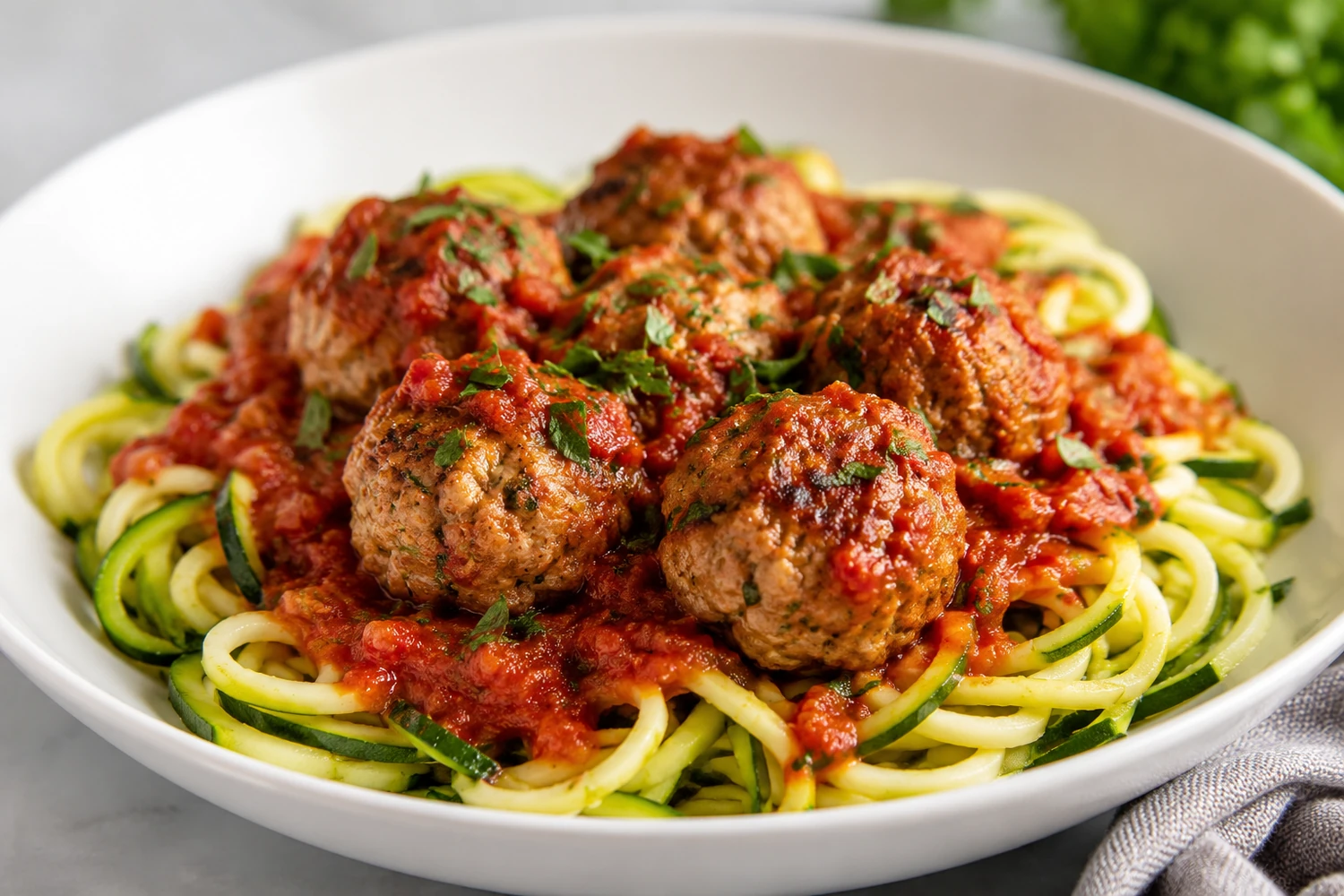
Tender baked turkey meatballs with zucchini noodles, tomato basil sauce, and a modest sprinkle of Parmesan.
Turkey Meatball Zucchini Noodles is designed as a complete recipe rather than a vague meal idea. The quantities create 4 servings, the timing separates preparation from cooking, and the method explains the points that most often determine texture. The central ingredients—93% lean ground turkey, egg, whole-wheat breadcrumbs, grated Parmesan, divided, garlic cloves, minced—have different jobs, so the recipe becomes easier when each one is handled at the correct stage instead of being added without a plan.
A healthy meal does not need to be perfect, unusually low in calories, or built from expensive specialty products. For the Best Fitness Routine audience, the more useful question is whether Turkey Meatball Zucchini Noodles can be repeated, adjusted, and fitted into a week that also includes work, family responsibilities, and exercise. This recipe answers that question with ordinary ingredients, clear portions, and options for weight management, muscle support, and general fitness.
Why This Recipe Works With a Fitness Routine
For Turkey Meatball Zucchini Noodles, the guidance in “Why This Recipe Works With a Fitness Routine” should protect both practicality and the intended result. Review the complete day of eating rather than expecting one recipe to determine results. Measure calorie-dense ingredients instead of removing every source of flavor. Keep the main protein source consistent, then adjust grains, fats, or sides to match the individual goal.
For Turkey Meatball Zucchini Noodles, the guidance in “Why This Recipe Works With a Fitness Routine” should protect both practicality and the intended result. Keep the main protein source consistent, then adjust grains, fats, or sides to match the individual goal. Treat the nutrition panel as an estimate because brands, drained weights, and measured portions vary.
- Baked meatballs are easier to prepare in a batch than pan-frying several rounds.
- The recipe offers a high-protein dinner with a generous vegetable portion.
- Zucchini noodles can be replaced or combined with whole-grain pasta depending on energy needs.
- Meatballs freeze well, making the recipe useful for future quick dinners.
Recipe Summary and Estimated Nutrition
Nutrition values are estimates. Brands, measured quantities, cooking loss, and substitutions change the final numbers.
For Turkey Meatball Zucchini Noodles, the guidance in “Recipe Summary and Estimated Nutrition” should protect both practicality and the intended result. Treat the nutrition panel as an estimate because brands, drained weights, and measured portions vary. Review the complete day of eating rather than expecting one recipe to determine results. Measure calorie-dense ingredients instead of removing every source of flavor.
Ingredients With Exact Quantities
- 1 1/4 pounds 93% lean ground turkey
- 1 large egg
- 1/3 cup whole-wheat breadcrumbs
- 1/4 cup grated Parmesan, divided
- 2 garlic cloves, minced
- 2 tablespoons chopped parsley
- 1 teaspoon Italian seasoning
- 1/2 teaspoon salt
- 1/4 teaspoon black pepper
- 1 tablespoon olive oil, divided
- 4 medium zucchini, spiralized
- 3 cups no-sugar-added marinara sauce
- 1/4 cup fresh basil leaves
- Red pepper flakes, optional
What Each Main Ingredient Contributes
- Lean turkey provides the protein base while breadcrumbs and egg help the meatballs stay together.
- Zucchini noodles contribute volume and a fresh texture with fewer carbohydrates than pasta.
- Marinara adds moisture and acidity, protecting the meatballs from tasting dry.
- Parmesan and herbs create savory depth without needing a heavy cream sauce.
For Turkey Meatball Zucchini Noodles, the guidance in “What Each Main Ingredient Contributes” should protect both practicality and the intended result. Treat the nutrition panel as an estimate because brands, drained weights, and measured portions vary. Review the complete day of eating rather than expecting one recipe to determine results.
Equipment and Preparation Setup
For Turkey Meatball Zucchini Noodles, the guidance in “Equipment and Preparation Setup” should protect both practicality and the intended result. Refrigerate perishable components promptly and avoid extended time at warm temperatures. Keep raw and ready-to-eat ingredients separate and wash tools between tasks.
For Turkey Meatball Zucchini Noodles, the guidance in “Equipment and Preparation Setup” should protect both practicality and the intended result. Refrigerate perishable components promptly and avoid extended time at warm temperatures. Keep raw and ready-to-eat ingredients separate and wash tools between tasks. In this recipe, apply it specifically within equipment and preparation setup and the listed serving size.
Step-by-Step Preparation
- Heat the oven to 425°F and line a baking sheet.
- Mix turkey, egg, breadcrumbs, half of the Parmesan, garlic, parsley, Italian seasoning, salt, and pepper just until combined.
- Shape into 16 meatballs and place them on the prepared sheet.
- Bake for 15 to 18 minutes, or until the centers reach 165°F.
- Warm marinara in a wide skillet over medium-low heat. Add the cooked meatballs and simmer for 5 minutes.
- Pat zucchini noodles dry. Heat a separate skillet with half of the olive oil and cook the noodles for only 2 to 3 minutes.
- Divide zucchini noodles among plates, spoon over meatballs and sauce, then finish with basil and remaining Parmesan.
Detailed Cooking and Texture Guide
The tomato sauce provides acidity and moisture, while turkey meatballs bring a savory herb flavor. Zucchini noodles should remain lightly crisp so they contrast with the tender meatballs.
For Turkey Meatball Zucchini Noodles, the guidance in “Detailed Cooking and Texture Guide” should protect both practicality and the intended result. Keep raw and ready-to-eat ingredients separate and wash tools between tasks. Follow product labels and individualized clinical advice when allergies or medical nutrition needs are involved.
From a meal-prep perspective, Turkey Meatball Zucchini Noodles works best when hot, cold, crisp, and creamy components are stored according to their texture. The goal is not simply to put everything in one container. It is to preserve the experience of the fresh meal, reduce food waste, and make the next serving easy enough that it is genuinely chosen instead of forgotten in the refrigerator.
Pros and Possible Limitations
Practical Advantages
- Baked meatballs are easier to prepare in a batch than pan-frying several rounds.
- The recipe offers a high-protein dinner with a generous vegetable portion.
- Zucchini noodles can be replaced or combined with whole-grain pasta depending on energy needs.
- Meatballs freeze well, making the recipe useful for future quick dinners.
Possible Limitations
- Overmixing turkey can make meatballs dense.
- Zucchini noodles release water when cooked too long.
- Very lean turkey may need careful timing to remain moist.
Best Time to Eat It
Dinner or a prepared lunch, especially when the goal is a protein-forward meal with a lighter vegetable base.
Who This Meal May Suit
Busy adults, families, lower-carbohydrate eaters, and readers who want a flexible meal alongside a gym workout routine.
Goal-Based Adjustments
For weight management: Start with the listed serving size, keep oils, cheese, nuts, seeds, avocado, and sauces measured, and increase low-calorie vegetables when more volume is useful. Turkey Meatball Zucchini Noodles can fit a weight-loss exercise plan, but no recipe produces weight loss by itself; total intake, activity, sleep, and consistency matter.
For Turkey Meatball Zucchini Noodles, the guidance in “Goal-Based Adjustments” should protect both practicality and the intended result. Review the complete day of eating rather than expecting one recipe to determine results. Measure calorie-dense ingredients instead of removing every source of flavor.
For Turkey Meatball Zucchini Noodles, the guidance in “Goal-Based Adjustments” should protect both practicality and the intended result. Measure calorie-dense ingredients instead of removing every source of flavor. Keep the main protein source consistent, then adjust grains, fats, or sides to match the individual goal.
For Turkey Meatball Zucchini Noodles, the guidance in “Goal-Based Adjustments” should protect both practicality and the intended result. Use measured quantities for ingredients that strongly affect calories, sodium, or texture. Taste after the primary seasoning is added, then make one small adjustment at a time.
Substitutions and Dietary Adjustments
- Use lean ground chicken or beef instead of turkey.
- Replace breadcrumbs with certified gluten-free crumbs or quick oats.
- Serve over spaghetti squash, whole-grain pasta, polenta, or roasted vegetables.
- Use nutritional yeast or a dairy-free Parmesan alternative if needed.
For Turkey Meatball Zucchini Noodles, the guidance in “Substitutions and Dietary Adjustments” should protect both practicality and the intended result. Treat the nutrition panel as an estimate because brands, drained weights, and measured portions vary. Review the complete day of eating rather than expecting one recipe to determine results.
Meal Prep, Storage, and Reheating
Refrigerate meatballs and sauce together for up to 4 days. Store zucchini noodles separately and cook them just before eating. Freeze meatballs and sauce for up to 3 months.
For Turkey Meatball Zucchini Noodles, the guidance in “Meal Prep, Storage, and Reheating” should protect both practicality and the intended result. Use a food thermometer when the recipe includes poultry, meat, or another ingredient with a defined safe temperature. Refrigerate perishable components promptly and avoid extended time at warm temperatures.
Common Mistakes and How to Avoid Them
- Packing the meat mixture firmly rather than shaping it gently.
- Cooking zucchini noodles until soft and watery.
- Using a small pan that prevents sauce from surrounding the meatballs.
- Skipping the thermometer and guessing whether poultry is safely cooked.
- Freezing cooked zucchini noodles, which damages their texture.
Budget and Shopping Strategy
Buy ground turkey in larger packages, freeze extra meatballs, and use seasonal zucchini or spaghetti squash when it is inexpensive.
For Turkey Meatball Zucchini Noodles, the guidance in “Budget and Shopping Strategy” should protect both practicality and the intended result. Change one ingredient at a time when accurate nutrition estimates are important. Drain wet ingredients thoroughly so the finished dish does not become diluted.
How to Use This Meal During a Busy Week
For Turkey Meatball Zucchini Noodles, the guidance in “How to Use This Meal During a Busy Week” should protect both practicality and the intended result. Change one ingredient at a time when accurate nutrition estimates are important. Drain wet ingredients thoroughly so the finished dish does not become diluted.
A second practical consideration is portion visibility. Dividing 4 servings immediately after cooking prevents the final serving from becoming unexpectedly small or large. It also makes the estimated About 420 kcal and About 39 g more meaningful.
For Turkey Meatball Zucchini Noodles, the guidance in “How to Use This Meal During a Busy Week” should protect both practicality and the intended result. Treat the nutrition panel as an estimate because brands, drained weights, and measured portions vary. Review the complete day of eating rather than expecting one recipe to determine results.
For Turkey Meatball Zucchini Noodles, the guidance in “How to Use This Meal During a Busy Week” should protect both practicality and the intended result. Keep the method simple enough to repeat while preserving the main flavor and nutrition purpose. Record useful substitutions so a successful version can be repeated consistently.
For Turkey Meatball Zucchini Noodles, the guidance in “How to Use This Meal During a Busy Week” should protect both practicality and the intended result. Use measured quantities for ingredients that strongly affect calories, sodium, or texture. Taste after the primary seasoning is added, then make one small adjustment at a time.
For Turkey Meatball Zucchini Noodles, the guidance in “How to Use This Meal During a Busy Week” should protect both practicality and the intended result. Keep the method simple enough to repeat while preserving the main flavor and nutrition purpose. Record useful substitutions so a successful version can be repeated consistently. In this recipe, apply it specifically within how to use this meal during a busy week and the listed serving size.
For Turkey Meatball Zucchini Noodles, the guidance in “How to Use This Meal During a Busy Week” should protect both practicality and the intended result. Review the complete day of eating rather than expecting one recipe to determine results. Measure calorie-dense ingredients instead of removing every source of flavor.
For Turkey Meatball Zucchini Noodles, the guidance in “How to Use This Meal During a Busy Week” should protect both practicality and the intended result. Transport perishable food with reliable cold storage when a refrigerator is not immediately available. Label portions with the preparation date and reheat only the serving that will be eaten.
For Turkey Meatball Zucchini Noodles, the guidance in “How to Use This Meal During a Busy Week” should protect both practicality and the intended result. Review the complete day of eating rather than expecting one recipe to determine results. Measure calorie-dense ingredients instead of removing every source of flavor. In this recipe, apply it specifically within how to use this meal during a busy week and the listed serving size.
For Turkey Meatball Zucchini Noodles, the guidance in “How to Use This Meal During a Busy Week” should protect both practicality and the intended result. Label portions with the preparation date and reheat only the serving that will be eaten. Keep sauces, delicate vegetables, and crisp toppings separate when texture matters.
One useful way to plan this recipe is to work backward from the time you want to eat. Prepare the ingredient that needs the longest cooking first, then use that time to wash produce, mix sauce, or portion toppings. This makes the listed 45 minutes feel manageable and keeps the workspace organized. In the context of Turkey Meatball Zucchini Noodles, this planning step keeps the recipe practical without changing its core ingredients or nutrition purpose.
A second practical consideration is portion visibility. Dividing 4 servings immediately after cooking prevents the final serving from becoming unexpectedly small or large. It also makes the estimated About 420 kcal and About 39 g more meaningful. In the context of Turkey Meatball Zucchini Noodles, this planning step keeps the recipe practical without changing its core ingredients or nutrition purpose.
The shopping process can also make preparation easier. Group the shopping list into protein, produce, pantry, and optional toppings. Checking the pantry before shopping avoids buying duplicate spices and helps the recipe remain affordable. In the context of Turkey Meatball Zucchini Noodles, this planning step keeps the recipe practical without changing its core ingredients or nutrition purpose.
Food Safety and Nutrition Notes
Cook ground turkey meatballs to 165°F (74°C) and refrigerate leftovers promptly.
For Turkey Meatball Zucchini Noodles, the guidance in “Food Safety and Nutrition Notes” should protect both practicality and the intended result. Use a food thermometer when the recipe includes poultry, meat, or another ingredient with a defined safe temperature. Refrigerate perishable components promptly and avoid extended time at warm temperatures.
For Turkey Meatball Zucchini Noodles, the guidance in “Food Safety and Nutrition Notes” should protect both practicality and the intended result. Refrigerate perishable components promptly and avoid extended time at warm temperatures. Keep raw and ready-to-eat ingredients separate and wash tools between tasks.
Frequently Asked Questions
They may be overcooked, overmixed, or made with extremely lean turkey. Use a thermometer and stop at 165°F.
Yes, but they release more water. Thaw, drain, and squeeze them gently before quick cooking.
Absolutely. Use whole-grain pasta or a half-pasta, half-zucchini combination for more carbohydrate.
This recipe makes about 16 meatballs, so one serving is approximately four meatballs.
Yes. Shape them one day ahead or bake and freeze them for future meals.
Salt is not necessary before cooking. Pat them dry and sauté for only 2 to 3 minutes.
It can fit when portions and total intake are appropriate. Cheese, oil, and sauce portions still matter.