Published by Best Fitness Routine. Editorial standards · Report a correction. Educational guidance; no individual clinical review is claimed unless a qualified reviewer is named.
About This Healthy Recipe
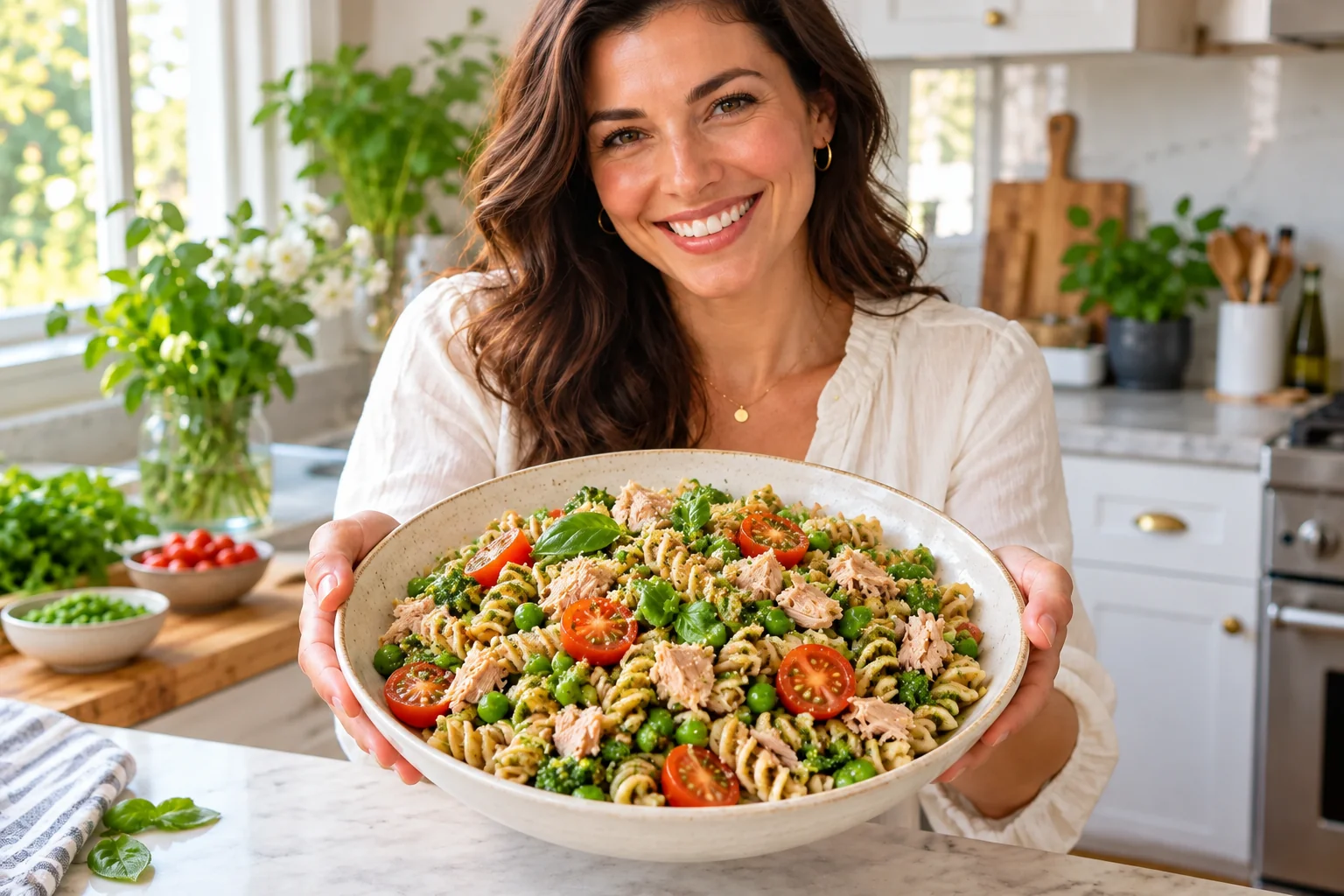
Tuna pesto pasta with peas combines drained light tuna, whole-wheat fusilli and a measured homemade basil-walnut pesto. Peas add sweetness and the tomatoes provide juicy contrast, so the sauce can stay modest rather than oil-heavy.
The drained weight matters more than the number of cans because can sizes and packing liquids vary between countries. Buy enough to provide the stated drained amount.
A store-bought pesto is convenient but its oil, cheese, nuts and sodium may be different. Replace the complete homemade-pesto set of ingredients, not just the basil, and recalculate. For another preparation, see One-Pot Tuna Puttanesca with Whole-Wheat Pasta.
Why Readers May Like It
- 1Measured portions, a clear sauce method and practical doneness checks.
- 2Clear dry, cooked and drained ingredient weights.
- 3A complete four-serving pasta meal with the sauce and toppings included.
Recipe Summary and Estimated Nutrition
Nutrition is estimated from the listed ingredient weights and the specific USDA records or manufacturer references linked below. Weights labeled dry, raw, cooked or drained must be matched to that state.
4 servings
One serving is one quarter of the base batch. Values are estimates rather than laboratory analysis.
Per one quarter of the base recipe
Per one quarter of the base recipe
Per one quarter of the base recipe
Per one quarter of the base recipe
Brands, drained weights, substitutions and final serving sizes can change these values.
Ingredient-by-Ingredient Nutrition Breakdown
Gram weights are the calculation basis; household measures are approximate. The table includes all listed oil, sauce and toppings. Plain pasta-boiling water is drained and is not a nutrient-bearing ingredient.
| Ingredient | Amount used | Weight | Calories | Protein | Carbs | Fat |
|---|---|---|---|---|---|---|
| Whole-wheat fusilli, dry | about 10 oz | 280 g | 986 kcal | 38.8 g | 205.4 g | 8.2 g |
| Canned light tuna in water, drained | about 14 oz drained | 400 g | 344 kcal | 77.8 g | 0 g | 3.8 g |
| Green peas, thawed if frozen | about 2 cups | 300 g | 243 kcal | 16.3 g | 43.4 g | 1.2 g |
| Cherry tomatoes, halved | about 2 cups | 300 g | 54 kcal | 2.6 g | 11.7 g | 0.6 g |
| Fresh basil leaves | about 2 cups loosely packed | 40 g | 9 kcal | 1.3 g | 1.1 g | 0.3 g |
| Walnuts | about 1/4 cup chopped | 30 g | 196 kcal | 4.6 g | 4.1 g | 19.6 g |
| Parmesan, finely grated | about 1/3 cup | 30 g | 118 kcal | 10.7 g | 1 g | 7.5 g |
| Olive oil | about 1 1/2 tbsp | 20 g | 177 kcal | 0 g | 0 g | 20 g |
| Lemon juice | 2 tbsp | 30 g | 7 kcal | 0.1 g | 2.1 g | 0.1 g |
| Garlic | 2 cloves | 6 g | 9 kcal | 0.4 g | 2 g | 0 g |
| Ground black pepper | about 1/2 tsp | 1 g | 3 kcal | 0.1 g | 0.6 g | 0 g |
| Full recipe estimate | 4 servings | — | 2146 kcal | 152.7 g | 271.4 g | 61.3 g |
How This Nutrition Estimate Was Prepared
- Match each listed ingredient to its linked food record or stated label reference.
- Multiply the per-100-g values by the listed gram weight and add the unrounded ingredient values.
- Divide the full calculation by four servings, then round for the cards.
- Recalculate if you change the ingredient brand, amount or serving yield.
Ingredient cells are rounded independently. The footer sums displayed cells; per-serving cards use the unrounded calculation, so small rounding differences are expected. Final cooking yield and brands can change the estimate.
Ingredients
Measured ingredients
Step-by-Step Preparation
As an Amazon Associate we earn from qualifying purchases. Equipment links are paid affiliate links; use suitable tools you already own.
Equipment
- Digital kitchen scale (paid link)
- Chef’s knife (paid link)
- Cutting board (paid link)
- Large pasta pot (paid link)
- Colander (paid link)
- Wide saucepan or skillet (paid link)
- Instant-read food thermometer (paid link)
- Shallow food containers (paid link)
Before You Start
The drained weight matters more than the number of cans because can sizes and packing liquids vary between countries. Buy enough to provide the stated drained amount.
Allow about 35 minutes. Components can overlap; use the doneness cues rather than the clock alone. Measure ingredients and prepare the vegetables before heating the pan. Use the listed dry, raw or drained state for each weight.
Drain and measure the tuna
5 minutesDrain canned tuna well, then weigh 400 g of solids. Keep some larger flakes intact. Halve tomatoes and measure the pesto ingredients before starting the pasta. A digital kitchen scale (paid link) helps keep the measured quantities consistent.
Cook fusilli
To package timingBring unsalted water to a boil and add dry pasta. Cook according to its package, stirring occasionally. Add peas for the final 2–3 minutes, until hot and tender.
Blend the pesto
1–2 minutesPulse basil, walnuts, Parmesan, oil, lemon, garlic and pepper in a small food processor. Scrape the bowl and add a tablespoon of warm pasta water as needed for a spoonable paste.
Reserve and drain
1 minuteKeep a mug of cooking water, then drain fusilli and peas. Return them to the warm pot (paid link) off the heat so the pesto does not fry against a hot pan.
Coat the pasta
1 minuteFold in all the measured pesto. Add reserved water a tablespoon at a time until the sauce spreads evenly across the pasta without collecting as an oily pool.
Warm tuna and tomatoes
1–2 minutesGently fold in tuna and tomatoes. If needed, warm over low heat just until everything is thoroughly hot; avoid vigorous stirring that turns the tuna into a fine paste.
Check the distribution
1 minuteMake sure each portion has tuna, peas and tomatoes as well as pasta. The Parmesan and canned tuna already contribute salt, so taste before adding any extra.
Serve four portions
1 minuteDivide equally into four bowls. Fresh pesto can darken slightly as it stands; serve soon after combining for the best color and texture.
How to Know It Is Ready
Use ready-to-eat canned tuna and heat the meal as described in the method. Reheated leftovers reach 165°F / 74°C.
Pasta is tender and the sauce coats it at the consistency described in the method.
One quarter of every listed ingredient, including pasta, sauce and any measured topping.
What This Meal Provides and What to Consider
Meal Balance
- The measured batch supplies about 38.2 g protein per serving.
- Pasta, the listed protein source and vegetables are included in the complete meal.
Things to Consider
- Fish, wheat, milk and walnuts. Parmesan may use animal rennet.
- Energy, sodium and saturated fat still depend on ingredients and portion size. This meal does not guarantee a particular fitness or health result.
Who May Enjoy This Recipe?
Pasta meal planning
Home cooks looking for a measured seafood lunch or dinner.
Home cooking
A store-bought pesto is convenient but its oil, cheese, nuts and sodium may be different. Replace the complete homemade-pesto set of ingredients, not just the basil, and recalculate.
Measured portions
People who want to understand how ingredient weights relate to a four-serving batch.
How to Adjust the Meal
Smaller appetite
Serve a smaller portion and save the rest safely. Recalculate nutrition for the portion you actually eat.
Larger appetite
Choose an appropriate larger portion or accompaniment and include those ingredients in the meal calculation.
Protein adjustments
If changing the main protein or pasta, use its product label and recalculate. The amount can also change texture and cooking requirements.
Substitutions, Dietary Notes, and Allergens
Practical Substitutions
- Use canned light tuna as specified. Oil-packed tuna adds a different amount of fat, even after draining.
- Use the package directions for an alternative pasta and recalculate if its nutrient label differs.
Allergen Information
Fish, wheat, milk and walnuts. Parmesan may use animal rennet.
Check packaged ingredient labels for the allergens relevant to you. A substitution changes both the recipe and the calculation.
Storage and Meal Preparation
Refrigerate perishable food within 2 hours, or within 1 hour when surroundings exceed 90°F / 32°C. Use shallow containers and a refrigerator at 40°F / 4°C or colder. Use safely handled cooked leftovers within 3–4 days; reheat hot leftovers to 165°F / 74°C.
Keeping This Pasta Meal
For a lunchbox, cool and refrigerate promptly. Transport with an ice pack and keep cold until eating; a fish-based pasta is not suitable for hours on a warm desk.
Reheating the Meal
Reheat the portion you plan to eat to 165°F / 74°C throughout. Add a little water if needed to loosen the sauce and check several places because microwave heating can be uneven. Pasta and dairy sauce textures may change after storage.
Follow USDA leftovers guidance. For another sauce and ingredient combination, browse Red Lentil Pasta with Cottage Cheese.
Frequently Asked Questions
Yes, but use its label and your actual weighed amount when recalculating. Jarred pesto may contain cashews, pine nuts, milk or other allergens.
The base method serves it warm. It can also be eaten chilled after prompt cooling and safe refrigeration; loosen with a little water if the pesto has thickened.
For a nut-free variation, omit them and use a suitable seed if tolerated, checking cross-contact labels. The texture and nutrition will change.
Use the serving controls to scale the gram quantities and serving count. Use larger cookware or cook in batches; cooking time does not simply double. Approximate household notes below remain at the base four-serving amounts.
Nutrition Sources and Recipe Notes
These values are planning estimates, not individualized nutrition advice. Use labels for your exact products when precision is important. The recipe has not been kitchen-tested and the image is a generated illustration of the intended dish.
Nutrition Data Sources
See our Nutrition Calculation Methodology for weights, rounding and substitutions.
Food Safety Reference
Recipe development note: this page does not claim independent kitchen testing. The image is illustrative and does not document a tested result. Ingredient-based nutrition estimates can change with brands, weighing state, preparation and serving size; use exact labels when precision matters.
Useful Tools for This Recipe
As an Amazon Associate we earn from qualifying purchases. Equipment links are paid affiliate links; use suitable tools you already own.
These tools fit the preparation above. Use suitable equipment you already own, or compare options if you need an item.
Digital kitchen scale
Weigh the raw, dry and drained amounts listed in the recipe.
Compare on Amazon → (paid link)Paid link · opens in a new tabChef’s knife
Prepare ingredients in the sizes described by the method.
Compare on Amazon → (paid link)Paid link · opens in a new tabCutting board
Keep preparation surfaces clean and separate raw animal foods from cooked food.
Compare on Amazon → (paid link)Paid link · opens in a new tabLarge pasta pot
Allow enough room for pasta to boil and be stirred.
Compare on Amazon → (paid link)Paid link · opens in a new tabColander
Drain pasta after reserving the required cooking water.
Compare on Amazon → (paid link)Paid link · opens in a new tabWide saucepan or skillet
Use a suitable pan for the sauce and other cooked components.
Compare on Amazon → (paid link)Paid link · opens in a new tabInstant-read food thermometer
Check the stated poultry or seafood temperatures with a clean probe.
Compare on Amazon → (paid link)Paid link · opens in a new tabShallow food containers
Cool and refrigerate planned leftovers promptly.
Compare on Amazon → (paid link)Paid link · opens in a new tab