Published by Best Fitness Routine. Editorial standards · Report a correction. Educational guidance; no individual clinical review is claimed unless a qualified reviewer is named.
About This Healthy Recipe
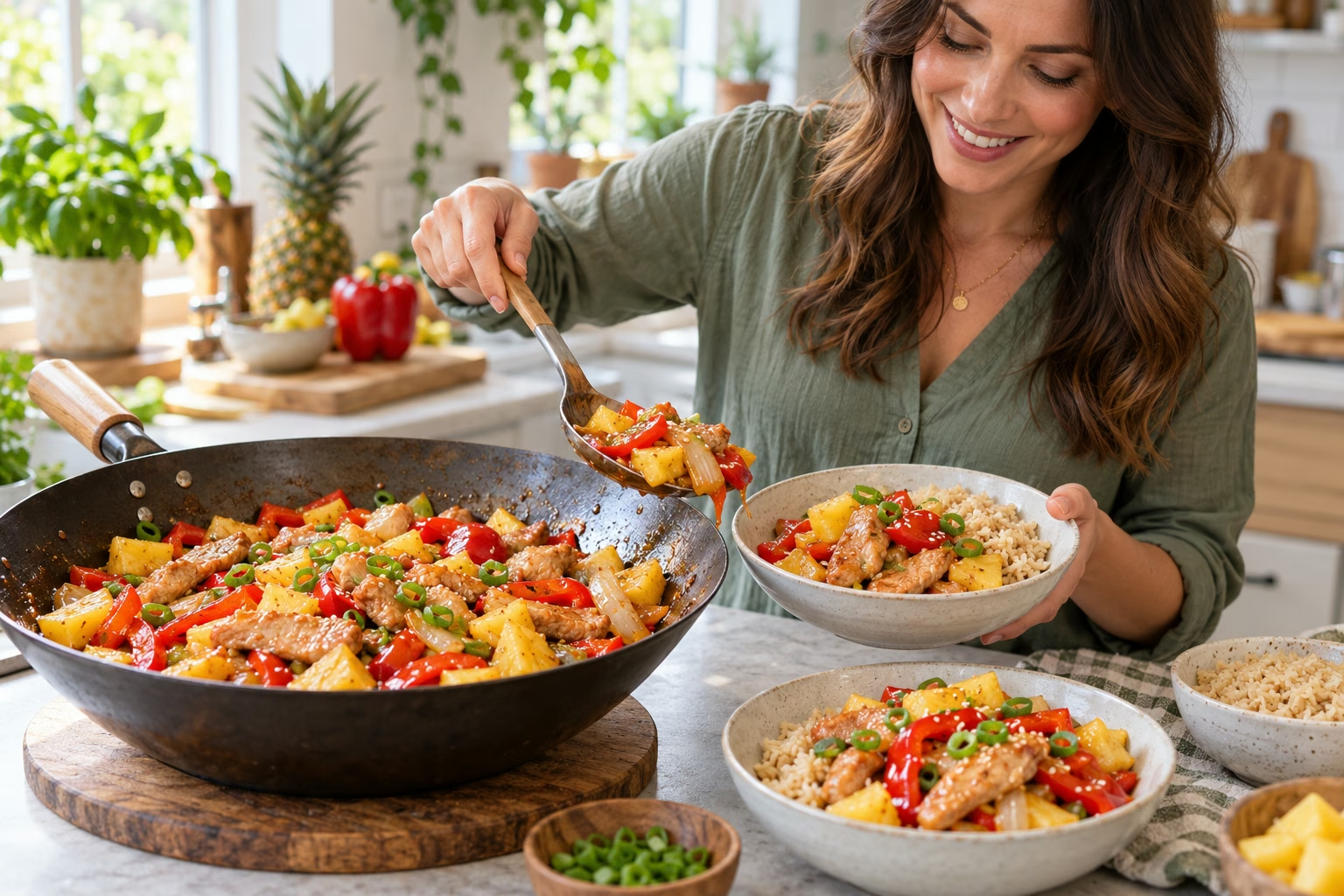
This sweet-and-sour pork stir-fry uses unbreaded tenderloin, fresh pineapple, peppers and carrots. A measured tomato-vinegar sauce and cooked brown rice make four complete dinner portions.
Prepare the sauce before heating the pan. Cook the pork separately, allow its safe rest and add pineapple later so the fruit retains its shape.
This is a lighter home cooking method rather than a promise to match every takeaway version. Honey contributes added sugar, and pineapple contributes natural sugars. Neither is omitted from the estimate.
Why Readers May Like It
- 1Measured portions, staged stir-frying and clear doneness checks.
- 2Clear dry, cooked and drained ingredient weights.
- 3A complete four-serving meal with practical cooking cues.
Recipe Summary and Estimated Nutrition
Nutrition is estimated from the listed ingredient weights and the specific USDA records or manufacturer references linked below. Weights labeled dry, cooked or drained must be matched to that state.
4 servings
One serving is one quarter of the base batch. Values are estimates rather than laboratory analysis.
Per one quarter of the base recipe
Per one quarter of the base recipe
Per one quarter of the base recipe
Per one quarter of the base recipe
Brands, drained weights, substitutions and final serving sizes can change these values.
Ingredient-by-Ingredient Nutrition Breakdown
Gram weights are the calculation basis; household measures are approximate. Cooking water is listed for preparation, and drained water is not included.
| Ingredient | Amount used | Weight | Calories | Protein | Carbs | Fat |
|---|---|---|---|---|---|---|
| Raw lean pork tenderloin, thin strips | about 1 lb 5 oz | 600 g | 654 kcal | 125.7 g | 0 g | 13 g |
| Fresh pineapple, edible chunks | about 2 cups | 300 g | 150 kcal | 1.6 g | 39.4 g | 0.4 g |
| Red bell pepper, chunks | about 2 large | 300 g | 78 kcal | 3 g | 18.1 g | 0.9 g |
| Onion, wedges | 1 large | 180 g | 72 kcal | 2 g | 16.8 g | 0.2 g |
| Carrot, thin slices | about 2 small | 150 g | 62 kcal | 1.4 g | 14.4 g | 0.4 g |
| Brown rice, already cooked and safely chilled | about 3 cups | 600 g | 738 kcal | 16.4 g | 153.5 g | 5.8 g |
| Olive oil | 1 1/2 tablespoons | 21 g | 186 kcal | 0 g | 0 g | 21 g |
| Crushed tomatoes, canned | about 1/3 cup plus 1 tablespoon | 100 g | 32 kcal | 1.6 g | 7.3 g | 0.3 g |
| Plain rice vinegar | about 2 tablespoons plus 1 teaspoon | 35 g | 7 kcal | 0 g | 0.3 g | 0 g |
| Honey | about 1 tablespoon | 20 g | 61 kcal | 0.1 g | 16.5 g | 0 g |
| Reduced-sodium soy sauce | 1 tablespoon plus 1 teaspoon | 20 g | 11 kcal | 1.8 g | 1.1 g | 0.1 g |
| Cornstarch | about 1 tablespoon plus 1 teaspoon | 10 g | 38 kcal | 0 g | 9.1 g | 0 g |
| Garlic, minced | 2 cloves | 8 g | 12 kcal | 0.5 g | 2.6 g | 0 g |
| Fresh ginger, minced | about 1 tablespoon | 10 g | 8 kcal | 0.2 g | 1.8 g | 0.1 g |
| Water for sauce | about 1/3 cup plus 1 tablespoon | 100 g | 0 kcal | 0 g | 0 g | 0 g |
| Full recipe estimate | 4 servings | — | 2109 kcal | 154.3 g | 280.9 g | 42.2 g |
How This Nutrition Estimate Was Prepared
- Match each listed ingredient to its linked food record or stated label reference.
- Multiply the per-100-g values by the listed gram weight and add the unrounded ingredient values.
- Divide the full calculation by four servings, then round for the cards.
- Recalculate if you change the ingredient brand, amount or serving yield.
Ingredient cells are rounded independently. The footer sums displayed cells; per-serving cards use the unrounded calculation, so small rounding differences are expected. Cooking-water losses affect finished weight, not the fixed four-serving calculation.
Ingredients
Measured ingredients
Step-by-Step Preparation
As an Amazon Associate I earn from qualifying purchases. Equipment links are paid affiliate links; use suitable tools you already own.
Equipment
- Digital kitchen scale (paid link)
- Chef’s knife (paid link)
- Cutting board (paid link)
- Mixing bowls (paid link)
- Whisk (paid link)
- Large wok or deep skillet (paid link)
- Kitchen tongs (paid link)
- Instant-read food thermometer (paid link)
- Microwave-safe food containers (paid link)
Before You Start
Prepare the sauce before heating the pan. Cook the pork separately, allow its safe rest and add pineapple later so the fruit retains its shape.
Allow about 40 minutes. Components can overlap; use the doneness cues rather than the clock alone. Keep surfaces and utensils clean. Prepare sauce and cut ingredients before heating the pan. Where cooked rice is listed, cooking it from dry grains takes additional time.
Cut pineapple, vegetables and pork
15 minutesUse a digital kitchen scale (paid link) for the edible pineapple, pork and cooked rice. Slice pork thinly on a separate clean surface. Cut pepper, onion and carrot so the pieces can cook within a short stir-fry interval.
Mix the sweet-and-sour sauce
3 minutesWhisk tomatoes, vinegar, honey, soy sauce, cornstarch and water in a bowl. Keep garlic and ginger for the hot pan.
Cook pork in shallow batches
6–9 minutesHeat 14 g oil in a large large wok or deep skillet (paid link). Cook pork in two batches, turning to cook through. Move cooked strips to a clean plate.
Confirm safe pork doneness and rest
3 minutesCheck several thick strips with a instant-read food thermometer (paid link). Pork must reach 145°F / 63°C and rest for at least 3 minutes before serving. Let it rest while vegetables cook.
Cook vegetables, then pineapple
6–8 minutesAdd remaining oil and carrot, onion and pepper. Stir-fry until the carrot is tender-crisp. Add pineapple, garlic and ginger for the last 2 minutes.
Reheat the brown rice
3–6 minutesReheat the listed cooked rice in a microwave-safe container with a small splash of water, covered with an appropriate vent. Stir midway and check 165°F / 74°C throughout, following appliance instructions. Keep hot for prompt serving. Never use rice left at room temperature beyond safe limits.
Thicken the sauce and return rested pork
2–3 minutesRe-stir and add the sauce, allowing it to bubble until the starch cooks and the liquid lightly coats the vegetables. Fold in cooked rested pork and its clean-plate juices, then heat promptly.
Serve or refrigerate equal portions
2 minutesShare all rice, pork, pineapple, vegetables and sauce among four servings. Use shallow microwave-safe food containers (paid link) portions for any food being kept, refrigerating promptly.
How to Know It Is Ready
Pork reaches 145°F / 63°C and rests 3 minutes; reheated rice reaches 165°F / 74°C.
Tender pork, intact pineapple chunks and lightly thickened sweet-sour sauce.
One quarter of all ingredients, including rice and sauce.
What This Meal Provides and What to Consider
Meal Balance
- The measured batch supplies about 38.6 g protein per serving.
- Vegetables and the listed grain or legume portions make this a full meal, rather than a protein-only snack.
Things to Consider
- Contains soy and wheat from soy sauce.
- Fresh pineapple and honey make this unsuitable for a sugar-free claim; portion and individual needs still matter.
Who May Enjoy This Recipe?
Stir-Fry meal planning
People looking for a practical meal with a measured grain, protein or legume component.
Home cooking
This is a lighter home cooking method rather than a promise to match every takeaway version. Honey contributes added sugar, and pineapple contributes natural sugars. Neither is omitted from the estimate.
Measured portions
People who want to understand how ingredient weights relate to a four-serving batch.
How to Adjust the Meal
Smaller appetite
Serve a smaller portion and save the rest. Recalculate nutrition for the portion you actually eat rather than labeling an unchanged serving low-calorie.
Larger appetite
Add vegetables or another suitable accompaniment, and include those ingredients in the meal calculation.
Protein adjustments
If changing raw lean pork tenderloin, thin strips, check its product label and recalculate. A larger amount may also change texture and cooking requirements.
Substitutions, Dietary Notes, and Allergens
Practical Substitutions
- Use canned pineapple in juice, drained, at the same edible weight and recalculate from its label.
- Use chicken breast at the same raw weight, cooking to 165°F / 74°C and recalculating nutrition.
Allergen Information
Contains soy and wheat from soy sauce.
Check packaged ingredient labels for the allergens relevant to you. A substitution changes both the recipe and the calculation.
Storage and Meal Preparation
Refrigerate perishable food within 2 hours, or within 1 hour when the surroundings exceed 90°F (32°C). Use shallow containers and a refrigerator at 40°F (4°C) or colder. Use cooked leftovers within 3–4 days; reheat hot leftovers to 165°F (74°C). Keep clean ready-to-eat sauces separate when that helps preserve texture.
Keeping This Stir-Fry
Store rice and pork mixture in separate shallow portions where practical. Pineapple releases more liquid after chilling, so sauce thickness can change.
Reheating the Meal
Use safely refrigerated leftovers within 3–4 days. Reheat to 165°F / 74°C, stirring and adding a little water only if needed; avoid an extended boil that toughens the pork.
Where cooked rice is listed, the preparation and cooking times assume safely cooked rice is already available. Cooking rice from dry grains takes additional time and different starting quantities.
Frequently Asked Questions
No. There is no flour coating or deep-frying step in this version. Cornstarch thickens the sauce and is included in its measured quantity.
A bottled sauce is a different formulation. Use its label and exact amount to recalculate sugar, sodium and calories rather than treating it as the same sauce.
The listed ingredients provide an estimated 38.6 g protein per one quarter of the batch. Brands and portions can change this value.
Use the 2× or 3× control for gram quantities and serving count. Keep the per-serving estimate as a base guide; use larger cookware or batches and check doneness rather than multiplying the cooking time.
Nutrition Sources and Recipe Notes
These values are planning estimates, not individualized nutrition advice. Use the labels for your exact products when precision is important. The recipe has not been kitchen-tested and the image is a generated illustration of the intended dish.
Nutrition Data Sources
See our Nutrition Calculation Methodology for weights, rounding and substitutions.
Food Safety Reference
Recipe development note: this page does not claim independent kitchen testing. The image is illustrative and does not document a tested result. Ingredient-based nutrition estimates can change with brands, weighing state, preparation and serving size; use exact labels when precision matters.
Useful Tools for This Recipe
As an Amazon Associate I earn from qualifying purchases. The links below are paid affiliate links.
These are the tools used in the preparation above. Use suitable equipment you already own, or compare options if you need an item.
Digital kitchen scale
Weigh the gram quantities used in the ingredient calculation.
Compare on Amazon →Paid link · opens in a new tabChef’s knife
Cut the recipe ingredients into the specified sizes.
Compare on Amazon →Paid link · opens in a new tabCutting board
Use a clean preparation surface and separate raw meat from ready-to-eat food.
Compare on Amazon →Paid link · opens in a new tabMixing bowls
Keep wet mixtures, coatings or fillings organized during preparation.
Compare on Amazon →Paid link · opens in a new tabWhisk
Mix the batter, eggs or sauce until evenly combined.
Compare on Amazon →Paid link · opens in a new tabLarge wok or deep skillet
Use a wide stable pan compatible with your stove. Cook ingredients in shallow batches and keep handles clear of the edge; a lid supports brief vegetable steaming.
Compare on Amazon →Paid link · opens in a new tabKitchen tongs
Turn strips or gently lift noodles. Clean utensils after contact with raw meat before handling cooked food.
Compare on Amazon →Paid link · opens in a new tabInstant-read food thermometer
Check stated safe temperatures, inserting sideways into thin meat where needed. Clean the probe between raw and cooked checks.
Compare on Amazon →Paid link · opens in a new tabMicrowave-safe food containers
Use shallow food containers and a vented microwave-safe cover for the rice; check the exact heating and storage instructions. A storage lid is not automatically microwave-safe.
Compare on Amazon →Paid link · opens in a new tab