Published by Best Fitness Routine. Editorial standards · Report a correction. Educational guidance; no individual clinical review is claimed unless a qualified reviewer is named.
About This Healthy Recipe
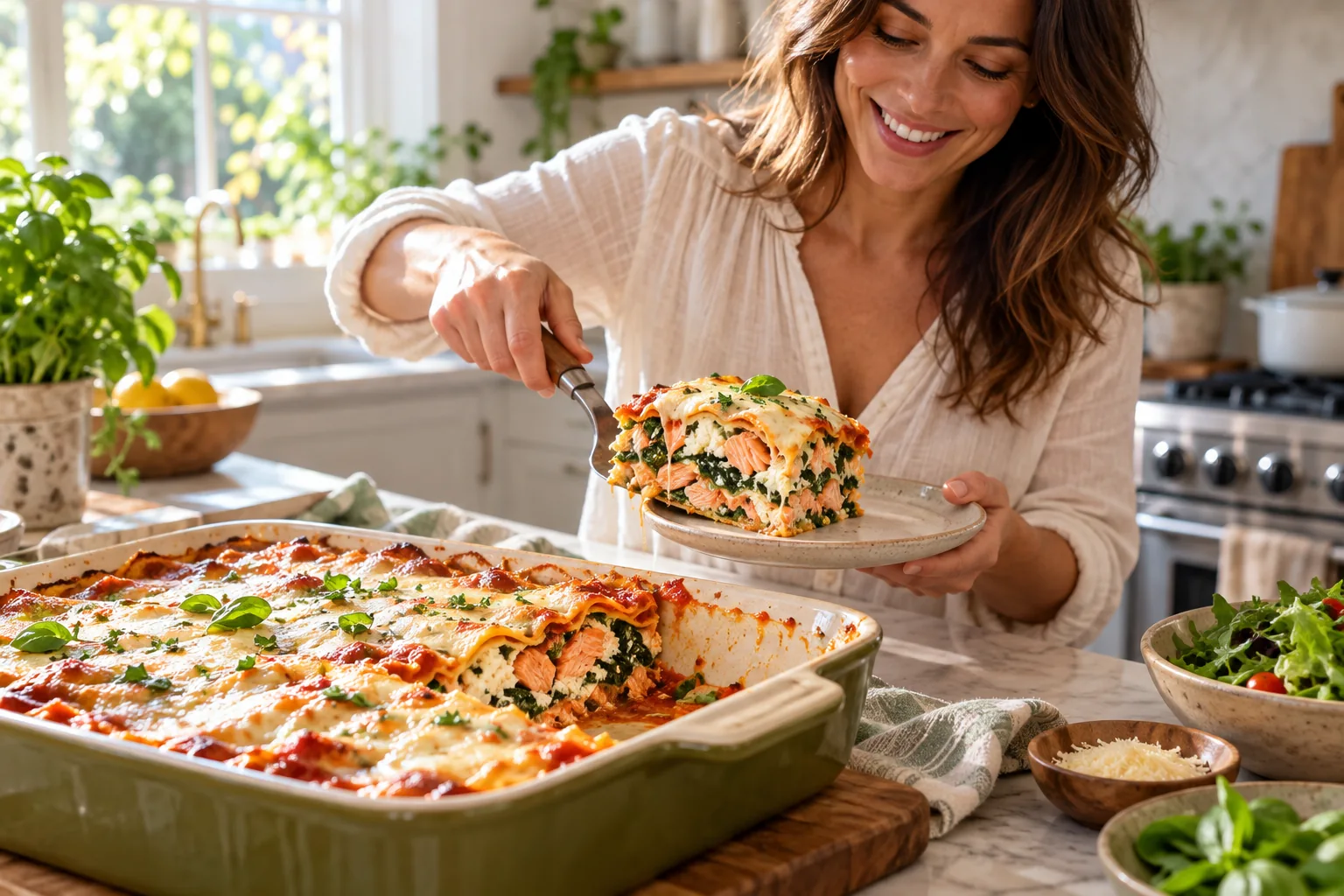
This salmon and spinach lasagna layers cooked fish, part-skim ricotta and spinach with tomato sauce and wheat pasta. Dill and lemon give the filling a fresh flavor without an added cream sauce.
Cook the fish safely, squeeze the spinach and use boil-first sheets. The final bake heats the combined dish throughout while completing the slightly undercooked pasta.
The estimate includes farmed Atlantic salmon and all ricotta and mozzarella. Other salmon species and richer cheeses change the numbers. Freezing softens the pasta but the sauce helps keep reheated portions moist.
Why Readers May Like It
- 1Measured portions and clear freezing and reheating guidance.
- 2Clear dry, cooked and drained ingredient weights.
- 3A complete four-serving meal with practical cooking cues.
Recipe Summary and Estimated Nutrition
Nutrition is estimated from the listed ingredient weights and the specific USDA records or manufacturer references linked below. Weights labeled dry, cooked or drained must be matched to that state.
4 servings
One serving is one quarter of the base batch. Values are estimates rather than laboratory analysis.
Per one quarter of the base recipe
Per one quarter of the base recipe
Per one quarter of the base recipe
Per one quarter of the base recipe
Brands, drained weights, substitutions and final serving sizes can change these values.
Ingredient-by-Ingredient Nutrition Breakdown
Gram weights are the calculation basis; household measures are approximate. Cooking water is listed for preparation, and drained water is not included.
| Ingredient | Amount used | Weight | Calories | Protein | Carbs | Fat |
|---|---|---|---|---|---|---|
| Raw salmon, skin removed | about 1 lb | 450 g | 936 kcal | 91.9 g | 0 g | 60.4 g |
| Lasagna sheets, dry | about 8 sheets | 180 g | 668 kcal | 23.5 g | 134.4 g | 2.7 g |
| Frozen spinach, thawed and squeezed | about 1 1/4 packed cups | 250 g | 58 kcal | 7.4 g | 9.4 g | 0.7 g |
| Part-skim ricotta | about 1 cup | 250 g | 345 kcal | 28.5 g | 12.8 g | 19.8 g |
| Crushed tomatoes, canned | about 3 cups | 700 g | 224 kcal | 11.5 g | 51 g | 2 g |
| Part-skim mozzarella, shredded | about 2/3 cup | 70 g | 213 kcal | 16.5 g | 5.6 g | 13.8 g |
| Onion, finely diced | 1 small | 120 g | 48 kcal | 1.3 g | 11.2 g | 0.1 g |
| Olive oil | 1 tablespoon | 14 g | 124 kcal | 0 g | 0 g | 14 g |
| Garlic, minced | 2 cloves | 8 g | 12 kcal | 0.5 g | 2.6 g | 0 g |
| Fresh dill, chopped | about 1/4 cup loosely packed | 10 g | 4 kcal | 0.3 g | 0.7 g | 0.1 g |
| Lemon juice | about 1 tablespoon plus 1 teaspoon | 20 g | 4 kcal | 0.1 g | 1.4 g | 0 g |
| Table salt | about 1/6 teaspoon | 1 g | 0 kcal | 0 g | 0 g | 0 g |
| Black pepper | about 1/2 teaspoon | 1 g | 3 kcal | 0.1 g | 0.6 g | 0 g |
| Full recipe estimate | 4 servings | — | 2639 kcal | 181.6 g | 229.7 g | 113.6 g |
How This Nutrition Estimate Was Prepared
- Match each listed ingredient to its linked food record or stated label reference.
- Multiply the per-100-g values by the listed gram weight and add the unrounded ingredient values.
- Divide the full calculation by four servings, then round for the cards.
- Recalculate if you change the ingredient brand, amount or serving yield.
Ingredient cells are rounded independently. The footer sums displayed cells; per-serving cards use the unrounded calculation, so small rounding differences are expected. Cooking-water losses affect finished weight, not the fixed four-serving calculation.
Ingredients
Measured ingredients
Step-by-Step Preparation
As an Amazon Associate I earn from qualifying purchases. Equipment links are paid affiliate links; use suitable tools you already own.
Equipment
- Instant-read food thermometer (paid link)
- Oven-safe baking dish (paid link)
- Oven gloves (paid link)
- Large lidded cooking pot (paid link)
- Kitchen tongs (paid link)
- Chef’s knife (paid link)
- Cutting board (paid link)
- Mixing bowls (paid link)
- Cooking spoon (paid link)
- Freezer-safe meal containers (paid link)
Before You Start
Cook the fish safely, squeeze the spinach and use boil-first sheets. The final bake heats the combined dish throughout while completing the slightly undercooked pasta.
Allow about 75 minutes. Components can overlap; use the doneness cues rather than the clock alone. Keep surfaces and utensils clean. Chilling and freezing time is additional to the preparation and cooking time shown.
Cook and flake the salmon
12–18 minutesHeat the oven to 400°F / 200°C conventional, or 375°F / 190°C fan. Place salmon in a small oven-safe dish and bake until a instant-read food thermometer (paid link) reads 145°F / 63°C in the thickest part. Flake on a clean plate and check carefully for bones.
Prepare the pasta sheets
10 minutesWhile the fish cooks, boil lasagna sheets to two minutes short of their package al dente time. Lift with kitchen tongs and lay separately on a clean tray. Reduce oven heat to 375°F / 190°C conventional, or 350°F / 175°C fan.
Simmer tomato sauce
12 minutesHeat oil in a pot, soften onion for 5 minutes and add garlic for one minute. Add tomatoes, salt and pepper and simmer gently until spoonable but still moist.
Combine spinach and ricotta
5 minutesMix squeezed spinach, ricotta, dill and lemon in a mixing bowls (paid link). Fold in cooled cooked salmon flakes gently.
Layer the measured ingredients
8 minutesSpread a thin sauce layer in a 2.5–3-quart / 2.5–3-liter baking dish. Build two filled pasta layers using half the filling in each, then finish with pasta, all remaining sauce and mozzarella. Cut sheets to fit without excessive overlap.
Bake covered, then finish
30–35 minutesCover and bake for 25 minutes. Uncover for another 5–10 minutes until the pasta is tender and the center reaches 165°F / 74°C. Use oven gloves (paid link) when removing the hot dish.
Rest, portion and chill
10 minutesRest the lasagna for 10 minutes, then cut into four portions. Serve promptly, or transfer freezer servings to shallow freezer-safe meal containers (paid link) portions and refrigerate within the safe cooling interval.
How to Know It Is Ready
Salmon reaches 145°F / 63°C first; completed lasagna reaches 165°F / 74°C.
Tender sheets with moist distinct filling layers.
One quarter of the full lasagna and all sauce.
What This Meal Provides and What to Consider
Meal Balance
- The measured batch supplies about 45.4 g protein per serving.
- Vegetables and the listed grain or legume portions make this a full meal, rather than a protein-only snack.
Things to Consider
- Contains fish, milk and wheat.
- Check salmon flakes for bones before folding them into the filling.
Who May Enjoy This Recipe?
Freezer meal planning
People looking for a practical meal with a measured grain, protein or legume component.
Home cooking
The estimate includes farmed Atlantic salmon and all ricotta and mozzarella. Other salmon species and richer cheeses change the numbers. Freezing softens the pasta but the sauce helps keep reheated portions moist.
Measured portions
People who want to understand how ingredient weights relate to a four-serving batch.
How to Adjust the Meal
Smaller appetite
Serve a smaller portion and save the rest. Recalculate nutrition for the portion you actually eat rather than labeling an unchanged serving low-calorie.
Larger appetite
Add vegetables or another suitable accompaniment, and include those ingredients in the meal calculation.
Protein adjustments
If changing raw salmon, skin removed, check its product label and recalculate. A larger amount may also change texture and cooking requirements.
Substitutions, Dietary Notes, and Allergens
Practical Substitutions
- Use cooked trout instead of salmon, starting with the same raw weight and recalculating nutrition.
- Replace dill with fresh parsley at the same weight for a different herb flavor.
Allergen Information
Contains fish, milk and wheat.
Check packaged ingredient labels for the allergens relevant to you. A substitution changes both the recipe and the calculation.
Storage and Meal Preparation
Refrigerate perishable food within 2 hours, or within 1 hour when the surroundings exceed 90°F (32°C). Use shallow containers and a refrigerator at 40°F (4°C) or colder. Use cooked leftovers within 3–4 days; reheat hot leftovers to 165°F (74°C). Keep clean ready-to-eat sauces separate when that helps preserve texture.
Freezing This Meal
Freeze chilled cooked squares at 0°F / −18°C for up to 2 months for best quality. Keep portions in a single layer until frozen if the container allows.
Thawing and Reheating
Thaw overnight in the refrigerator. Put a portion in a suitable baking dish, cover and reheat at 350°F / 175°C until its center reaches 165°F / 74°C. Microwave portions can also be reheated with a suitable cover; check the densest filling and rotate midway.
Preparation and cooking times describe making the fresh batch. Chilling, freezer storage, thawing and later reheating require additional time. Do not thaw perishable meals on the counter.
Frequently Asked Questions
This version cooks the salmon first so the fish can be checked, flaked and divided consistently. Adding raw pieces needs a different method and safe doneness checks.
A short rest helps sauce settle and layers hold together. It does not replace checking the hot center or promptly refrigerating the portions kept for later.
The listed ingredients provide an estimated 45.4 g protein per one quarter of the batch. Brands and portions can change this value.
Use the 2× or 3× control for gram quantities and serving count. Keep the per-serving estimate as a base guide; use larger cookware or batches and check doneness rather than multiplying the cooking time.
Nutrition Sources and Recipe Notes
These values are planning estimates, not individualized nutrition advice. Use the labels for your exact products when precision is important. The recipe has not been kitchen-tested and the image is a generated illustration of the intended dish.
Nutrition Data Sources
See our Nutrition Calculation Methodology for weights, rounding and substitutions.
Food Safety Reference
Freezer Storage Reference
Recipe development note: this page does not claim independent kitchen testing. The image is illustrative and does not document a tested result. Ingredient-based nutrition estimates can change with brands, weighing state, preparation and serving size; use exact labels when precision matters.
Useful Tools for This Recipe
As an Amazon Associate I earn from qualifying purchases. The links below are paid affiliate links.
These are the tools used in the preparation above. Use suitable equipment you already own, or compare options if you need an item.
Instant-read food thermometer
Check the stated safe center temperature rather than relying on surface color alone.
Compare on Amazon →Paid link · opens in a new tabOven-safe baking dish
Choose a roomy 2.5–3-quart / 2.5–3-liter dish, or multiple smaller dishes. Follow temperature-change instructions and avoid thermal shock.
Compare on Amazon →Paid link · opens in a new tabOven gloves
Protect your hands when moving the hot tray or oven-safe pan.
Compare on Amazon →Paid link · opens in a new tabLarge lidded cooking pot
Choose a pot large enough for the batch, with a well-fitting lid and a base suitable for your stove.
Compare on Amazon →Paid link · opens in a new tabKitchen tongs
Handle the ingredient described in the method; clean after contact with raw food.
Compare on Amazon →Paid link · opens in a new tabChef’s knife
Cut the recipe ingredients into the specified sizes.
Compare on Amazon →Paid link · opens in a new tabCutting board
Use a clean preparation surface and separate raw meat from ready-to-eat food.
Compare on Amazon →Paid link · opens in a new tabMixing bowls
Keep wet mixtures, coatings or fillings organized during preparation.
Compare on Amazon →Paid link · opens in a new tabCooking spoon
Stir sauces and fillings and divide the measured cooked ingredients.
Compare on Amazon →Paid link · opens in a new tabFreezer-safe meal containers
Choose shallow containers rated for freezing, with suitable expansion space. Transfer food to oven-safe cookware for oven reheating unless the maker explicitly permits it.
Compare on Amazon →Paid link · opens in a new tab