Published by Best Fitness Routine. Editorial standards · Report a correction. Educational guidance; no individual clinical review is claimed unless a qualified reviewer is named.
About This Healthy Recipe
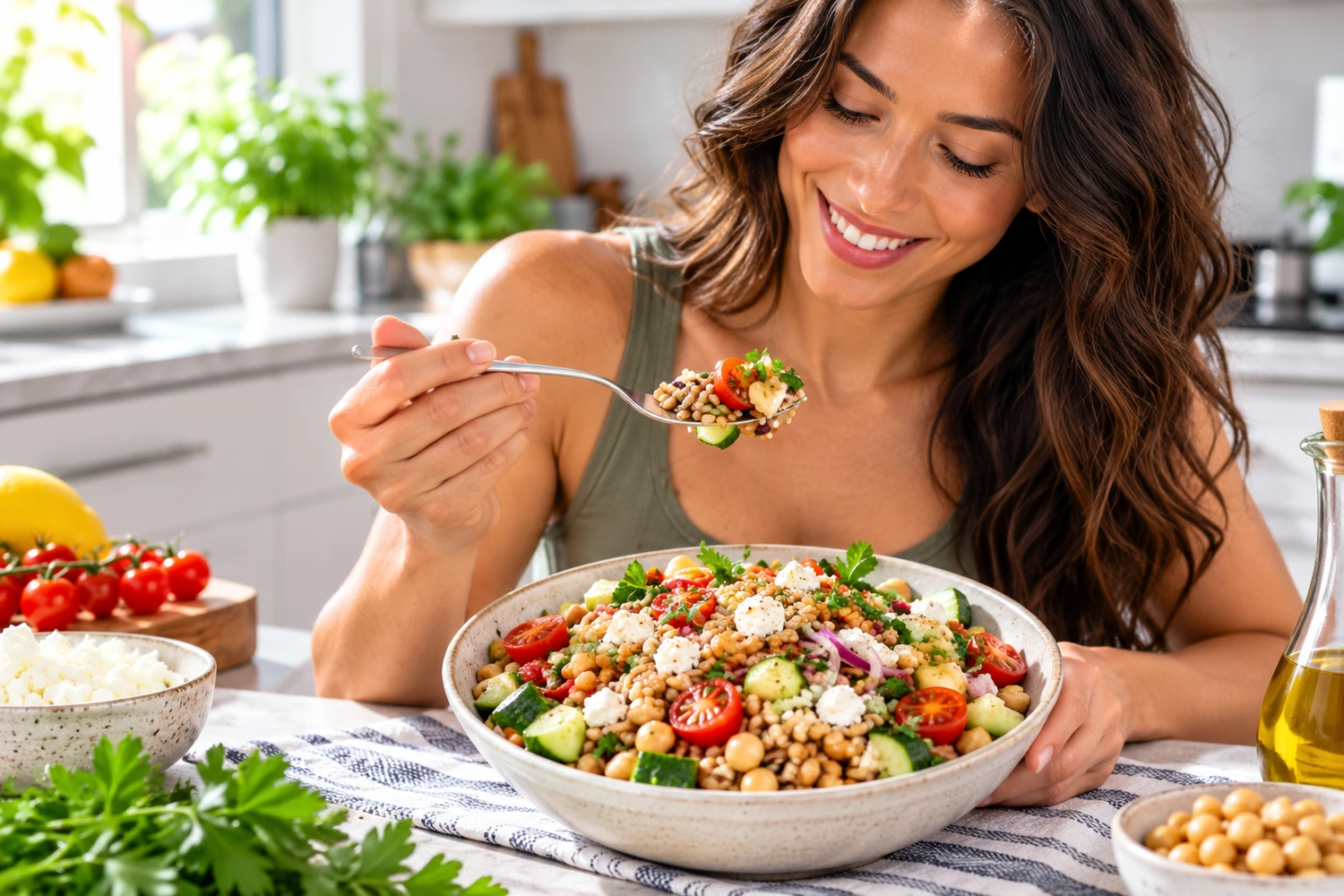
This Mediterranean chickpea farro salad layers chewy farro, chickpeas, cucumber, tomatoes, herbs, olives and feta with a bright lemon-olive oil dressing.
This recipe uses familiar Mediterranean-style ingredients such as vegetables, whole grains or legumes, olive oil, herbs and a practical protein source. The combination is designed for everyday cooking rather than a restrictive meal plan.
It is part of our Mediterranean Diet Recipes collection. You can also browse more Healthy Meals for additional breakfast, lunch and dinner ideas.
Why Readers May Like It
- 1Provides about 15.0 g of estimated protein per serving.
- 2Uses familiar ingredients available in major Tier-1 supermarkets.
- 3Balances produce, whole-food carbohydrates and Mediterranean-style fats.
Recipe Summary and Estimated Nutrition
Nutrition is estimated from typical ingredient weights and standard food-composition references. Brands, produce size, cooking loss and substitutions can change the final values.
4 servings
Values are divided across the listed 4 servings and are planning estimates rather than laboratory analysis.
Estimated energy per serving
Calculated from all listed ingredients
Includes fiber and naturally occurring sugars
Includes saturated and unsaturated fat
i Values are rounded for readability. Product labels, produce size, and measured cooking changes can shift the final estimate.
Ingredient-by-Ingredient Nutrition Breakdown
Household measurements and gram weights are shown together so readers can reproduce the recipe and compare the estimate with another reliable database or the labels on the exact products they buy.
| Ingredient | Amount used | Weight | Calories | Protein | Carbs | Fat |
|---|---|---|---|---|---|---|
| Cooked farro | 3 cups | 510 g | 600 kcal | 21 g | 126 g | 6 g |
| Chickpeas, drained | 1½ cups | 246 g | 402 kcal | 22 g | 67 g | 6 g |
| Cucumber, diced | 1 large | 300 g | 45 kcal | 2 g | 11 g | 0 g |
| Cherry tomatoes, halved | 2 cups | 298 g | 54 kcal | 3 g | 12 g | 1 g |
| Feta cheese | ½ cup | 75 g | 198 kcal | 11 g | 3 g | 16 g |
| Kalamata olives | ⅓ cup | 45 g | 53 kcal | 0 g | 3 g | 5 g |
| Extra-virgin olive oil | 2 tablespoons | 28 g | 238 kcal | 0 g | 0 g | 28 g |
| Lemon juice | 3 tablespoons | 45 g | 10 kcal | 0 g | 3 g | 0 g |
| Parsley and mint | ½ cup | 30 g | 10 kcal | 1 g | 2 g | 0 g |
| Full recipe estimate | 4 servings | — | 1610 kcal | 60.0 g | 227.0 g | 62.0 g |
How This Nutrition Estimate Was Prepared
- Ingredient amounts were matched to standard food-composition references or typical package labels.
- The full recipe total was divided by 4 servings.
- Cooking changes water weight more than the core nutrient estimate.
- Use exact labels and measured weights when you need a closer personal estimate.
Accuracy note: these values are credible planning estimates, not laboratory analysis. For exact personal needs, use the labels on the products you buy and guidance from a qualified professional.
The batch footer adds the displayed ingredient estimates. Serving values divide that batch by the stated yield; brands and preparation can change the estimate.
Ingredients
Recipe ingredients
Professional Step-by-Step Preparation
As an Amazon Associate I earn from qualifying purchases. Tool links below are paid links.
Equipment
Have the listed equipment ready before preparing high-protein chicken quinoa breakfast bowl with avocado so measuring, cooking, and serving steps stay organized.
- Large skillet or grill pan
- Chef’s knife and cutting board
- Measuring cups and spoons (paid link)
- Instant-read food thermometer
Before You Start
Wash and prepare the produce first. Keep raw poultry separate from ready-to-eat ingredients, use a clean plate after cooking, and check the thickest portion with a food thermometer.
Cool the cooked farro completely before assembling the salad.
About 3–5 minutesWork steadily and use the visual and temperature cues described in the step rather than relying only on the clock. Weigh the listed ingredient quantities with a digital kitchen scale (paid link) before starting this step.
Combine farro, chickpeas, cucumber, tomatoes, olives and herbs in a large bowl.
About 3–5 minutesWork steadily and use the visual and temperature cues described in the step rather than relying only on the clock.
Whisk olive oil and lemon juice with black pepper.
About 3–5 minutesWork steadily and use the visual and temperature cues described in the step rather than relying only on the clock.
Pour the dressing over the salad and toss gently.
About 3–5 minutesWork steadily and use the visual and temperature cues described in the step rather than relying only on the clock.
Fold in feta just before serving.
About 1–2 minutesWork steadily and use the visual and temperature cues described in the step rather than relying only on the clock.
How to Know It Is Ready
The chicken is ready when the thickest portion reaches 165°F and the juices run clear.
Grains should be tender, vegetables fresh or crisp-tender, and avocado added only after the hot components are portioned.
Slice the chicken after a brief rest and divide the bowl components evenly before adding the final dressing or citrus.
Potential Benefits and Things to Consider
Potential Benefits
- About 36.8 g estimated protein per serving can help make breakfast more substantial.
- Whole grains, legumes, fruit or vegetables contribute fiber and micronutrients.
- The recipe can fit an active lifestyle when portions align with individual energy needs.
Things to Consider
- Protein needs vary with body size, training volume and total daily intake.
- Calories and sodium vary with brands and substitutions.
- No single breakfast guarantees weight loss, muscle gain or improved health.
Who May Enjoy This Recipe?
It May Work Well For
- Active adults who prefer a protein-forward breakfast.
- People who enjoy savory morning meals or balanced brunches.
- Readers wanting a whole-food alternative to highly processed breakfast options.
Best Times to Eat It
- Breakfast or brunch.
- After morning training when a complete meal is appropriate.
- Meal prep when the ingredients store well.
Individual energy and protein needs vary. Adjust portions for appetite, training, allergies and professional guidance.
How to Adjust It for Different Goals
For fewer calories
Use a little less grain, avocado, nuts, oil or other calorie-dense toppings while keeping vegetables and lean protein generous.
For more energy
Add an extra portion of whole grain, fruit, beans or starchy vegetables.
For more protein
Increase the main protein source or add Greek yogurt, cottage cheese, edamame or egg whites when they fit the recipe.
Recalculate estimates when ingredient amounts or serving sizes change substantially.
Substitutions, Dietary Notes, and Allergens
Practical Substitutions
- Swap quinoa and brown rice when the texture works for the recipe.
- Use spinach, kale or mixed greens interchangeably.
- Use another lean protein with similar cooking characteristics.
- Choose dairy-free yogurt or feta alternatives when needed.
Allergen Information
Potential allergens vary by recipe and can include dairy, soy, sesame, fish or shellfish.
Always check every packaged ingredient label because formulas can change.
Storage and Meal Preparation
Cool cooked components promptly and refrigerate in shallow airtight containers. Most cooked grain, bean and poultry components are best used within 3 to 4 days; cooked seafood is usually best within 2 to 3 days.
Store avocado, delicate greens, yogurt sauces and crunchy toppings separately when possible so texture stays fresh.
Reheat cooked foods until steaming hot and discard food that has been held at unsafe temperatures or shows spoilage.
Frequently Asked Questions
Yes. Store cooked components in airtight containers and keep delicate toppings separate until serving.
It can be a practical post-workout meal because it combines protein with carbohydrate, but ideal portions depend on your training and total daily intake.
Yes. Increase the main protein source or add Greek yogurt, cottage cheese, edamame or egg whites when appropriate.
No. They are estimates and can change with brands, ingredient size, cooking loss and substitutions.
No. It is general educational content and does not replace personalized guidance from a qualified professional.
Nutrition and Safety Note
This page is for general education. It does not diagnose, treat, prescribe a diet, or replace individualized nutrition care. People with allergies, medical conditions, pregnancy, medications or specific nutrition requirements should seek qualified professional guidance.
Nutrition Data Source
For a clear explanation of ingredient weights, data sources, rounding, substitutions, and estimate limitations, read our Nutrition Calculation Methodology.
General Nutrition References
Recipe development note: this page does not claim independent kitchen testing. The image is illustrative and does not document a tested result. Ingredient-based nutrition estimates can change with brands, weighing state, preparation and serving size; use exact labels when precision matters.