Published by Best Fitness Routine. Editorial standards · Report a correction. Educational guidance; no individual clinical review is claimed unless a qualified reviewer is named.
About This Healthy Recipe
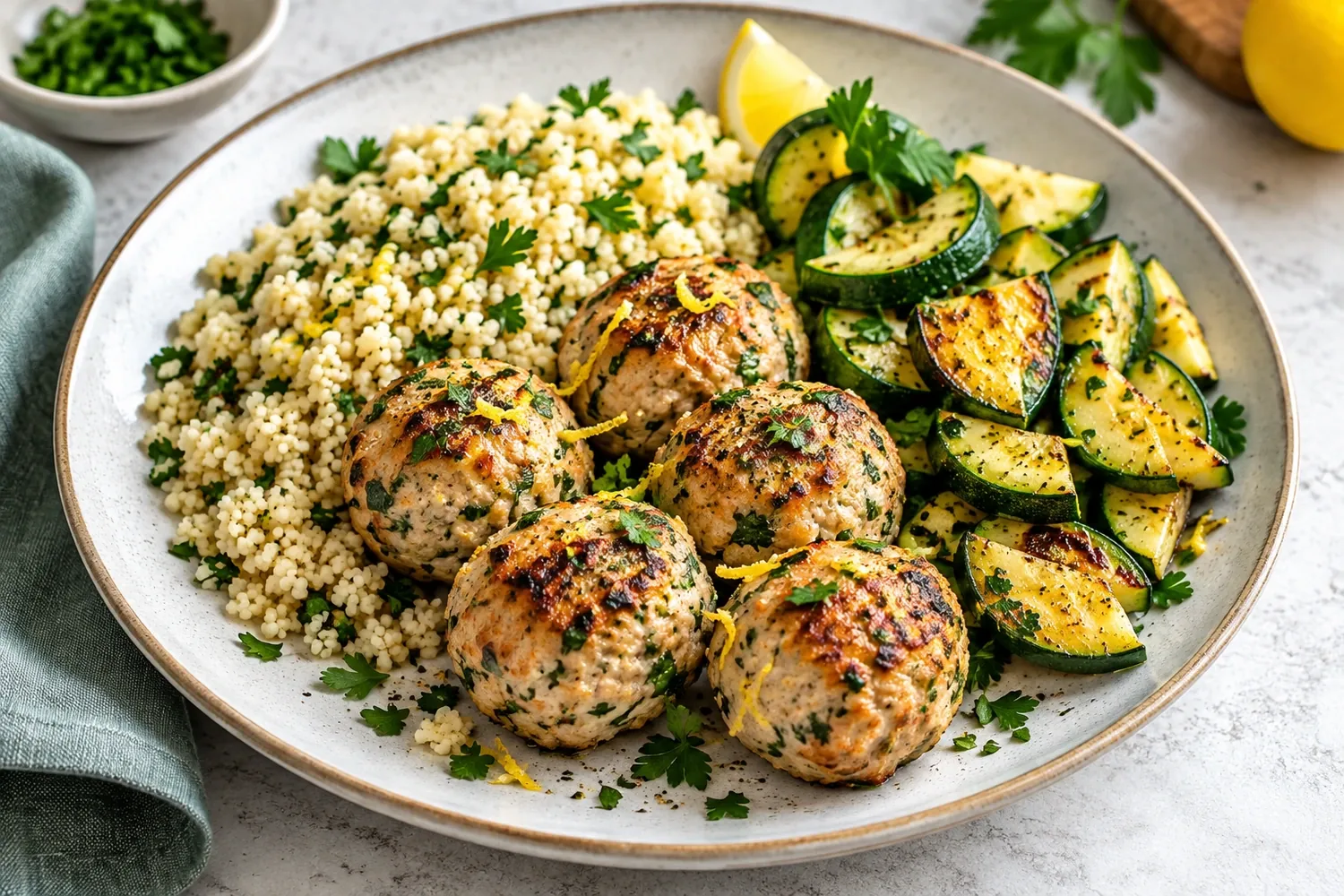
These low sodium turkey meatballs use lean ground turkey, oats, herbs and garlic, served with zucchini and herbed couscous for a balanced dinner.
Flavor comes from fresh produce, herbs, citrus, garlic, spices and carefully selected packaged ingredients rather than heavy added salt.
This recipe is part of our Low-Sodium Recipes collection and can be paired with other Healthy Meals based on your nutrition and training goals.
Why Readers May Like It
- 1Practical ingredients available in U.S. supermarkets.
- 2Estimated sodium is about 312 mg per serving.
- 3Balanced mix of protein, produce and satisfying carbohydrates.
Recipe Summary and Estimated Nutrition
Nutrition is estimated from typical ingredient weights and package data. Sodium is especially brand-dependent, so choose products labeled no-salt-added or reduced-sodium when the recipe calls for them.
4 servings
Values are divided across the listed yield and are intended as planning estimates, not laboratory analysis.
Estimated energy per serving
Calculated from all listed ingredients
Includes fiber and naturally occurring sugars
Includes saturated and unsaturated fat
Nutrition values are evidence-informed estimates. Product labels, drained weights, produce size, cooking loss, and substitutions can change the final result—especially sodium.
Ingredient-by-Ingredient Nutrition Breakdown
Calculated from the gram weights and weighing states below using the identified USDA SR Legacy records. All measured oil and listed sides are included; no extra table salt is included. Divide unrounded batch values by the stated yield.
| Ingredient | Amount used | Weight | Calories | Protein | Carbs | Fat |
|---|---|---|---|---|---|---|
| Ground turkey, 93% lean, raw, unseasoned | 1 1/4 lb | 567.0 g | 850 kcal | 106.2 g | 0.0 g | 47.3 g |
| Old-fashioned rolled oats, dry, pulsed into crumbs | about 1/2 cup | 40.0 g | 152 kcal | 5.3 g | 27.1 g | 2.6 g |
| Whole egg, raw, shell removed | 1 large | 50.0 g | 72 kcal | 6.3 g | 0.4 g | 4.8 g |
| Garlic, raw, minced | 2 cloves | 6.0 g | 9 kcal | 0.4 g | 2.0 g | 0.0 g |
| Fresh parsley, chopped | about 2 tbsp | 8.0 g | 3 kcal | 0.2 g | 0.5 g | 0.1 g |
| Onion powder, without added salt | about 1 tsp | 2.0 g | 7 kcal | 0.2 g | 1.6 g | 0.0 g |
| Paprika, without added salt | about 1 tsp | 2.0 g | 6 kcal | 0.3 g | 1.1 g | 0.3 g |
| Couscous, cooked without salt | about 1 1/2 cups | 236.0 g | 264 kcal | 8.9 g | 54.8 g | 0.4 g |
| Zucchini, raw, sliced | 2 medium | 392.0 g | 67 kcal | 4.7 g | 12.2 g | 1.3 g |
| Olive oil | about 1 tbsp | 14.0 g | 124 kcal | 0.0 g | 0.0 g | 14.0 g |
| Full recipe estimate | 4 servings | — | 1553 kcal | 132.5 g | 99.6 g | 70.7 g |
How This Nutrition Estimate Was Prepared
- Measured ingredient amounts were matched with standard nutrition references or typical package labels.
- No-salt-added and reduced-sodium items are used where specified.
- Cooking losses and brand differences can change the final values.
- Sodium is an estimate and should be verified from labels if you follow a prescribed sodium limit.
Accuracy note: These numbers are credible planning estimates, not laboratory analysis. For the closest result, use the exact product labels and measured ingredient weights from your kitchen.
Ingredients
Measured ingredients
Gram weights define the base recipe; household measures are approximate. No extra salt, bottled sauce or optional oil is included. Ingredient substitutions change both flavor and nutrition.
Step-by-Step Preparation
As an Amazon Associate I earn from qualifying purchases. Tool links below are paid links.
Equipment
Have the equipment ready before you begin so measuring, cooking, and serving stay organized.
- Knife and chopping board (paid link)
- Digital kitchen scale (paid link)
- Baking tray (paid link)
- Mixing bowl (paid link)
- Food thermometer (paid link)
Before You Start
Start with grains or legumes already cooked when the list says cooked; allow extra time if preparing them from dry. All measured oil, sauces and sides define four base servings. Keep raw animal foods and their utensils separate from ready-to-eat ingredients.
Prepare the mixture
10 minutesHeat the oven to 400°F / 200°C. Pulse oats into crumbs. Mix raw turkey, oats, egg, garlic, parsley, onion powder and paprika until combined.
Shape and bake
18–22 minutesShape sixteen similar meatballs on a lined tray. Bake until the largest reaches 165°F / 74°C in its center.
Cook the zucchini
6–8 minutes, while meatballs bakeUse all measured oil to saute the zucchini until tender. Keep raw-meat utensils away from cooked vegetables and grain.
Divide the meal
3 minutesWarm the listed cooked couscous thoroughly. Serve four meatballs per person with a quarter of the couscous and zucchini.
Store portions
Within 2 hoursRefrigerate shallow portions promptly. Use within 3–4 days of the earliest cooked component and reheat leftovers to 165°F / 74°C.
How to Know It Is Ready
Shape sixteen similar meatballs on a lined tray. Bake until the largest reaches 165°F / 74°C in its center.
Protein should be fully cooked and moist; vegetables should be tender but not mushy.
Divide the finished recipe into 4 equal servings so the nutrition estimate remains meaningful.
Potential Benefits and Things to Consider
Potential Benefits
- Emphasizes minimally processed foods and fresh produce.
- Uses herbs, citrus and spices to build flavor with less reliance on salt.
- Provides a meaningful protein source for an active lifestyle.
Things to Consider
- Individual sodium needs vary.
- Packaged ingredient brands can change the sodium estimate.
- People with kidney, heart or other medical conditions should follow their clinician’s individualized advice.
Who May Enjoy This Recipe?
It May Work Well For
- People who want a flavorful lower-sodium home-cooked meal.
- Active adults building balanced plates with protein, produce and whole-food carbohydrates.
- Meal-prep users who want practical portions for lunches or dinners.
Best Times to Eat It
- Dinner.
- A substantial lunch.
- After training when the meal fits your overall nutrition plan.
This meal may work well for adults who want flavorful home-cooked meals, athletes building balanced plates, families reducing reliance on heavily processed foods, and people who simply prefer to cook with less added salt. Individual needs can differ with allergies, medical conditions, pregnancy, medications, or a professionally prescribed eating plan.
How to Adjust It for Different Goals
Higher Protein
Increase the lean protein portion or add a low-sodium protein side.
More Energy
Add an extra serving of whole grains, potatoes or other minimally processed carbohydrate.
More Vegetables
Double the non-starchy vegetables while keeping sauces and seasonings lower in sodium.
Any adjustment changes calories, macronutrients, and often sodium. Recalculate from the actual ingredient weights and product labels rather than assuming the original estimates still apply.
Substitutions, Dietary Notes, and Allergens
Practical Substitutions
- Use gluten-free grains or tortillas when needed.
- Choose reduced-sodium tamari instead of standard soy sauce where relevant.
- Use no-salt-added canned beans and tomatoes whenever possible.
- Check labels for allergens such as soy, dairy, egg, fish, shellfish or gluten depending on the recipe.
Allergen Information
Potential allergens in this recipe: egg, wheat/gluten depending on product.
Always check every packaged ingredient label because formulations, sodium values, and cross-contact statements can change.
Storage and Meal Preparation
Cool leftovers promptly and refrigerate in airtight containers. Most cooked meals keep well for 3 to 4 days. Reheat until steaming hot. Seafood is usually best within 2 to 3 days. When freezing, use freezer-safe containers and thaw safely in the refrigerator.
Reheat only the portion you need and heat cooked foods until steaming hot.
Discard food that has been held at unsafe temperatures, smells unusual, shows spoilage, or has exceeded a safe storage period. When in doubt, do not taste it to test safety.
Frequently Asked Questions
It relies on fresh ingredients, herbs, citrus and spices while limiting added salt and using reduced-sodium or no-salt-added packaged ingredients.
Yes. Cool leftovers promptly, refrigerate in airtight containers and reheat only the portion you need.
No. They are estimates. Sodium can vary substantially by brand, especially broth, canned foods, tortillas, mustard and sauces.
If you are following a medically prescribed sodium limit, follow your clinician’s guidance. Otherwise, taste first and use herbs, lemon, vinegar or pepper before adding salt.
No. This recipe is general healthy-eating information and is not medical treatment or individualized nutrition advice.
Nutrition and Safety Note
This page is for general education. It does not diagnose, treat, or provide individualized diet advice. People with allergies, medical conditions, pregnancy, medications, kidney or heart conditions, or specific sodium requirements should seek qualified professional guidance.
Nutrition Data Source
For a clear explanation of ingredient weights, data sources, rounding, substitutions, and estimate limitations, read our Nutrition Calculation Methodology.
General Nutrition References
Sodium depends on your ingredients. Choose unbrined meat or seafood and the specified no-salt-added products; check every package label. This recipe is an ingredient-selection idea, not a certified low-sodium claim or a prescribed diet. A clinician or dietitian should set any medical sodium restriction.
Reference calculation: Turkey, ground, 93% lean, 7% fat, raw — USDA FDC 172850; Cereals, oats, regular and quick, not fortified, dry — USDA FDC 173904; Egg, whole, raw, fresh — USDA FDC 171287; Garlic, raw — USDA FDC 169230; Parsley, fresh — USDA FDC 170416; Spices, onion powder — USDA FDC 171327; Spices, paprika — USDA FDC 171329; Couscous, cooked — USDA FDC 169700; Squash, summer, zucchini, includes skin, raw — USDA FDC 169291; Oil, olive, salad or cooking — USDA FDC 171413. Source records and per-100-g values are listed in the Nutrition Methodology reference appendix. View the source records and values.
Recipe development note: this page does not claim independent kitchen testing. The image is illustrative and does not document a tested result. Ingredient-based nutrition estimates can change with brands, weighing state, preparation and serving size; use exact labels when precision matters.