Published by Best Fitness Routine. Editorial standards · Report a correction. Educational guidance; no individual clinical review is claimed unless a qualified reviewer is named.
About This Healthy Recipe
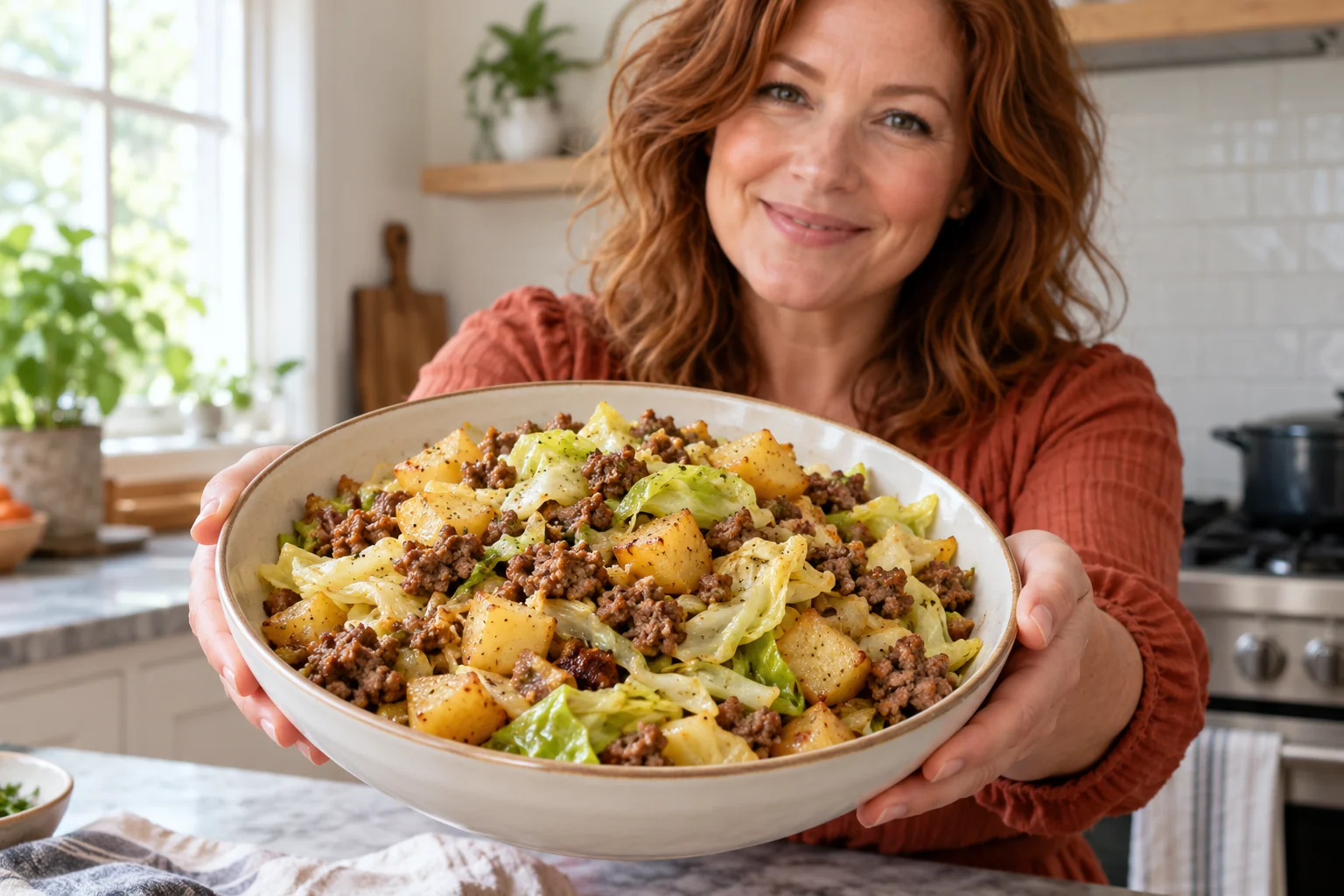
This ground beef and cabbage skillet includes small potato cubes rather than relying on an unlisted side. Tomato and paprika bind the cabbage to lean mince. Potatoes are steamed briefly first so they finish in the skillet without leaving the cabbage cooking for too long.
The 60-minute allowance covers cutting, potato steaming and skillet cooking; some tasks overlap. Larger potato cubes need longer.
Raw beef is 95% lean for the calculation. Another mince fat percentage changes energy and fat even if its cooked serving looks similar. For another preparation, see Gluten-Free Beef Stuffed Cabbage Rolls with Tomato Sauce.
Why Readers May Like It
- 1Measured portions, clear cooking guidance and practical doneness checks.
- 2Clear dry, cooked and drained ingredient weights.
- 3Four measured portions with cabbage, sauces and all listed sides included.
Recipe Summary and Estimated Nutrition
Nutrition is estimated from the listed ingredient weights and the specific USDA records or manufacturer references linked below. Weights labeled dry, raw, cooked or drained must be matched to that state.
4 servings
One serving is one quarter of the base batch. Values are estimates rather than laboratory analysis.
Per one quarter of the base recipe
Per one quarter of the base recipe
Per one quarter of the base recipe
Per one quarter of the base recipe
Brands, drained weights, substitutions and final serving sizes can change these values.
Ingredient-by-Ingredient Nutrition Breakdown
Gram weights are the calculation basis; household measures are approximate. The table includes all listed oil, sauce and toppings. All measured oil, sauces and sides are included. Discarded soaking, pressing or cooking water is not counted as consumed food.
| Ingredient | Amount used | Weight | Calories | Protein | Carbs | Fat |
|---|---|---|---|---|---|---|
| Ground beef, 95% lean / 5% fat, raw | about 1 lb 5 oz | 600 g | 822 kcal | 128.5 g | 0 g | 30 g |
| Green cabbage, raw edible leaves, cut into 1 cm strips | about 10 cups loosely packed | 700 g | 175 kcal | 9 g | 40.6 g | 0.7 g |
| Potatoes with skin, raw edible weight, cut into 1.5 cm cubes | about 4 medium | 700 g | 539 kcal | 14.3 g | 122.4 g | 0.6 g |
| Onion, raw, diced | about 1 large | 180 g | 72 kcal | 2 g | 16.8 g | 0.2 g |
| Canned crushed tomatoes | about 1 2/3 cups | 400 g | 128 kcal | 6.6 g | 29.2 g | 1.1 g |
| Olive oil: 10 g beef, 10 g vegetables | about 1 1/2 tablespoons | 20 g | 177 kcal | 0 g | 0 g | 20 g |
| Garlic, raw, finely grated | about 3 cloves | 12 g | 18 kcal | 0.8 g | 4 g | 0.1 g |
| Paprika, dried; smoked if desired | about 2 teaspoons | 5 g | 14 kcal | 0.7 g | 2.7 g | 0.6 g |
| Dried oregano | about 2 teaspoons | 2 g | 5 kcal | 0.2 g | 1.4 g | 0.1 g |
| Table salt | about 1/3 teaspoon | 2 g | 0 kcal | 0 g | 0 g | 0 g |
| Ground black pepper | about 1/2 teaspoon | 1 g | 3 kcal | 0.1 g | 0.6 g | 0 g |
| Water for skillet sauce | about 1 cup; potato steaming water is discarded | 250 g | 0 kcal | 0 g | 0 g | 0 g |
| Full recipe estimate | 4 servings | — | 1953 kcal | 162.2 g | 217.7 g | 53.4 g |
How This Nutrition Estimate Was Prepared
- Match each listed ingredient to its linked food record or stated label reference.
- Multiply the per-100-g values by the listed gram weight and add the unrounded ingredient values.
- Divide the full calculation by four servings, then round for the cards.
- Recalculate if you change the ingredient brand, amount or serving yield.
Ingredient cells are rounded independently. The footer sums displayed cells; per-serving cards use the unrounded calculation, so small rounding differences are expected. Final cooking yield and brands can change the estimate.
Ingredients
Measured ingredients
Step-by-Step Preparation
As an Amazon Associate we earn from qualifying purchases. Equipment links are paid affiliate links; use suitable tools you already own.
Equipment
- Wide deep skillet (paid link)
- Steamer basket and saucepan (paid link)
- Thin-tip food thermometer (paid link)
- Digital kitchen scale (paid link)
- Chef knife and board (paid link)
- Measuring spoons (paid link)
- Mixing bowl (paid link)
Before You Start
The 60-minute allowance covers cutting, potato steaming and skillet cooking; some tasks overlap. Larger potato cubes need longer.
Allow about 60 minutes for preparation, cooking all batches and any stated resting. Some tasks overlap; doneness checks take priority over the clock. Measure the listed oil before cooking and keep the sides within the stated four portions. Use the raw, dry, cooked or drained state specified for each ingredient.
Prepare potatoes and steam
10–12 minutes; overlaps choppingScrub potatoes and cut into similar 1.5 cm cubes, removing damaged areas. Place in a steamer basket over simmering water, cover and steam for 10–12 minutes until a knife enters with slight resistance. This steaming water is not consumed or counted. A digital kitchen scale (paid link) helps keep the measured quantities consistent.
Prepare skillet vegetables
8 minutesWhile potatoes steam, slice cabbage and dice onion on a clean board. Measure tomatoes, garlic, paprika, oregano, salt, pepper and 250 g sauce water. Keep raw beef separate from vegetables and cooked potatoes.
Brown the lean beef
7–9 minutesHeat 10 g oil in a wide deep skillet (paid link) over medium-high heat. Add beef in a loose layer and break into small crumbles, stirring and turning for about 7–9 minutes. Avoid compacting it into large lumps that brown outside while remaining cold within.
Check and reserve beef
2 minutesGather a mound and insert a thin thermometer away from the skillet surface. Check several areas reach at least 160°F / 71°C, then move cooked beef and cooked juices to a clean bowl. Use clean utensils and clean raw-meat contact surfaces.
Soften cabbage
9–11 minutesAdd the remaining 10 g oil and onion to the skillet. Cook for 3 minutes, then add cabbage gradually. Cook another 6–8 minutes, turning to prevent scorching. Stir garlic, paprika and oregano through for the final 30 seconds.
Simmer potatoes in tomato
8–10 minutesAdd steamed potatoes, tomatoes, 250 g water, salt and pepper. Fold together, cover loosely and simmer about 8–10 minutes until potatoes are fully tender. If liquid reduces before they soften, add plain water rather than extra oil.
Return beef and check texture
3 minutesFold in cooked beef and juices. Simmer uncovered for 2–3 minutes until hot and sauce clings to vegetables rather than pooling like soup. Check potato centers with a knife. A darker sauce is not a replacement for the earlier meat temperature check.
Divide the whole skillet
2 minutesStir from the bottom, then divide into four portions with equal shares of beef, potato, cabbage and sauce. Serve promptly. Transfer saved food to shallow containers rather than leaving the full skillet on the counter until cold.
How to Know It Is Ready
Ground beef reaches at least 160°F / 71°C in several checked mounds; potatoes are tender. A poultry substitution requires 165°F / 74°C.
Tender potato cubes, small lean-beef crumbles and soft cabbage with a short tomato coating.
One quarter of every listed component
What This Meal Provides and What to Consider
Meal Balance
- The measured batch supplies about 40.5 g protein per serving.
- Cabbage, the listed protein or legumes, accompaniments and measured cooking oil are included in the portion.
Things to Consider
- No major regulated allergen is intentionally included in the plain base ingredients; canned tomatoes, spices and cross-contact still need checking.
- Energy, sodium and saturated fat still depend on ingredients and portion size. This meal does not guarantee a particular fitness or health result.
Who May Enjoy This Recipe?
Cabbage meal planning
Home cooks looking for a measured beef lunch or dinner.
Home cooking
Raw beef is 95% lean for the calculation. Another mince fat percentage changes energy and fat even if its cooked serving looks similar.
Measured portions
People who want to understand how ingredient weights relate to a four-serving batch.
How to Adjust the Meal
Smaller appetite
Serve a smaller portion and save the rest safely. Recalculate nutrition for the portion you actually eat.
Larger appetite
Choose an appropriate larger portion or accompaniment and include those ingredients in the meal calculation.
Protein adjustments
If changing the main ingredients or listed sides, use its product label and recalculate. The amount can also change texture and cooking requirements.
Substitutions, Dietary Notes, and Allergens
Practical Substitutions
- Cooked white beans can replace beef only with a new calculation and adjusted method. Do not exchange raw and cooked weights gram for gram.
- Changing the protein, cabbage cut or accompaniment changes cooking time, texture and nutrition. Follow safe handling and doneness guidance for the replacement and recalculate the estimate.
Allergen Information
No major regulated allergen is intentionally included in the plain base ingredients; canned tomatoes, spices and cross-contact still need checking.
Check packaged ingredient labels for the allergens relevant to you. A substitution changes both the recipe and the calculation.
Storage and Meal Preparation
Refrigerate perishable food within 2 hours, or within 1 hour when surroundings exceed 90°F / 32°C. Use shallow containers and a refrigerator at 40°F / 4°C or colder. Follow the component-specific storage limits below; rice has a shorter storage window where specified. Reheat hot leftovers to 165°F / 74°C.
Keeping This Cabbage Meal
Refrigerate leftovers in shallow containers within 2 hours, or within 1 hour above 90°F / 32°C. Keep at 40°F / 4°C or below and use within 2 days, following an earlier ingredient use-by date. Do not leave a deep pan on the counter to cool completely.
Reheating the Meal
Reheat only the portion needed, covered with a small splash of plain water. Stir or turn for even heating and check several spots reach 165°F / 74°C. Keep any cold accompaniment separate.
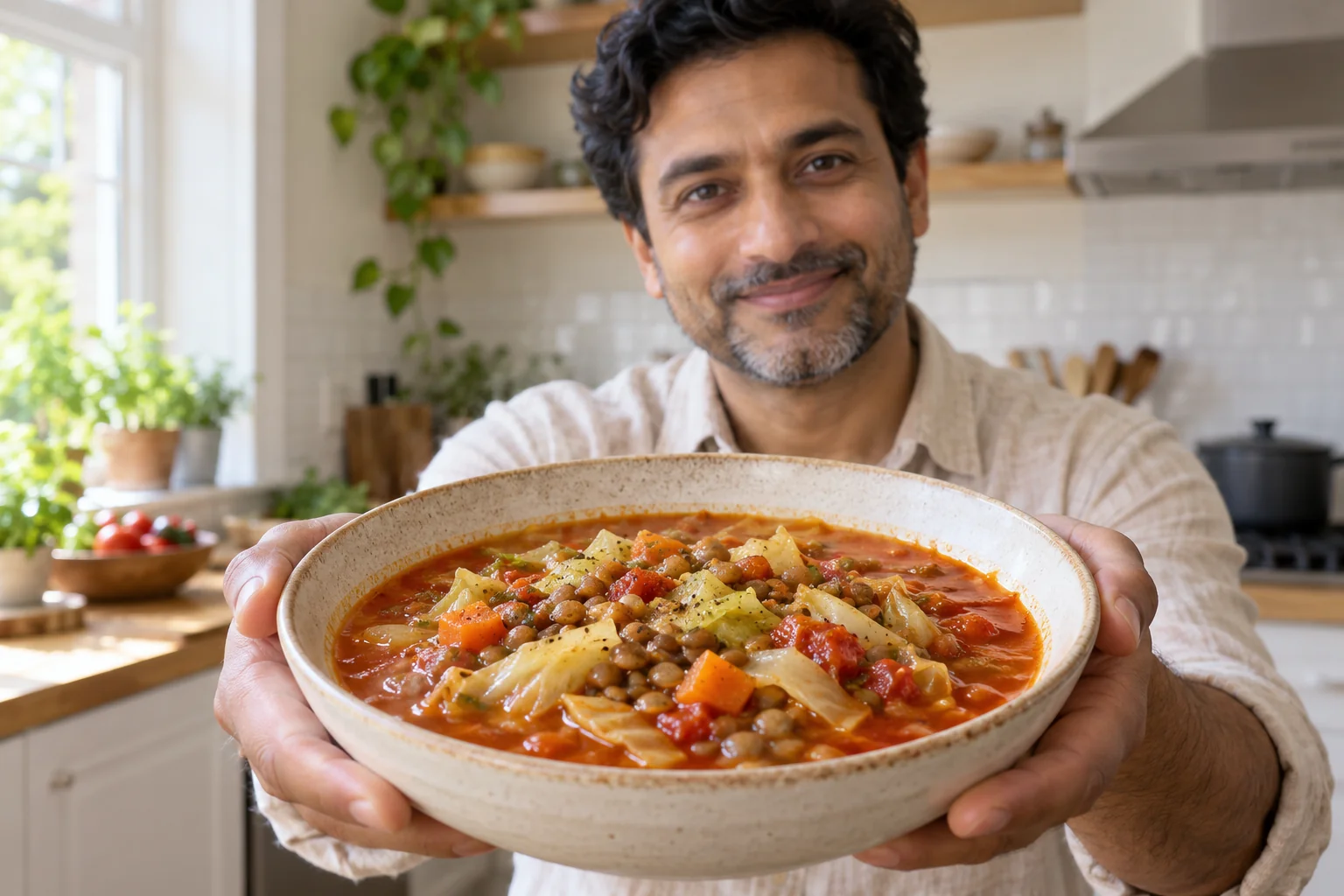
Follow USDA leftovers guidance. For another meal idea, browse Cabbage and Lentil Tomato Soup.
Frequently Asked Questions
The stated method pre-steams them for reliable timing. Raw cubes need more liquid and a longer covered simmer, changing cabbage texture and overall time.
Use a new nutrient calculation and cook ground turkey to 165°F / 74°C. Do not use the lower ground-beef temperature for poultry.
No. It is a potato-and-mince skillet with a short tomato coating, portioned as a solid meal rather than a broth-based soup.
Use the serving controls to scale gram quantities and serving count. Use additional trays or cook more batches; cooking time does not simply double. Household notes describe the base four-serving recipe.
Nutrition Sources and Recipe Notes
These values are planning estimates, not individualized nutrition advice. Use labels for your exact products when precision is important. The recipe has not been kitchen-tested and the image is a generated illustration of the intended dish.
Nutrition Data Sources
See our Nutrition Calculation Methodology for weights, rounding and substitutions.
Food Safety Reference
Useful Tools for This Recipe
As an Amazon Associate we earn from qualifying purchases. Equipment links are paid affiliate links; use suitable tools you already own.
These tools fit the preparation above. Use suitable equipment you already own, or compare options if you need an item.
Wide deep skillet
Holds cabbage and tomato with room to fold.
Compare on Amazon → (paid link)Paid link · opens in a new tabSteamer basket and saucepan
Pre-cooks evenly cut potatoes above simmering water.
Compare on Amazon → (paid link)Paid link · opens in a new tabThin-tip food thermometer
Checks beef and later reheated portions without touching the pan.
Compare on Amazon → (paid link)Paid link · opens in a new tab