About This Healthy Recipe
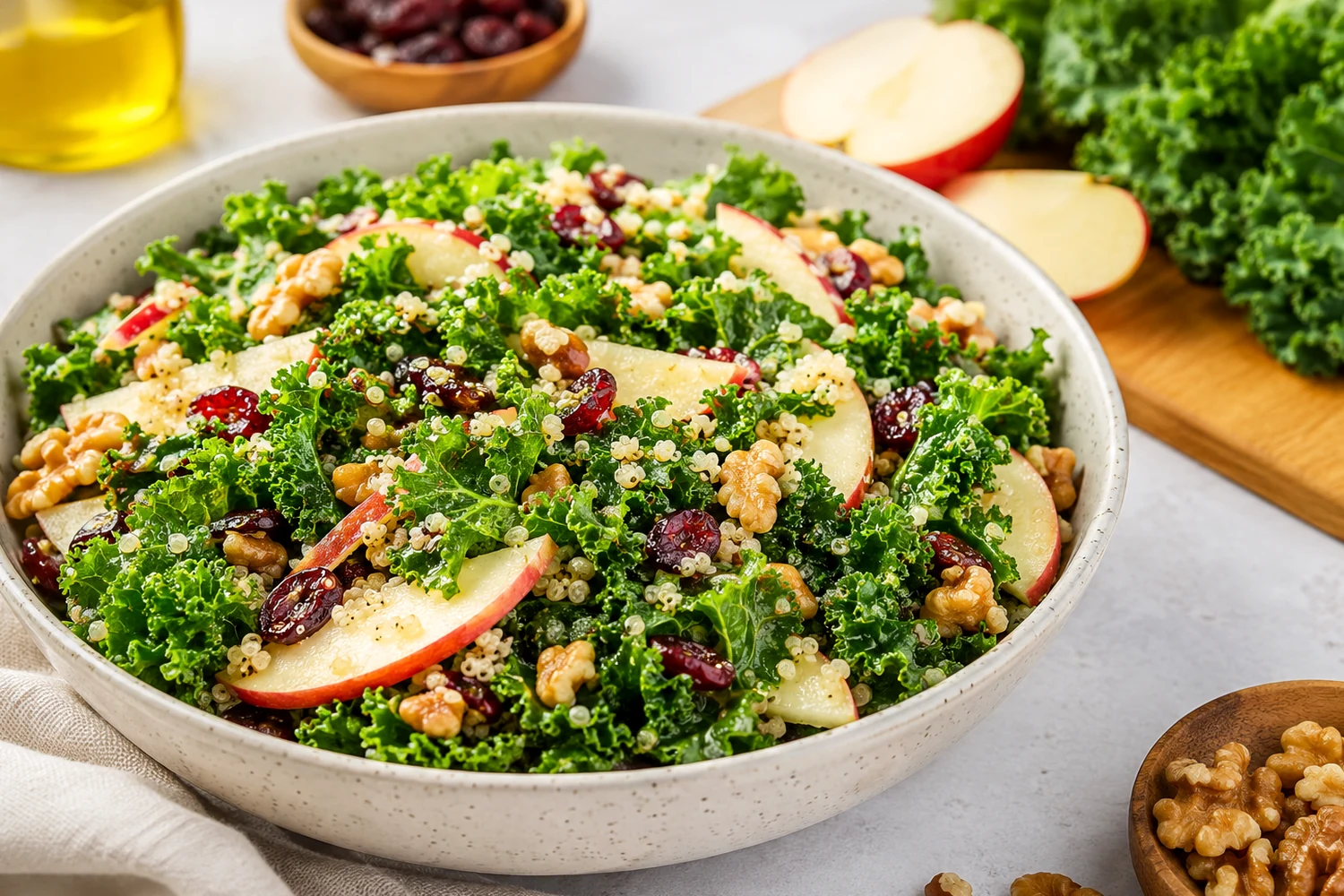
This kale pear walnut barley salad combines tender kale, cooked barley, pears, chickpeas, walnuts, dried cranberries, and a lemon-Dijon dressing. It is a sturdy make-ahead salad with whole grains and legumes, aligning with the growing interest in meals that combine protein and fiber rather than focusing on protein alone.
The ingredient amounts are measured for the listed yield so the recipe can be reproduced at home and the nutrition estimate can be checked against food labels or a reliable database.
This recipe is a healthy meal idea for general education, not a cure, guaranteed weight-loss method, or substitute for individualized nutrition care.
Why Readers May Like It
- 1Barley, chickpeas, kale, pears, and walnuts contribute fiber.
- 2Chickpeas, barley, walnuts, and feta add a mix of plant and dairy protein.
- 3Kale and barley hold texture well, making the salad useful for meal prep.
Recipe Summary and Estimated Nutrition
The values below are calculated for the exact ingredient weights listed in the base recipe. The four primary cards show calories, protein, carbohydrates, and total fat per serving; the detailed table shows how every ingredient contributes to the full recipe total.
4 servings
Calculated from measured ingredient weights and divided by 4 servings. Values are evidence-informed estimates rather than laboratory-tested results.
Estimated energy per serving
Calculated from all listed ingredients
Includes fiber and naturally occurring sugars
Includes saturated and unsaturated fat
Values are calculated before display rounding. Product labels, produce size, drained weight, cooking loss, and substitutions can change the final result.
Ingredient-by-Ingredient Nutrition Breakdown
Household measurements and gram weights are shown together so readers can reproduce the recipe and compare the estimate with another reliable database or the labels on the exact products they buy.
| Ingredient | Amount used | Weight | Calories | Protein | Carbs | Fat |
|---|---|---|---|---|---|---|
| Kale, stems removed and chopped | 10 cups loosely packed | 200 g | 70 kcal | 5.8 g | 8.8 g | 3 g |
| Cooked barley | 2 cups | 360 g | 443 kcal | 8.3 g | 101.5 g | 1.4 g |
| Ripe pears, sliced | 2 medium pears | 300 g | 171 kcal | 1.2 g | 45.6 g | 0.3 g |
| Cooked chickpeas, rinsed | 1½ cups | 240 g | 394 kcal | 21.4 g | 65.8 g | 6.2 g |
| Walnuts, chopped | ½ cup | 50 g | 327 kcal | 7.6 g | 6.8 g | 32.6 g |
| Dried cranberries | ⅓ cup | 40 g | 130 kcal | 0 g | 33 g | 0.4 g |
| Reduced-fat feta | ½ cup | 60 g | 158 kcal | 8.5 g | 2.5 g | 12.8 g |
| Extra-virgin olive oil | 1 tablespoon plus 1 teaspoon | 15 g | 133 kcal | 0 g | 0 g | 15 g |
| Fresh lemon juice | 2 tablespoons | 30 g | 7 kcal | 0.1 g | 2.1 g | 0.1 g |
| Dijon mustard | 1 tablespoon | 20 g | 13 kcal | 0.9 g | 1.2 g | 0.7 g |
| Calculated full-recipe total | 4 servings | 1315 g | 1845 kcal | 53.8 g | 267.2 g | 72.5 g |
How This Nutrition Estimate Was Prepared
- Every ingredient is assigned a specific gram weight instead of relying only on a cup, spoon, or item count.
- Standard unbranded food-composition values are aligned with the closest matching foods in USDA FoodData Central.
- Ingredient values are added for the full recipe, divided by the listed yield, and rounded only for display.
- Optional ingredients are excluded unless a measured amount is included in the base recipe.
Accuracy note: These numbers are credible estimates, not laboratory analysis. Weigh ingredients and calculate from the labels on the exact brands used when precision is important.
Ingredients
Greens
Whole grain
Fruit
Protein and fiber
Toppings
Dressing
Professional Step-by-Step Preparation
Equipment
Large cutting board, chef knife, measuring cups and spoons, mixing bowls, and the skillet, saucepan, sheet pan, or baking dish required by the steps below.
Before You Start
Wash produce, keep raw animal proteins separate from ready-to-eat ingredients, and use a clean food thermometer when the recipe includes meat, poultry, seafood, or eggs.
Cook and cool the barley
Cook barley according to package directions until chewy-tender. Drain well and cool.
Success tip: Keep the measured ingredient amounts consistent if you want the displayed nutrition estimate to remain comparable.
Massage the kale
Place chopped kale in a large bowl with half the lemon juice and massage for 1 to 2 minutes until slightly softened.
Success tip: Keep the measured ingredient amounts consistent if you want the displayed nutrition estimate to remain comparable.
Make the dressing
Whisk olive oil, remaining lemon juice, Dijon mustard, black pepper, and a small splash of water.
Success tip: Keep the measured ingredient amounts consistent if you want the displayed nutrition estimate to remain comparable.
Add grain and legumes
Add cooled barley and rinsed chickpeas to the kale.
Success tip: Keep the measured ingredient amounts consistent if you want the displayed nutrition estimate to remain comparable.
Add fruit and toppings
Fold in sliced pears, walnuts, cranberries, and feta.
Success tip: Keep the measured ingredient amounts consistent if you want the displayed nutrition estimate to remain comparable.
Dress and rest briefly
Toss with dressing and let stand for 10 minutes before serving so the flavors settle.
Success tip: Keep the measured ingredient amounts consistent if you want the displayed nutrition estimate to remain comparable.
How to Know It Is Ready
The grain or vegetables should be tender without becoming mushy.
Use the safe internal temperature stated in the cooking steps when animal protein or eggs are included.
The finished meal should have distinct textures, fresh flavor, and evenly distributed dressing or sauce.
Potential Benefits and Things to Consider
Potential Benefits
- Barley, chickpeas, kale, pears, and walnuts contribute fiber.
- Chickpeas, barley, walnuts, and feta add a mix of plant and dairy protein.
- Kale and barley hold texture well, making the salad useful for meal prep.
Things to Consider
- Barley contains gluten.
- Walnuts are a tree-nut allergen.
- Dried cranberries may contain added sugar depending on the product.
Who May Enjoy This Recipe?
It May Work Well For
- People prioritizing fiber-rich lunches.
- Vegetarians who include dairy.
- Meal-prep readers who want a salad that stays sturdy for several days.
Best Times to Eat It
- Lunch.
- Side dish with dinner.
- Meal prep for busy weekdays.
How to Adjust It for Different Goals
For fewer calories
Reduce walnuts, feta, and dried cranberries.
For more protein
Add extra chickpeas or serve with Greek yogurt on the side.
For more energy
Increase barley or pair with whole-grain bread.
Substitutions, Dietary Notes, and Allergens
Practical Substitutions
- Use apples instead of pears.
- Use quinoa instead of barley for a gluten-free version.
- Use pumpkin seeds instead of walnuts for a nut-free variation.
- Omit feta for a dairy-free version.
Allergen Information
Contains milk, tree nuts, and gluten. Packaged cranberries may be processed in facilities with other allergens.
Always check every packaged ingredient label because formulations and cross-contact statements can change.
Storage and Meal Preparation
Refrigerate for up to 3 days.
For best texture, add pears and walnuts shortly before serving if preparing far ahead.
Keep the salad chilled at 40°F (4°C) or below.
Discard perishable food that has been left at room temperature for more than 2 hours, or 1 hour when temperatures are above 90°F (32°C).
Frequently Asked Questions
Refrigerate for up to 3 days.
Use apples instead of pears.
Add extra chickpeas or serve with Greek yogurt on the side.
Follow the texture and food-safety cues in the preparation section and use a food thermometer whenever animal protein or eggs are included.
Each ingredient is assigned a gram weight. Standard food-composition estimates are multiplied by those weights, totaled for the full recipe, and divided by the listed yield before display rounding.
No. This recipe page provides general educational information and does not replace individualized guidance from a qualified health or nutrition professional.
Nutrition and Safety Note
This page is for general education. It does not diagnose, treat, or provide individualized diet advice. People with allergies, medical conditions, pregnancy, or specific nutrition requirements should seek qualified professional guidance.
Nutrition Data Source
For a clear explanation of ingredient weights, data sources, rounding, substitutions, and estimate limitations, read our Nutrition Calculation Methodology.