Published by Best Fitness Routine. Editorial standards · Report a correction. Educational guidance; no individual clinical review is claimed unless a qualified reviewer is named.
About This Healthy Recipe
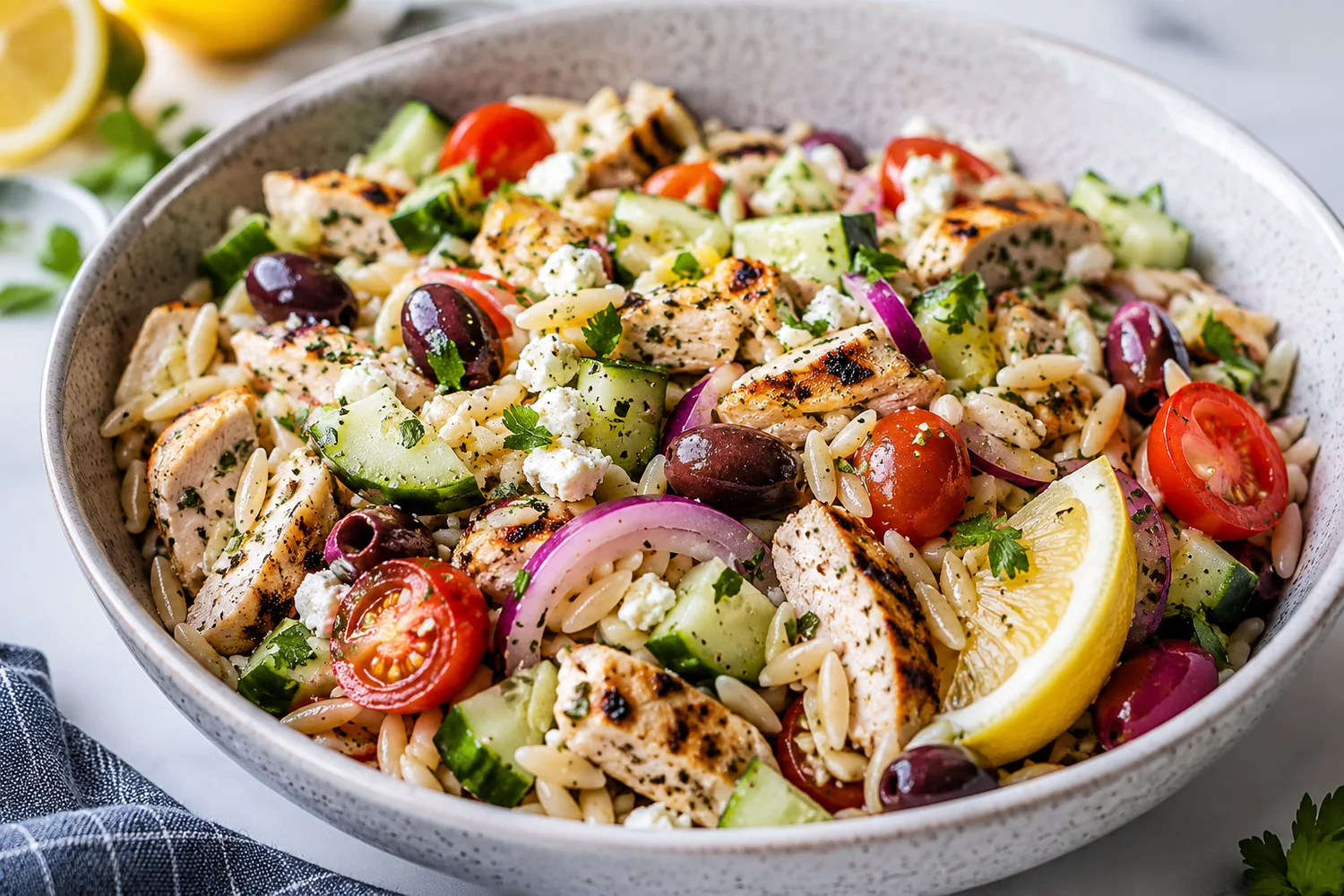
Grilled chicken breast, orzo, cucumber, cherry tomatoes, red onion, olives, feta, lemon, and herbs turn a pasta salad into a protein-forward lunch. The dressing uses a measured amount of olive oil and plenty of lemon so the salad tastes bright without being oil-heavy.
The ingredients are measured in household units and gram weights so the finished meal can be reproduced more consistently. Cooking times are realistic for home kitchens, while product brands, produce size, draining, and cooking loss can change the final nutrition estimate.
This high-protein mediterranean chicken orzo salad is presented as a practical healthy meal for general education. It can fit many active lifestyles, but it is not a cure, guaranteed weight-loss method, or substitute for individualized nutrition care.
Why Readers May Like It
- 1A familiar pasta salad with substantially more protein.
- 2Fresh vegetables keep the meal bright and crunchy.
- 3Works well for packed lunches.
Recipe Summary and Estimated Nutrition
The values below are calculated for the exact ingredient weights listed in the base recipe. The four primary cards show calories, protein, carbohydrates, and total fat per serving; the detailed table shows how every ingredient contributes to the full recipe total.
4 servings
Calculated from measured ingredient weights and divided by 4 servings. Values are evidence-informed estimates rather than laboratory-tested results.
Estimated energy per serving
Calculated from all listed ingredients
Includes fiber and naturally occurring sugars
Includes saturated and unsaturated fat
Values are calculated before display rounding. Product labels, produce size, drained weight, cooking loss, and substitutions can change the final result.
Ingredient-by-Ingredient Nutrition Breakdown
Household measurements and gram weights are shown together so readers can reproduce the recipe and compare the estimate with another reliable database or the labels on the exact products they buy.
| Ingredient | Amount used | Weight | Calories | Protein | Carbs | Fat |
|---|---|---|---|---|---|---|
| Cooked chicken breast, sliced | 3½ cups cooked chicken breast | 500 g | 825 kcal | 155.0 g | 0.0 g | 18.0 g |
| Cooked orzo | 2½ cups cooked orzo | 400 g | 632 kcal | 23.2 g | 123.6 g | 3.6 g |
| Cucumber | 1½ cups chopped cucumber | 200 g | 30 kcal | 1.4 g | 7.2 g | 0.2 g |
| Cherry tomatoes | 1½ cups cherry tomatoes | 200 g | 36 kcal | 1.8 g | 7.8 g | 0.4 g |
| Red onion | ½ cup sliced red onion | 60 g | 24 kcal | 0.7 g | 5.6 g | 0.1 g |
| Feta cheese | ¾ cup crumbled feta | 80 g | 212 kcal | 11.4 g | 3.1 g | 17.2 g |
| Kalamata olives | ½ cup Kalamata olives | 60 g | 70 kcal | 0.5 g | 3.6 g | 6.5 g |
| Extra-virgin olive oil | 1½ tablespoons olive oil | 20 g | 177 kcal | 0.0 g | 0.0 g | 20.0 g |
| Fresh lemon juice | 2 tablespoons lemon juice | 30 g | 9 kcal | 0.3 g | 2.8 g | 0.1 g |
| Fresh parsley and dill | ½ cup chopped parsley and dill | 30 g | 11 kcal | 0.9 g | 1.9 g | 0.2 g |
| Calculated full-recipe total | 4 servings | 1580 g | 2025 kcal | 195.1 g | 155.6 g | 66.3 g |
How This Nutrition Estimate Was Prepared
- Every ingredient is assigned a gram weight instead of relying only on cups, spoons, or item counts.
- Standard unbranded food-composition values are aligned with the closest matching generic item in USDA FoodData Central.
- Ingredient values are added for the full recipe and divided by the listed yield before display rounding.
- Optional toppings and substitutions are excluded unless a measured amount appears in the ingredient list.
Accuracy note: These numbers are credible estimates, not laboratory analysis. For the closest personal result, weigh the ingredients and calculate from the labels on the exact brands used.
Ingredients
Protein
Pasta
Vegetables
Toppings
Dressing
Professional Step-by-Step Preparation
As an Amazon Associate I earn from qualifying purchases. Tool links below are paid links.
Equipment
Use basic home-kitchen equipment suited to this recipe: cutting board (paid link), chef’s knife (paid link), measuring cups and spoons (paid link), mixing bowls (paid link), and the cookware named in the steps. A reliable instant-read food thermometer (paid link) is recommended whenever meat, poultry, fish, shellfish, eggs, or reheated leftovers are involved.
Before You Start
Measure the ingredients, wash produce, keep raw animal proteins separate from ready-to-eat foods, and read all steps before cooking. Prepare cold toppings only after raw-protein surfaces have been cleaned.
Cook and cool the orzo
Cook orzo until al dente, drain, and spread on a tray so it cools without continuing to steam.
Cook the chicken
Season chicken simply and grill (paid link) or pan-cook until the thickest part reaches 165°F (74°C). Rest before slicing.
Prepare the vegetables
Chop cucumber, tomatoes, onion, parsley, and dill while the pasta and chicken cool. Use a chef’s knife (paid link) for even cuts before proceeding.
Make the lemon dressing
Whisk (paid link) lemon juice, olive oil, black pepper, oregano, and a small pinch of salt.
Combine the salad
Toss orzo, chicken, cucumber, tomatoes, onion, olives, herbs, and dressing gently. Combine the ingredients in a mixing bowl (paid link) with enough room to avoid spilling.
Finish with feta
Fold in feta last so it remains in visible pieces. Chill or serve at cool room temperature.
How to Know It Is Ready
Chicken reaches 165°F (74°C), orzo is tender but not mushy, and the salad is cool enough that the vegetables stay crisp.
The grains, vegetables, or fresh toppings should keep their intended texture rather than becoming watery or overcooked.
Hot components should be hot, chilled components should remain cold, and sauces should coat rather than flood the meal.
Potential Benefits and Things to Consider
Potential Benefits
- Chicken contributes complete protein for muscle maintenance.
- Vegetables and herbs add volume and micronutrients.
- A measured olive-oil portion adds unsaturated fat.
Things to Consider
- Contains wheat/gluten and milk.
- Olives and feta can raise sodium.
- Cooked chicken must be handled and chilled safely.
These points describe the nutrient profile and practical use of the meal, not guaranteed outcomes. Overall diet quality, portion size, activity level, medical history, and individual needs matter more than any single recipe.
Who May Enjoy This Recipe?
It May Work Well For
- People who want a high-protein cold lunch.
- Meal preppers who enjoy Mediterranean flavors.
- Active adults who want carbohydrates and protein together.
Best Times to Eat It
- Lunch.
- Post-workout meal.
- Warm-weather dinner.
A recipe can be nutritious and still require changes for allergies, medical conditions, pregnancy, cultural preferences, medications, or a professionally prescribed eating plan.
How to Adjust It for Different Goals
For fewer calories
Reduce orzo and feta, then add more cucumber and tomatoes.
For more protein
Increase chicken or add extra Greek-yogurt dressing on the side.
For more energy
Increase the orzo portion or add whole-grain pita.
Any adjustment changes calories and macronutrients. Recalculate the recipe from the actual gram weights and product labels rather than assuming the original numbers still apply.
Substitutions, Dietary Notes, and Allergens
Practical Substitutions
- Use whole-wheat couscous instead of orzo.
- Use chickpeas for part of the chicken if you want more plant protein and fiber.
- Use reduced-fat feta to lower saturated fat.
Allergen Information
Contains wheat/gluten and milk. Olives and packaged feta may be high in sodium.
Always check every packaged ingredient label because formulations and cross-contact statements can change.
Storage and Meal Preparation
Refrigerate within 2 hours and use within 3–4 days.
Keep a little dressing separate if preparing several days ahead.
Do not leave the chicken salad at room temperature for more than 2 hours.
Discard perishable food that has been at room temperature for more than 2 hours, or 1 hour when the temperature is above 90°F (32°C). When in doubt, do not taste food to test safety.
Frequently Asked Questions
Refrigerate within 2 hours and use within 3–4 days.
Use whole-wheat couscous instead of orzo.
Increase chicken or add extra Greek-yogurt dressing on the side. Recalculate nutrition after changing ingredient quantities.
Chicken reaches 165°F (74°C), orzo is tender but not mushy, and the salad is cool enough that the vegetables stay crisp.
Each ingredient is assigned a gram weight. Standard unbranded food-composition values are multiplied by those weights, added for the full recipe, and divided by the listed servings before display rounding. Product labels and substitutions can change the result.
No. This recipe page provides general educational information and does not replace individualized guidance from a qualified health or nutrition professional.
Nutrition and Safety Note
This page is for general education. It does not diagnose, treat, or provide individualized diet advice. People with allergies, medical conditions, pregnancy, or specific nutrition requirements should seek qualified professional guidance.
Nutrition Data Source
For a clear explanation of ingredient weights, data sources, rounding, substitutions, and estimate limitations, read our Nutrition Calculation Methodology.
General Nutrition References
Recipe development note: this page does not claim independent kitchen testing. The image is illustrative and does not document a tested result. Ingredient-based nutrition estimates can change with brands, weighing state, preparation and serving size; use exact labels when precision matters.