Published by Best Fitness Routine. Editorial standards · Report a correction. Educational guidance; no individual clinical review is claimed unless a qualified reviewer is named.
About This Healthy Recipe
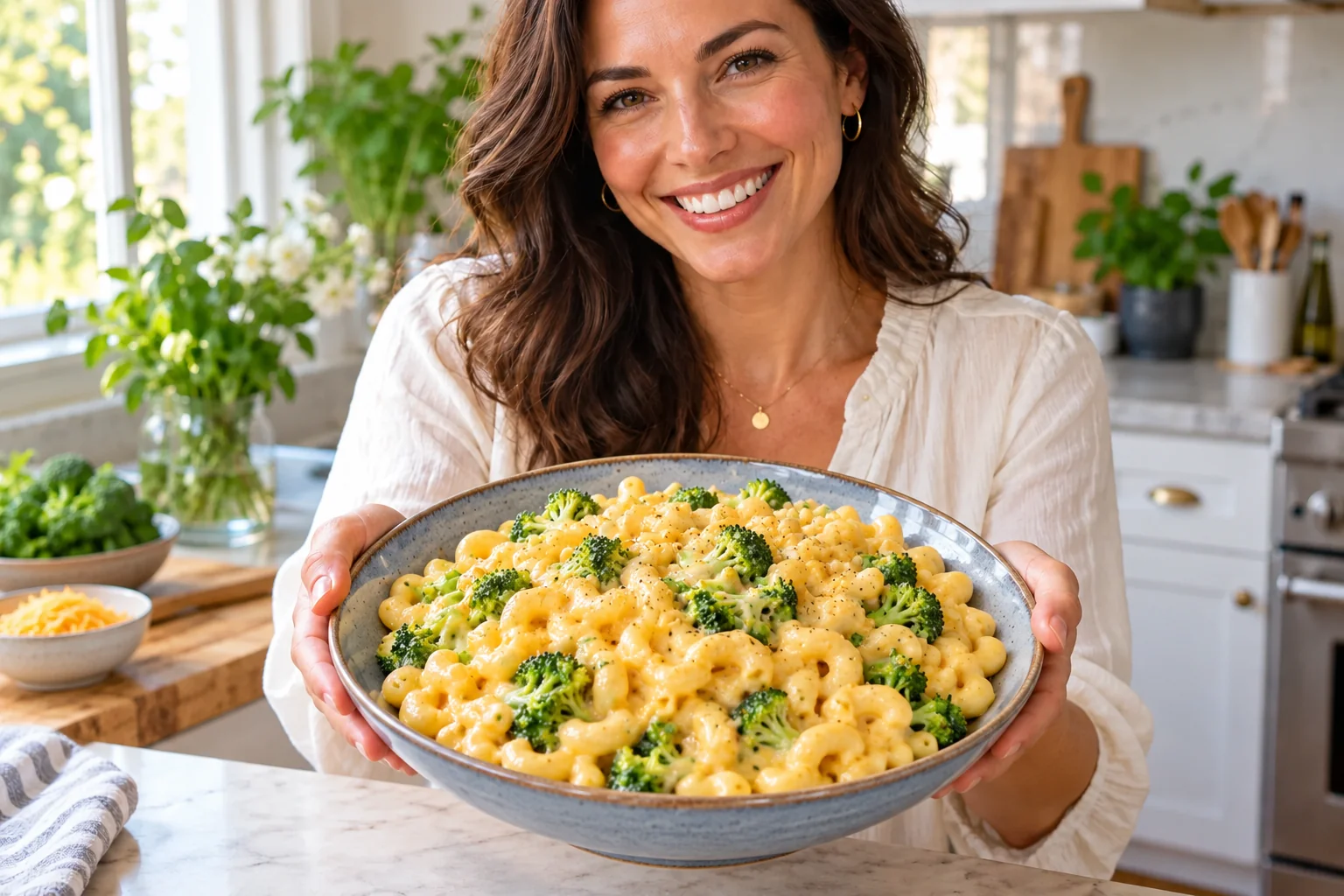
This cottage cheese mac and cheese with broccoli combines familiar elbow pasta with a smooth, blended cheese sauce. Broccoli cooks in the pasta pot near the end, while cottage cheese, milk and a measured amount of cheddar make the sauce without a flour-and-butter roux.
Low heat matters more than extra cheese: boiling the cottage-cheese mixture can make it grainy. A countertop blender gives a smoother result than briefly stirring the curds by hand.
Use the dry pasta weight. A cup of cooked macaroni is not equivalent to a cup of dry elbows, and changing that basis changes both portions and the nutrition estimate. For another preparation, see High-Protein Cottage Cheese Chicken Alfredo Pasta with Broccoli.
Why Readers May Like It
- 1Measured portions, a clear sauce method and practical doneness checks.
- 2Clear dry, cooked and drained ingredient weights.
- 3A complete four-serving pasta meal with the sauce and toppings included.
Recipe Summary and Estimated Nutrition
Nutrition is estimated from the listed ingredient weights and the specific USDA records or manufacturer references linked below. Weights labeled dry, raw, cooked or drained must be matched to that state.
4 servings
One serving is one quarter of the base batch. Values are estimates rather than laboratory analysis.
Per one quarter of the base recipe
Per one quarter of the base recipe
Per one quarter of the base recipe
Per one quarter of the base recipe
Brands, drained weights, substitutions and final serving sizes can change these values.
Ingredient-by-Ingredient Nutrition Breakdown
Gram weights are the calculation basis; household measures are approximate. The table includes all listed oil, sauce and toppings. Plain pasta-boiling water is drained and is not a nutrient-bearing ingredient.
| Ingredient | Amount used | Weight | Calories | Protein | Carbs | Fat |
|---|---|---|---|---|---|---|
| Whole-wheat elbow macaroni, dry | about 10 oz | 280 g | 986 kcal | 38.8 g | 205.4 g | 8.2 g |
| Low-fat 1% cottage cheese | about 2 2/3 cups | 600 g | 432 kcal | 74.3 g | 16.3 g | 6.1 g |
| Broccoli, small florets and thinly sliced peeled stems | about 6 cups | 500 g | 170 kcal | 14.1 g | 33.2 g | 1.9 g |
| Skim milk | about 2/3 US cup | 160 g | 54 kcal | 5.4 g | 7.9 g | 0.1 g |
| Cheddar, finely grated | about 1/2 cup | 60 g | 242 kcal | 13.7 g | 2 g | 20 g |
| Prepared yellow mustard | about 2 tsp | 10 g | 6 kcal | 0.4 g | 0.6 g | 0.3 g |
| Garlic, finely grated | 2 cloves | 6 g | 9 kcal | 0.4 g | 2 g | 0 g |
| Ground black pepper | about 1/2 tsp | 1 g | 3 kcal | 0.1 g | 0.6 g | 0 g |
| Table salt, for the sauce | about 1/6 tsp | 1 g | 0 kcal | 0 g | 0 g | 0 g |
| Full recipe estimate | 4 servings | — | 1902 kcal | 147.2 g | 268 g | 36.6 g |
How This Nutrition Estimate Was Prepared
- Match each listed ingredient to its linked food record or stated label reference.
- Multiply the per-100-g values by the listed gram weight and add the unrounded ingredient values.
- Divide the full calculation by four servings, then round for the cards.
- Recalculate if you change the ingredient brand, amount or serving yield.
Ingredient cells are rounded independently. The footer sums displayed cells; per-serving cards use the unrounded calculation, so small rounding differences are expected. Final cooking yield and brands can change the estimate.
Ingredients
Measured ingredients
Step-by-Step Preparation
As an Amazon Associate we earn from qualifying purchases. Equipment links are paid affiliate links; use suitable tools you already own.
Equipment
- Digital kitchen scale (paid link)
- Chef’s knife (paid link)
- Cutting board (paid link)
- Large pasta pot (paid link)
- Colander (paid link)
- Wide saucepan or skillet (paid link)
- Blender or food processor (paid link)
- Shallow food containers (paid link)
Before You Start
Low heat matters more than extra cheese: boiling the cottage-cheese mixture can make it grainy. A countertop blender gives a smoother result than briefly stirring the curds by hand.
Allow about 35 minutes. Components can overlap; use the doneness cues rather than the clock alone. Measure ingredients and prepare the vegetables before heating the pan. Use the listed dry, raw or drained state for each weight.
Prepare the sauce ingredients
5 minutesGrate the cheddar finely and cut broccoli into small, even pieces. Set the milk and cottage cheese out only while preparing the other ingredients; keep total room-temperature time within safe limits. A digital kitchen scale (paid link) helps keep the measured quantities consistent.
Blend until completely smooth
1–2 minutesBlend cottage cheese, milk, mustard, garlic, pepper and the measured salt for 45–60 seconds, scraping the sides as needed. The mixture should have no visible curds before heating.
Boil the macaroni
To package timingBring a large pot (paid link) of unsalted water to a boil. Cook the dry macaroni according to its package, stirring after adding it. Begin checking the texture a minute before the suggested finish.
Cook broccoli with the pasta
3–4 minutesAdd broccoli to the boiling pasta for the final 3–4 minutes. Keep the water at a gentle boil until the stems are tender enough to bite but the florets still hold their shape.
Drain and retain some water
1 minuteReserve a mug of cooking water, then drain the pasta and broccoli in a colander. Return them to the warm pot with the heat switched off.
Coat gently, without boiling
2–3 minutesStir in the blended sauce and cheddar. Warm over the lowest heat just until hot and the cheese has melted, stirring constantly. Do not boil; loosen with reserved water a tablespoon at a time only if needed.
Check the finished texture
1 minuteThe sauce should coat the elbows rather than sit in a separate watery layer. If it tightens while standing, fold in a little more warm water. Taste before adding any unlisted salt.
Serve four complete portions
1 minuteDivide both pasta and broccoli equally between four bowls. Serve promptly. Extra cheese, breadcrumbs or oil are not included in the nutrition estimate.
How to Know It Is Ready
Pasta has no raw center and the cooked sauce is hot throughout. Reheated leftovers reach 165°F / 74°C.
Pasta is tender and the sauce coats it at the consistency described in the method.
One quarter of every listed ingredient, including pasta, sauce and any measured topping.
What This Meal Provides and What to Consider
Meal Balance
- The measured batch supplies about 36.8 g protein per serving.
- Pasta, the listed protein source and vegetables are included in the complete meal.
Things to Consider
- Wheat and milk. Use vegetarian-rennet cheddar if required.
- Energy, sodium and saturated fat still depend on ingredients and portion size. This meal does not guarantee a particular fitness or health result.
Who May Enjoy This Recipe?
Pasta meal planning
Home cooks looking for a measured vegetarian lunch or dinner.
Home cooking
Use the dry pasta weight. A cup of cooked macaroni is not equivalent to a cup of dry elbows, and changing that basis changes both portions and the nutrition estimate.
Measured portions
People who want to understand how ingredient weights relate to a four-serving batch.
How to Adjust the Meal
Smaller appetite
Serve a smaller portion and save the rest safely. Recalculate nutrition for the portion you actually eat.
Larger appetite
Choose an appropriate larger portion or accompaniment and include those ingredients in the meal calculation.
Protein adjustments
If changing the main protein or pasta, use its product label and recalculate. The amount can also change texture and cooking requirements.
Substitutions, Dietary Notes, and Allergens
Practical Substitutions
- Use cauliflower florets instead of broccoli for a different vegetable; cook until just tender. Lactose-free dairy may suit some readers, but it does not remove milk protein allergens.
- Use the package directions for an alternative pasta and recalculate if its nutrient label differs.
Allergen Information
Wheat and milk. Use vegetarian-rennet cheddar if required.
Check packaged ingredient labels for the allergens relevant to you. A substitution changes both the recipe and the calculation.
Storage and Meal Preparation
Refrigerate perishable food within 2 hours, or within 1 hour when surroundings exceed 90°F / 32°C. Use shallow containers and a refrigerator at 40°F / 4°C or colder. Use safely handled cooked leftovers within 3–4 days; reheat hot leftovers to 165°F / 74°C.
Keeping This Pasta Meal
For leftovers, add a spoonful of water before reheating; a dairy sauce will usually be less silky on the second day. Reheat the complete portion to 165°F / 74°C.
Reheating the Meal
Reheat the portion you plan to eat to 165°F / 74°C throughout. Add a little water if needed to loosen the sauce and check several places because microwave heating can be uneven. Pasta and dairy sauce textures may change after storage.
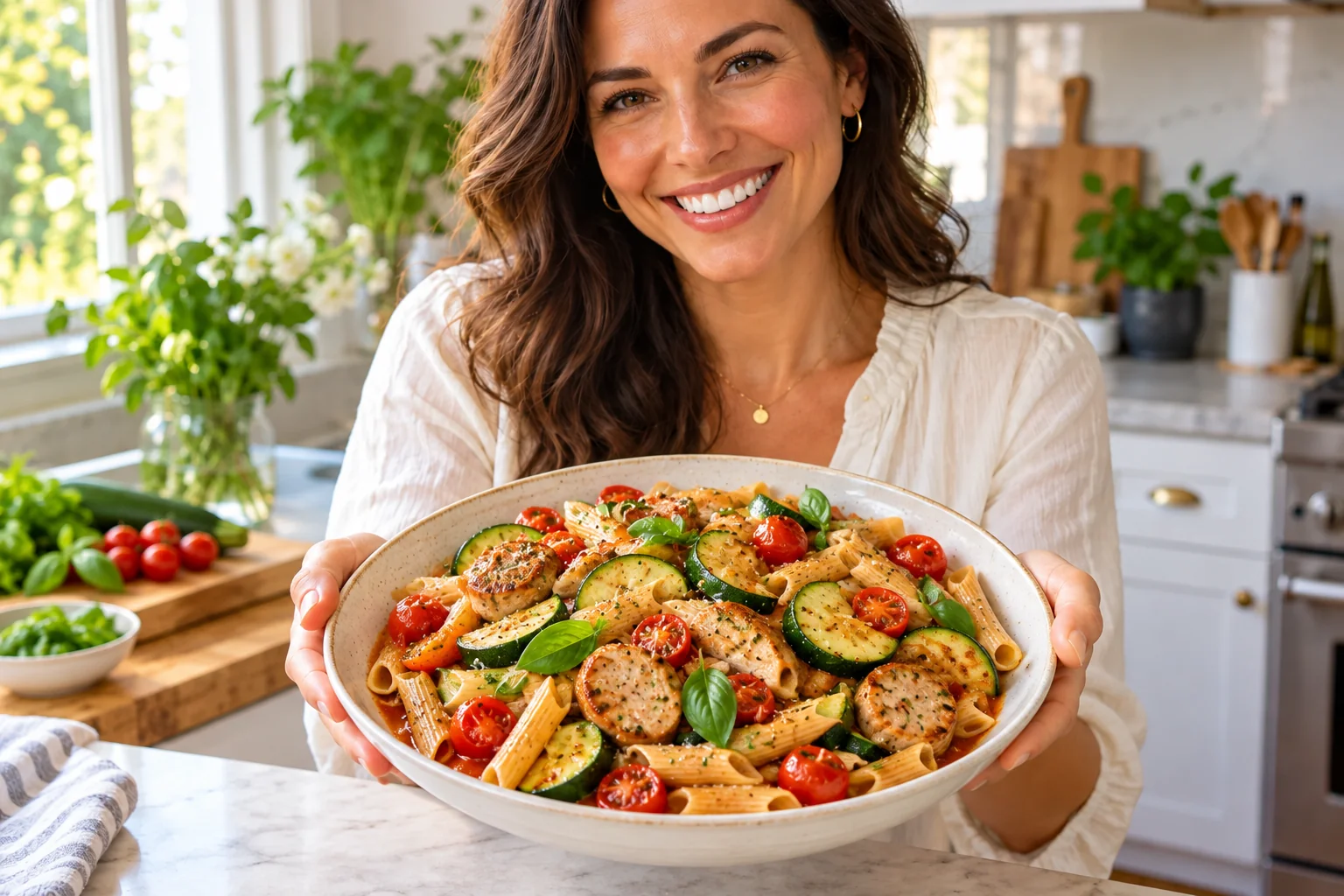
Follow USDA leftovers guidance. For another sauce and ingredient combination, browse Chicken Sausage and Zucchini Pasta.
Frequently Asked Questions
Yes, using the same dry weight. Its cooking time, fiber and protein may differ; use the package instructions and recalculate nutrition if precision matters.
High heat or incompletely blended curds can cause a grainy result. Blend thoroughly, add the sauce off the heat and warm it gently without a rolling boil.
You can develop a baked variation, but the topping, oven time and extra ingredients are not part of this stovetop recipe or its nutrition estimate.
Use the serving controls to scale the gram quantities and serving count. Use larger cookware or cook in batches; cooking time does not simply double. Approximate household notes below remain at the base four-serving amounts.
Nutrition Sources and Recipe Notes
These values are planning estimates, not individualized nutrition advice. Use labels for your exact products when precision is important. The recipe has not been kitchen-tested and the image is a generated illustration of the intended dish.
Nutrition Data Sources
See our Nutrition Calculation Methodology for weights, rounding and substitutions.
Food Safety Reference
Recipe development note: this page does not claim independent kitchen testing. The image is illustrative and does not document a tested result. Ingredient-based nutrition estimates can change with brands, weighing state, preparation and serving size; use exact labels when precision matters.
Useful Tools for This Recipe
As an Amazon Associate we earn from qualifying purchases. Equipment links are paid affiliate links; use suitable tools you already own.
These tools fit the preparation above. Use suitable equipment you already own, or compare options if you need an item.
Digital kitchen scale
Weigh the raw, dry and drained amounts listed in the recipe.
Compare on Amazon → (paid link)Paid link · opens in a new tabChef’s knife
Prepare ingredients in the sizes described by the method.
Compare on Amazon → (paid link)Paid link · opens in a new tabCutting board
Keep preparation surfaces clean and separate raw animal foods from cooked food.
Compare on Amazon → (paid link)Paid link · opens in a new tabLarge pasta pot
Allow enough room for pasta to boil and be stirred.
Compare on Amazon → (paid link)Paid link · opens in a new tabColander
Drain pasta after reserving the required cooking water.
Compare on Amazon → (paid link)Paid link · opens in a new tabWide saucepan or skillet
Use a suitable pan for the sauce and other cooked components.
Compare on Amazon → (paid link)Paid link · opens in a new tabBlender or food processor
Blend the sauce ingredients as described and follow the maker’s guidance for warm liquids.
Compare on Amazon → (paid link)Paid link · opens in a new tabShallow food containers
Cool and refrigerate planned leftovers promptly.
Compare on Amazon → (paid link)Paid link · opens in a new tab