Published by Best Fitness Routine. Editorial standards · Report a correction. Educational guidance; no individual clinical review is claimed unless a qualified reviewer is named.
About This Healthy Recipe
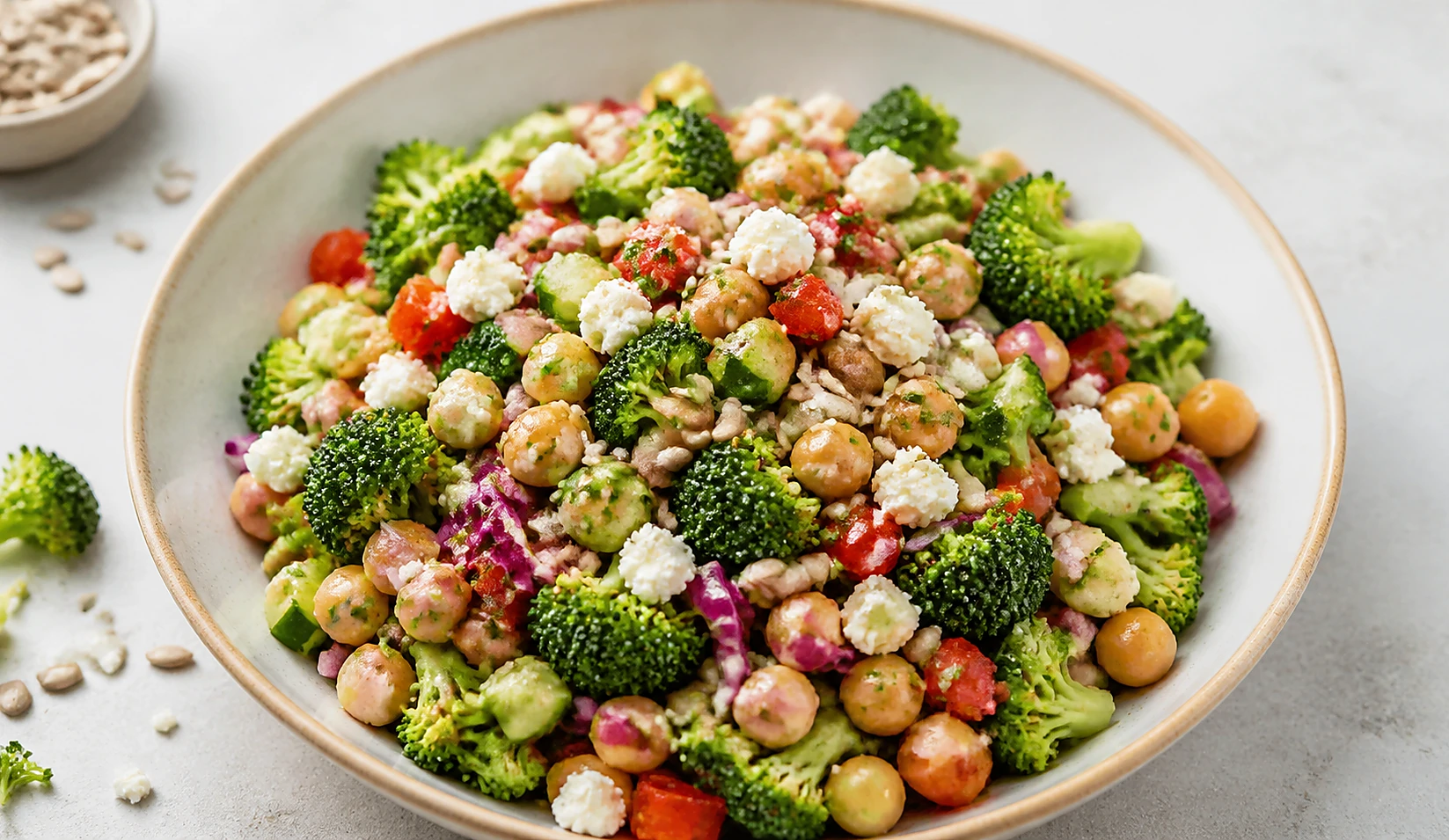
A chopped broccoli chickpea salad with red cabbage, apple, feta, sunflower seeds, and lemon yogurt dressing for a fiber-rich make-ahead lunch.
The ingredients are widely available in U.S. supermarkets and are shown with household measures and gram weights. That makes the recipe practical for everyday cooking while keeping the estimated nutrition transparent.
This page provides general food and fitness education, not individualized medical or diet treatment.
Why Readers May Like It
- 1Broccoli, chickpeas, cabbage, and apple contribute substantial fiber.
- 2Chickpeas, yogurt, feta, and seeds provide protein from multiple sources.
- 3The chopped texture keeps well for meal prep.
Recipe Summary and Estimated Nutrition
Values are calculated from the listed ingredient weights and divided by 4 servings. Product labels, produce size, cooking loss, drained weight, and substitutions can change the result.
4 servings
USDA-aligned generic food estimates divided by the listed yield.
Estimated energy per serving
Calculated from listed ingredients
Includes fiber and sugars
Includes unsaturated and saturated fat
Ingredient-by-Ingredient Nutrition Breakdown
| Ingredient | Amount used | Weight | Calories | Protein | Carbs | Fat |
|---|---|---|---|---|---|---|
| Broccoli florets, finely chopped | 5 cups | 455.0 g | 155 kcal | 12.7 g | 30.0 g | 1.8 g |
| Chickpeas | 2 cups drained | 330.0 g | 541 kcal | 29.4 g | 90.4 g | 8.6 g |
| Red cabbage, shredded | 2 cups | 180.0 g | 56 kcal | 2.5 g | 13.3 g | 0.4 g |
| Apple, diced | 1 large | 220.0 g | 114 kcal | 0.7 g | 30.4 g | 0.4 g |
| Crumbled feta | 1/2 cup | 75.0 g | 198 kcal | 10.7 g | 3.1 g | 16.0 g |
| Sunflower seeds | 1/3 cup | 45.0 g | 263 kcal | 9.4 g | 9.0 g | 23.2 g |
| Plain nonfat Greek yogurt | 3/4 cup | 180.0 g | 106 kcal | 18.5 g | 6.5 g | 0.7 g |
| Lemon juice | 2 tablespoons | 30.0 g | 9 kcal | 0.3 g | 2.8 g | 0.1 g |
| Total of listed ingredient estimates | 4 servings | 1515 g | 1442 kcal | 84.2 g | 185.5 g | 51.2 g |
How This Nutrition Estimate Was Prepared
- Each ingredient has an explicit gram weight.
- Generic food-composition estimates are aligned with USDA FoodData Central.
- Full-recipe values are divided by the listed yield before display rounding.
- Optional ingredients are excluded unless measured in the base recipe.
Accuracy note: These values are approximate ingredient estimates, not independently verified nutrition analysis. Use exact package labels when precision is important.
These totals sum the displayed ingredient estimates and divide by the listed servings. They are approximate, not independently verified nutrition analysis. Raw versus cooked weights, brands, seasoning and substitutions can change the result.
Ingredients
Vegetables and legumes
Fruit and finish
Dressing
Professional Step-by-Step Preparation
As an Amazon Associate I earn from qualifying purchases. Tool links below are paid links.
Equipment
Cutting board (paid link), chef knife (paid link), measuring tools, mixing bowls (paid link), and the cookware described in the directions.
Before You Start
Wash produce, keep raw animal proteins separate from ready-to-eat foods, and use a food thermometer where appropriate.
Chop the vegetables
Finely chop broccoli and shred cabbage so the salad is easy to eat. Use a chef’s knife (paid link) for even cuts before proceeding. Weigh the listed ingredient quantities with a digital kitchen scale (paid link) before starting this step.
Success tip: Keep measured ingredients consistent when comparing the displayed nutrition estimate.
Rinse the chickpeas
Drain and rinse chickpeas thoroughly, then pat dry.
Success tip: Keep measured ingredients consistent when comparing the displayed nutrition estimate.
Make the dressing
Whisk (paid link) Greek yogurt and lemon juice with black pepper.
Success tip: Keep measured ingredients consistent when comparing the displayed nutrition estimate.
Combine
Toss broccoli, chickpeas, cabbage, apple, feta, and sunflower seeds with dressing. Combine the ingredients in a mixing bowl (paid link) with enough room to avoid spilling.
Success tip: Keep measured ingredients consistent when comparing the displayed nutrition estimate.
Chill
Refrigerate 15 minutes before serving to let the flavors combine.
Success tip: Keep measured ingredients consistent when comparing the displayed nutrition estimate.
Potential Benefits and Things to Consider
Potential Benefits
- Broccoli, chickpeas, cabbage, and apple contribute substantial fiber.
- Chickpeas, yogurt, feta, and seeds provide protein from multiple sources.
- The chopped texture keeps well for meal prep.
Things to Consider
- Feta can raise sodium.
- Sunflower seeds increase calories quickly if portions grow.
- Contains milk and sunflower seeds.
Who May Enjoy This Recipe?
It May Work Well For
- Gym-goers and active adults looking for balanced, practical meals.
- Health-conscious readers who value vegetables, whole foods, and transparent nutrition estimates.
- Busy U.S. households that want familiar supermarket ingredients.
Best Times to Eat It
- Quick lunch or family dinner
- Meal prep when stored safely
- Before or after training according to individual preference and needs
How to Adjust It for Different Goals
For More Protein
Increase the main protein-rich ingredient by about 25% and recalculate the nutrition estimate.
For Lower Calories
Keep the vegetable portions generous and reduce calorie-dense cheese, oil, nuts, seeds, or spreads where appropriate.
For More Carbohydrate
Add a measured serving of whole grains, potatoes, fruit, or whole-grain bread around training needs.
Substitutions, Dietary Notes, and Allergens
Practical Substitutions
- Use pumpkin seeds instead of sunflower seeds.
- Use pear instead of apple.
- Use a dairy-free yogurt and feta alternative if preferred.
Allergen Information
Contains milk and sunflower seeds.
Always check packaged ingredient labels because formulations and cross-contact statements can change.
Storage and Meal Preparation
Refrigerate in a sealed container for up to 4 days. For maximum crunch, add sunflower seeds just before serving.
Cool cooked food promptly, refrigerate within 2 hours, and reheat leftovers until steaming hot where appropriate.
Frequently Asked Questions
Refrigerate in a sealed container for up to 4 days. For maximum crunch, add sunflower seeds just before serving.
Increase the main protein portion slightly or add a measured serving of Greek yogurt, cottage cheese, eggs, beans, poultry, seafood, tofu, or another protein-rich ingredient that fits the recipe.
Use pumpkin seeds instead of sunflower seeds.
Each listed ingredient is assigned a generic USDA-aligned food-composition estimate by gram weight. Ingredient values are totaled for the full recipe and divided by the stated yield.
It is a general healthy-meal idea. Individual nutrition needs differ, especially with allergies, medical conditions, pregnancy, or prescribed diets.
No. This page is educational and does not diagnose, treat, or provide individualized nutrition advice.
Nutrition and Safety Note
This page is for general education. It does not diagnose, treat, or provide individualized diet advice. People with allergies, medical conditions, pregnancy, or specific nutrition requirements should seek qualified professional guidance.
Nutrition Data Source
Read our Nutrition Calculation Methodology for details on weights, estimates, rounding, and limitations.
General Nutrition References
Recipe development note: this page does not claim independent kitchen testing. The image is illustrative and does not document a tested result. Ingredient-based nutrition estimates can change with brands, weighing state, preparation and serving size; use exact labels when precision matters.