Published by Best Fitness Routine. Editorial standards · Report a correction. Educational guidance; no individual clinical review is claimed unless a qualified reviewer is named.
About This Healthy Recipe
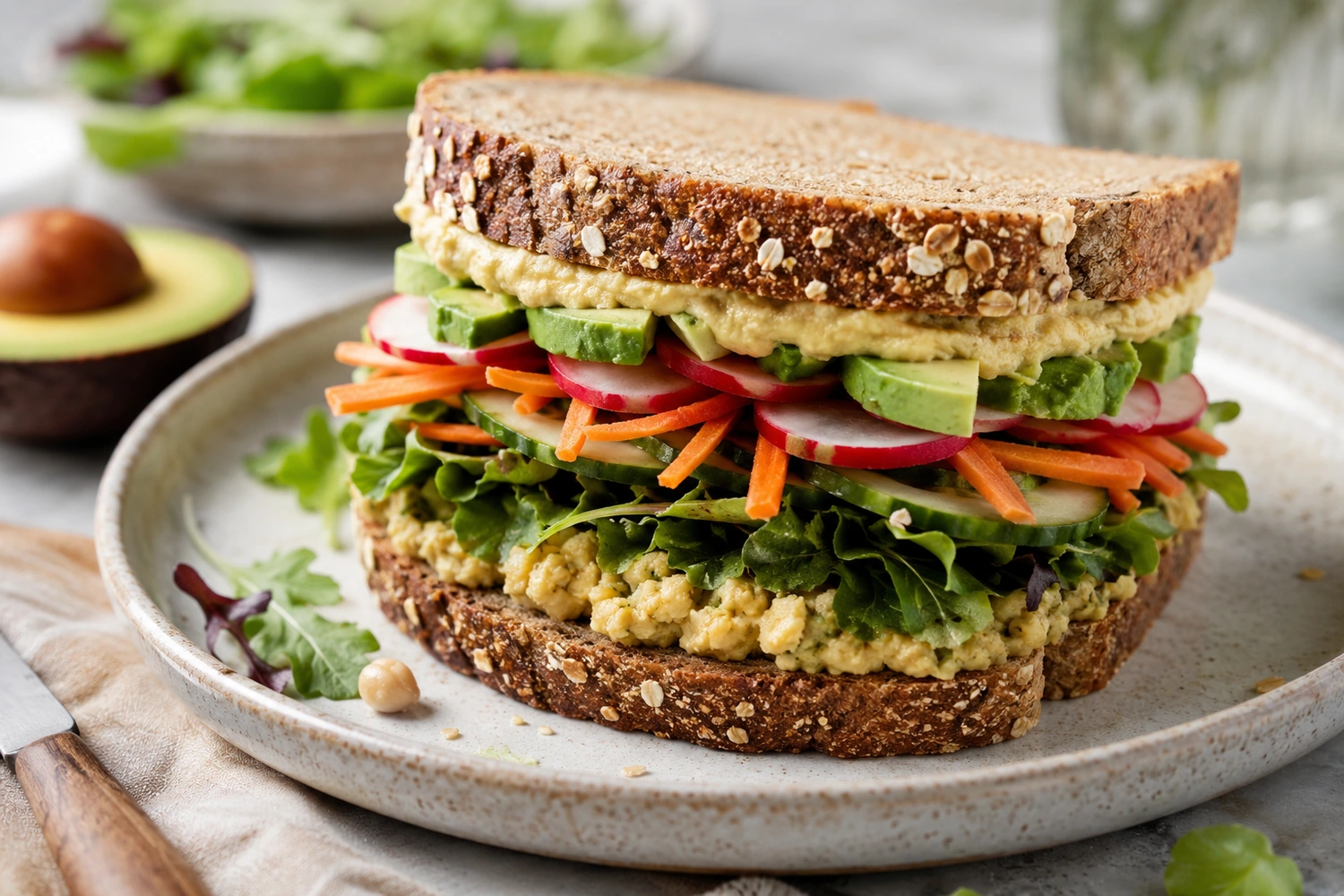
Mashed chickpeas, avocado, hummus, cucumber, tomato, spinach, and whole-grain bread make a quick no-cook lunch with fiber and plant protein. The recipe uses measured avocado and hummus so the sandwich stays satisfying without becoming unnecessarily heavy.
The ingredients are measured in household units and gram weights so the finished meal can be reproduced more consistently. Cooking times are realistic for home kitchens, while product brands, produce size, draining, and cooking loss can change the final nutrition estimate.
This chickpea avocado hummus crunch sandwich is presented as a practical healthy meal for general education. It can fit many active lifestyles, but it is not a cure, guaranteed weight-loss method, or substitute for individualized nutrition care.
Why Readers May Like It
- 1No cooking required.
- 2Uses pantry-friendly chickpeas.
- 3Easy to adapt for school, work, or home lunches.
Recipe Summary and Estimated Nutrition
The values below are calculated for the exact ingredient weights listed in the base recipe. The four primary cards show calories, protein, carbohydrates, and total fat per serving; the detailed table shows how every ingredient contributes to the full recipe total.
4 servings
Calculated from measured ingredient weights and divided by 4 servings. Values are evidence-informed estimates rather than laboratory-tested results.
Estimated energy per serving
Calculated from all listed ingredients
Includes fiber and naturally occurring sugars
Includes saturated and unsaturated fat
Values are calculated before display rounding. Product labels, produce size, drained weight, cooking loss, and substitutions can change the final result.
Ingredient-by-Ingredient Nutrition Breakdown
Household measurements and gram weights are shown together so readers can reproduce the recipe and compare the estimate with another reliable database or the labels on the exact products they buy.
| Ingredient | Amount used | Weight | Calories | Protein | Carbs | Fat |
|---|---|---|---|---|---|---|
| Chickpeas, drained | 2½ cups cooked chickpeas | 400 g | 528 kcal | 35.6 g | 94.8 g | 2.0 g |
| Avocado | 1 medium avocado | 150 g | 240 kcal | 3.0 g | 12.8 g | 22.0 g |
| Hummus | ½ cup hummus | 120 g | 199 kcal | 9.5 g | 17.2 g | 11.5 g |
| Cucumber, sliced | 1½ cups cucumber | 180 g | 27 kcal | 1.3 g | 6.5 g | 0.2 g |
| Tomato, sliced | 1½ cups tomato | 180 g | 32 kcal | 1.6 g | 7.0 g | 0.4 g |
| Baby spinach | 3 cups baby spinach | 90 g | 21 kcal | 2.6 g | 3.2 g | 0.4 g |
| Whole-grain bread | 8 slices whole-grain bread | 320 g | 790 kcal | 41.6 g | 131.2 g | 13.4 g |
| Fresh lemon juice | 2 tablespoons lemon juice | 30 g | 9 kcal | 0.3 g | 2.8 g | 0.1 g |
| Calculated full-recipe total | 4 servings | 1470 g | 1846 kcal | 95.5 g | 275.4 g | 50.0 g |
How This Nutrition Estimate Was Prepared
- Every ingredient is assigned a gram weight instead of relying only on cups, spoons, or item counts.
- Standard unbranded food-composition values are aligned with the closest matching generic item in USDA FoodData Central.
- Ingredient values are added for the full recipe and divided by the listed yield before display rounding.
- Optional toppings and substitutions are excluded unless a measured amount appears in the ingredient list.
Accuracy note: These numbers are credible estimates, not laboratory analysis. For the closest personal result, weigh the ingredients and calculate from the labels on the exact brands used.
Ingredients
Filling
Vegetables
Bread
Flavor
Professional Step-by-Step Preparation
As an Amazon Associate I earn from qualifying purchases. Tool links below are paid links.
Equipment
Use basic home-kitchen equipment suited to this recipe: cutting board (paid link), chef’s knife (paid link), measuring cups and spoons (paid link), mixing bowls (paid link), and the cookware named in the steps. A reliable instant-read food thermometer is recommended whenever meat, poultry, fish, shellfish, eggs, or reheated leftovers are involved.
Before You Start
Measure the ingredients, wash produce, keep raw animal proteins separate from ready-to-eat foods, and read all steps before cooking. Prepare cold toppings only after raw-protein surfaces have been cleaned.
Mash the chickpeas
Place drained chickpeas in a bowl and mash about two-thirds of them, leaving some texture. Weigh the listed ingredient quantities with a digital kitchen scale (paid link) before starting this step.
Mix the filling
Fold in avocado, hummus, lemon juice, black pepper, and optional herbs. Combine the ingredients in a mixing bowl (paid link) with enough room to avoid spilling.
Prepare the vegetables
Slice cucumber and tomato and wash and dry the spinach. Use a chef’s knife (paid link) for even cuts before proceeding.
Build the sandwiches
Spread chickpea-avocado filling over four bread slices and top with cucumber, tomato, and spinach.
Close and cut
Add the remaining bread slices and cut each sandwich in half.
Serve promptly
Serve immediately or wrap tightly and keep refrigerated until lunch.
How to Know It Is Ready
Filling is creamy but still textured, vegetables are crisp, and the bread is not soggy.
The grains, vegetables, or fresh toppings should keep their intended texture rather than becoming watery or overcooked.
Hot components should be hot, chilled components should remain cold, and sauces should coat rather than flood the meal.
Potential Benefits and Things to Consider
Potential Benefits
- Chickpeas and whole-grain bread provide fiber and plant protein.
- Avocado contributes unsaturated fat.
- Fresh vegetables add volume and texture.
Things to Consider
- Contains wheat/gluten and sesame if traditional hummus uses tahini.
- Avocado and hummus are calorie-dense enough that portions still matter.
- Prepared sandwiches can soften during storage.
These points describe the nutrient profile and practical use of the meal, not guaranteed outcomes. Overall diet quality, portion size, activity level, medical history, and individual needs matter more than any single recipe.
Who May Enjoy This Recipe?
It May Work Well For
- Vegetarians.
- Busy adults and students.
- Families needing a quick lunch option.
Best Times to Eat It
- Lunch.
- Picnic or packed meal when kept cold.
- Light dinner with soup or fruit.
A recipe can be nutritious and still require changes for allergies, medical conditions, pregnancy, cultural preferences, medications, or a professionally prescribed eating plan.
How to Adjust It for Different Goals
For fewer calories
Use one open-faced slice per serving and increase vegetables.
For more protein
Add edamame to the filling or serve with Greek yogurt if dairy is suitable.
For more energy
Keep two bread slices and add fruit or a side grain salad.
Any adjustment changes calories and macronutrients. Recalculate the recipe from the actual gram weights and product labels rather than assuming the original numbers still apply.
Substitutions, Dietary Notes, and Allergens
Practical Substitutions
- Use white beans instead of chickpeas.
- Use a whole-grain wrap instead of bread.
- Use sunflower-seed spread instead of hummus for sesame avoidance.
Allergen Information
Contains wheat/gluten and typically sesame from hummus. Check packaged bread and hummus labels.
Always check every packaged ingredient label because formulations and cross-contact statements can change.
Storage and Meal Preparation
For best texture, store filling and vegetables separately and assemble close to eating.
Prepared filling can be refrigerated for up to 2 days because avocado quality declines over time.
Keep sandwiches below 40°F (4°C) when packed for later.
Discard perishable food that has been at room temperature for more than 2 hours, or 1 hour when the temperature is above 90°F (32°C). When in doubt, do not taste food to test safety.
Frequently Asked Questions
For best texture, store filling and vegetables separately and assemble close to eating.
Use white beans instead of chickpeas.
Add edamame to the filling or serve with Greek yogurt if dairy is suitable. Recalculate nutrition after changing ingredient quantities.
Filling is creamy but still textured, vegetables are crisp, and the bread is not soggy.
Each ingredient is assigned a gram weight. Standard unbranded food-composition values are multiplied by those weights, added for the full recipe, and divided by the listed servings before display rounding. Product labels and substitutions can change the result.
No. This recipe page provides general educational information and does not replace individualized guidance from a qualified health or nutrition professional.
Nutrition and Safety Note
This page is for general education. It does not diagnose, treat, or provide individualized diet advice. People with allergies, medical conditions, pregnancy, or specific nutrition requirements should seek qualified professional guidance.
Nutrition Data Source
For a clear explanation of ingredient weights, data sources, rounding, substitutions, and estimate limitations, read our Nutrition Calculation Methodology.
General Nutrition References
Recipe development note: this page does not claim independent kitchen testing. The image is illustrative and does not document a tested result. Ingredient-based nutrition estimates can change with brands, weighing state, preparation and serving size; use exact labels when precision matters.