Published by Best Fitness Routine. Editorial standards · Report a correction. Educational guidance; no individual clinical review is claimed unless a qualified reviewer is named.
About This Healthy Recipe
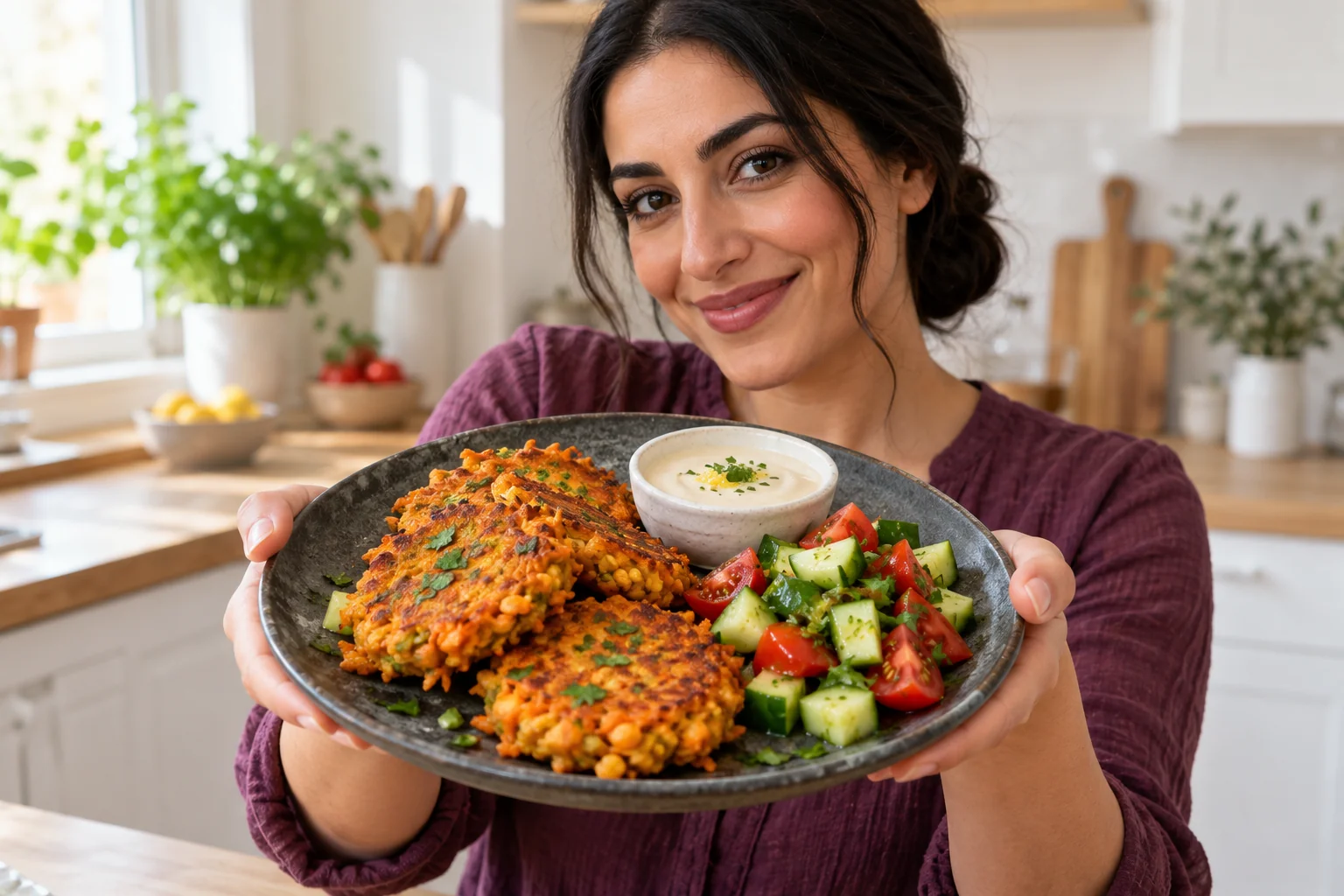
Grated carrot and halloumi cook into twelve small fritters with golden cheese edges and a tender vegetable center. A generous lentil-cucumber salad and lemon yogurt make this a complete four-portion meal. Halloumi contributes a salty flavor, so the batter needs no added salt.
The reference halloumi provides 316 kcal, 16 g saturated fat and about 1000 mg sodium per 100 g; 40 g per serving is included. Brands and regional labels vary.
Use vegetarian-rennet halloumi if serving vegetarians. The referenced manufacturer specifies non-animal rennet. For another preparation, see French Lentil Roasted Vegetable Salad with Dijon Vinaigrette.
Why Readers May Like It
- 1Measured portions, clear shaping guidance and practical doneness checks.
- 2Clear dry, cooked and drained ingredient weights.
- 3Four measured meal portions with the fritters, listed sides and sauce included.
Recipe Summary and Estimated Nutrition
Nutrition is estimated from the listed ingredient weights and the specific USDA records or manufacturer references linked below. Weights labeled dry, raw, cooked or drained must be matched to that state.
4 servings
One serving is one quarter of the base batch. Values are estimates rather than laboratory analysis.
Per one quarter of the base recipe
Per one quarter of the base recipe
Per one quarter of the base recipe
Per one quarter of the base recipe
Brands, drained weights, substitutions and final serving sizes can change these values.
Ingredient-by-Ingredient Nutrition Breakdown
Gram weights are the calculation basis; household measures are approximate. The table includes all listed oil, sauce and toppings. All measured oil, sauces and sides are included. Discarded soaking, pressing or cooking water is not counted as consumed food.
| Ingredient | Amount used | Weight | Calories | Protein | Carbs | Fat |
|---|---|---|---|---|---|---|
| Carrots, raw, trimmed edible weight | about 1 lb 2 oz | 500 g | 205 kcal | 4.7 g | 47.9 g | 1.2 g |
| Vegetarian-rennet halloumi, drained | about 5 2/3 oz | 160 g | 506 kcal | 36.8 g | 3.2 g | 38.4 g |
| Whole eggs, raw, without shells | 3 large | 150 g | 214 kcal | 18.8 g | 1.1 g | 14.3 g |
| Whole-wheat flour, dry | about 7/8 cup | 110 g | 374 kcal | 14.5 g | 79.2 g | 2.8 g |
| Scallions, raw, trimmed | about 1/2 cup sliced | 60 g | 19 kcal | 1.1 g | 4.4 g | 0.1 g |
| Ground cumin, dry | about 1 1/2 teaspoons | 3 g | 11 kcal | 0.5 g | 1.3 g | 0.7 g |
| Olive oil, total for pan and salad | about 2 tablespoons plus 1 teaspoon; weigh | 32 g | 283 kcal | 0 g | 0 g | 32 g |
| Lentils, cooked without salt and drained | about 3 1/4 cups | 650 g | 754 kcal | 58.6 g | 130.8 g | 2.5 g |
| Cucumber with peel, raw | about 2 2/3 cups diced | 400 g | 60 kcal | 2.6 g | 14.5 g | 0.4 g |
| Plain nonfat Greek yogurt | about 1 cup | 240 g | 142 kcal | 24.5 g | 8.6 g | 0.9 g |
| Lemon juice, raw | about 1/4 cup plus 2 teaspoons | 70 g | 15 kcal | 0.2 g | 4.8 g | 0.2 g |
| Parsley, raw | about 1/3 cup chopped | 20 g | 7 kcal | 0.6 g | 1.3 g | 0.2 g |
| Black pepper, ground | about 1/2 teaspoon | 1 g | 3 kcal | 0.1 g | 0.6 g | 0 g |
| Full recipe estimate | 4 servings | — | 2593 kcal | 163 g | 297.7 g | 93.7 g |
How This Nutrition Estimate Was Prepared
- Match each listed ingredient to its linked food record or stated label reference.
- Multiply the per-100-g values by the listed gram weight and add the unrounded ingredient values.
- Divide the full calculation by four servings, then round for the cards.
- Recalculate if you change the ingredient brand, amount or serving yield.
Ingredient cells are rounded independently. The footer sums displayed cells; per-serving cards use the unrounded calculation, so small rounding differences are expected. Final cooking yield and brands can change the estimate.
Ingredients
Measured ingredients
Step-by-Step Preparation
As an Amazon Associate we earn from qualifying purchases. Equipment links are paid affiliate links; use suitable tools you already own.
Equipment
- Digital kitchen scale (paid link)
- Mixing bowls (paid link)
- Chef knife and cutting board (paid link)
- 12-inch nonstick skillet (paid link)
- Wide turner (paid link)
- Instant-read food thermometer (paid link)
- Rimmed baking sheet and rack (paid link)
- Box grater (paid link)
Before You Start
The reference halloumi provides 316 kcal, 16 g saturated fat and about 1000 mg sodium per 100 g; 40 g per serving is included. Brands and regional labels vary.
Allow about 65 minutes for preparation, cooking all batches and any stated resting. Some tasks overlap; doneness checks take priority over the clock. Measure the listed oil before cooking and keep the sides within the stated four portions. Use the raw, dry, cooked or drained state specified for each ingredient.
Grate carrots and cheese
10–12 minutesScrub the carrots, trim the ends and weigh 500 g edible carrot before grating. Use the fine or medium holes of a box grater to make short shreds, then pat them dry if visibly wet. Coarsely grate the drained halloumi separately, taking care with the last small piece. Thinly slice all the scallions. A digital kitchen scale (paid link) helps keep the measured quantities consistent.
Toss the lentil cucumber salad
6 minutesDice the cucumber into approximately 1/2-inch / 1-cm pieces. Combine with the cooked drained lentils, chopped parsley, 45 g lemon juice, 8 g olive oil and half the pepper. Toss gently to keep the lentils intact, then refrigerate. There is no added salt in the salad; the halloumi supplies a salty contrast on the plate.
Mix the cool yogurt sauce
3 minutes plus oven heatingStir the yogurt with the remaining 25 g lemon juice and remaining pepper in a small bowl (paid link). Cover and refrigerate until serving. Set a rack over a rimmed baking sheet for holding the cooked fritters, and preheat the oven to 200°F / 95°C. Keep the cold sauce away from the raw-egg mixing area.
Bind the grated vegetables
5 minutesBeat the eggs in a clean large bowl, then mix in the whole-wheat flour and cumin. Fold in the grated carrot, halloumi and scallions until every shred is coated. Scrape the bottom of the bowl so no dry flour remains. Divide the mixture into twelve equal mounds without squeezing them into dense balls.
Begin the first skillet batch
3 minutesWarm a 12-inch nonstick skillet over medium heat for 2 minutes and brush with 8 g olive oil. Add four mounds of mixture with clear space between them. Press each to about 4 inches / 10 cm across and 3/8 inch / 1 cm thick, keeping loose carrot strands tucked into the edges.
Cook the carrot through
8–10 minutesCook for 4–5 minutes on the first side, then turn with a broad spatula and cook 4–5 minutes more. Lower the heat if the cheese darkens rapidly. The carrot shreds should be tender when the thickest center reaches 160°F / 71°C; probe sideways to check the egg batter rather than a hot cheese pocket.
Finish two more batches
18–22 minutesTransfer the first batch to the rack in the warm oven. Repeat with two additional batches of four, using 8 g olive oil for each batch. Allow another 18–20 minutes and check the center temperature each time. Avoid stacking the cooked fritters; escaping steam otherwise softens the surface while the final batch is cooking.
Assemble four dinner plates
3 minutesDivide the salad evenly among four plates and place three carrot halloumi fritters beside each portion. Add one-quarter of the lemon yogurt, about 60 g yogurt before lemon juice. Serve immediately. The 65-minute allowance includes grating, salad and sauce preparation, preheating and all three batches; cheese browning is controlled with moderate pan heat.
How to Know It Is Ready
Centers reach 160°F / 71°C, the flour binder is set and carrot shreds are tender rather than crunchy.
Tender carrot shreds in small golden pancakes with distinct cheese pieces, plus cool lentils, cucumber and lemon yogurt.
One quarter of the fritters and every listed side, sauce and measured oil portion.
What This Meal Provides and What to Consider
Meal Balance
- The measured batch supplies about 40.8 g protein per serving.
- Fritters, the listed accompaniments and measured cooking oil are included in the complete portion.
Things to Consider
- Contains milk, egg and wheat. Check halloumi packaging for its milk types and other allergens.
- Energy, sodium and saturated fat still depend on ingredients and portion size. This meal does not guarantee a particular fitness or health result.
Who May Enjoy This Recipe?
Fritter meal planning
Home cooks looking for a measured vegetarian lunch or dinner.
Home cooking
Use vegetarian-rennet halloumi if serving vegetarians. The referenced manufacturer specifies non-animal rennet.
Measured portions
People who want to understand how ingredient weights relate to a four-serving batch.
How to Adjust the Meal
Smaller appetite
Serve a smaller portion and save the rest safely. Recalculate nutrition for the portion you actually eat.
Larger appetite
Choose an appropriate larger portion or accompaniment and include those ingredients in the meal calculation.
Protein adjustments
If changing the main protein, binder or side, use its product label and recalculate. The amount can also change texture and cooking requirements.
Substitutions, Dietary Notes, and Allergens
Practical Substitutions
- Replace parsley in the salad with the same weight of fresh dill. Use the stated halloumi portion; a different cheese changes texture and nutrition.
- A different flour, binder or vegetable can change moisture and how well the fritters hold together. Adjust the method and recalculate the estimate when substituting.
Allergen Information
Contains milk, egg and wheat. Check halloumi packaging for its milk types and other allergens.
Check packaged ingredient labels for the allergens relevant to you. A substitution changes both the recipe and the calculation.
Storage and Meal Preparation
Refrigerate perishable food within 2 hours, or within 1 hour when surroundings exceed 90°F / 32°C. Use shallow containers and a refrigerator at 40°F / 4°C or colder. Use safely handled cooked leftovers within 3–4 days; reheat hot leftovers to 165°F / 74°C.
Keeping This Fritter Meal
Refrigerate cooked fritters and sides separately in shallow containers within 2 hours, or within 1 hour above 90°F / 32°C. Keep at 40°F / 4°C or below for 3–4 days, counting from the earliest cooking of any perishable component. Cook all batter during this session; do not save uncooked batter. Follow any earlier ingredient use-by date.
Reheating the Meal
Reheat fritters on a baking sheet at 350°F / 180°C until their centers reach 165°F / 74°C. Keep cold salads and yogurt or tahini sauce separate. Reheat any grain served hot to 165°F / 74°C as well; a fixed number of minutes cannot establish safe reheating.
Follow USDA leftovers guidance. For another fritter and accompaniment combination, browse Tofu Sweet Potato Fritters with Edamame Slaw and Lime Tahini.
Frequently Asked Questions
It softens and browns while retaining small cheese pieces, which gives the edges their distinctive texture.
Halloumi already contributes substantial sodium. Lemon and cumin provide flavor without adding another salt ingredient.
Yes, finely grated short shreds are used here. Keep the fritters thin and use moderate heat long enough to soften the carrot and reach 160°F / 71°C.
Use the serving controls to scale gram quantities and serving count. Use additional trays or cook more batches; cooking time does not simply double. Household notes describe the base four-serving recipe.
Nutrition Sources and Recipe Notes
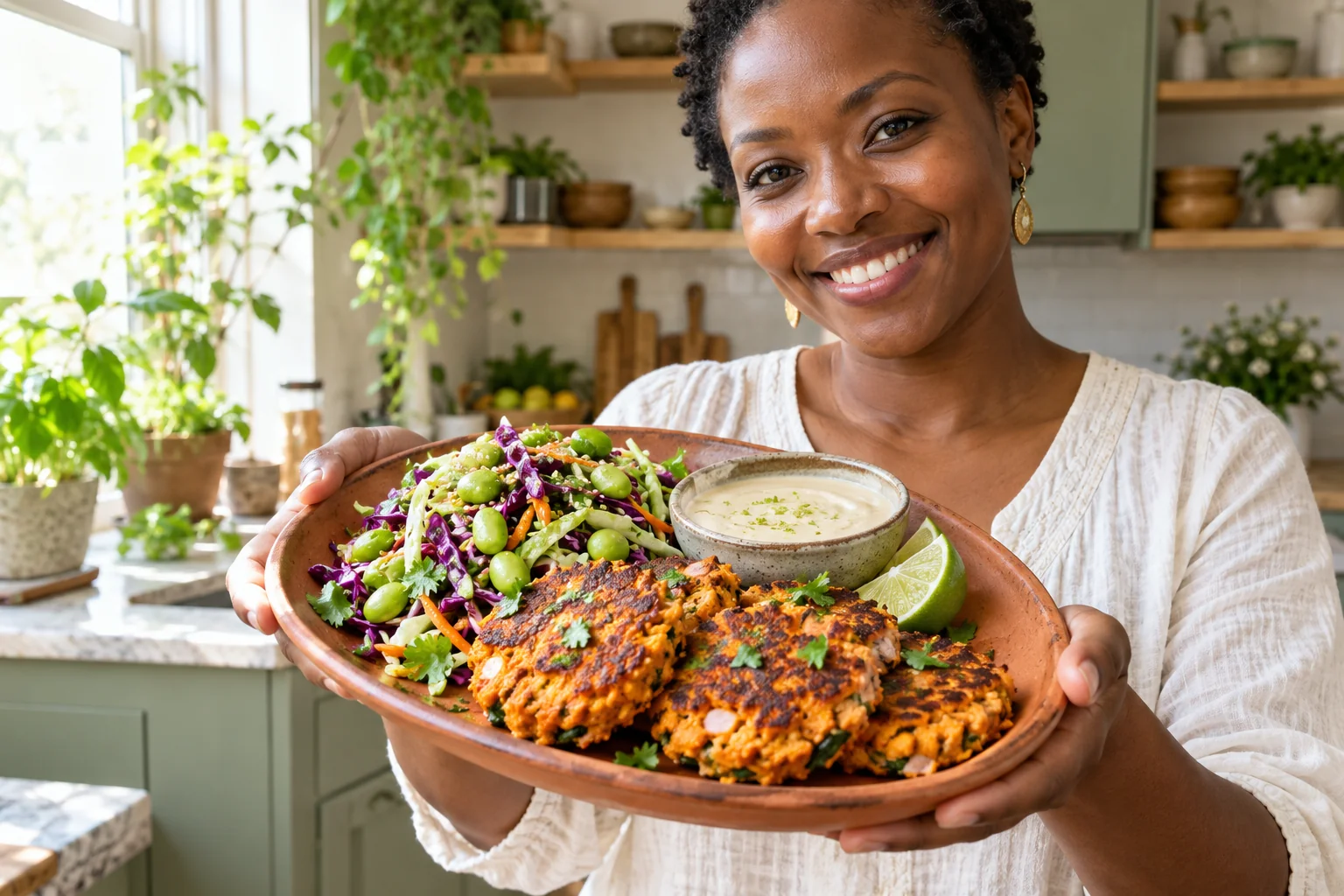
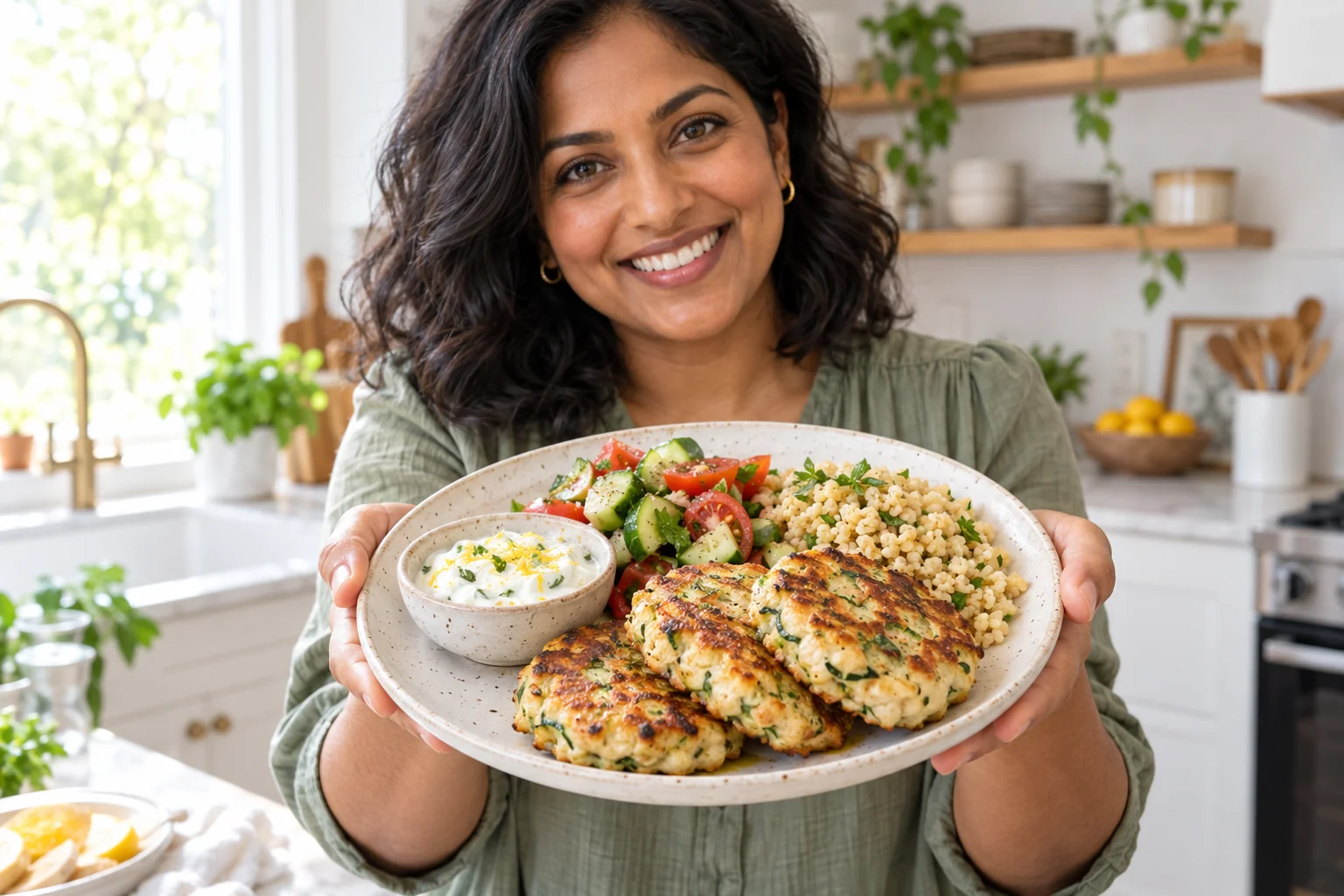
These values are planning estimates, not individualized nutrition advice. Use labels for your exact products when precision is important. The recipe has not been kitchen-tested and the image is a generated illustration of the intended dish.
Nutrition Data Sources
See our Nutrition Calculation Methodology for weights, rounding and substitutions.
Food Safety Reference
Recipe development note: this page does not claim independent kitchen testing. The image is illustrative and does not document a tested result. Ingredient-based nutrition estimates can change with brands, weighing state, preparation and serving size; use exact labels when precision matters.
Useful Tools for This Recipe
As an Amazon Associate we earn from qualifying purchases. Equipment links are paid affiliate links; use suitable tools you already own.
These tools fit the preparation above. Use suitable equipment you already own, or compare options if you need an item.
Digital kitchen scale
Weighs the batter ingredients and all measured oil for four portions.
Compare on Amazon → (paid link)Paid link · opens in a new tab12-inch nonstick skillet
Provides the cooking surface specified in the method.
Compare on Amazon → (paid link)Paid link · opens in a new tabInstant-read food thermometer
Checks the center without relying on exterior browning.
Compare on Amazon → (paid link)Paid link · opens in a new tab