About This Healthy Recipe
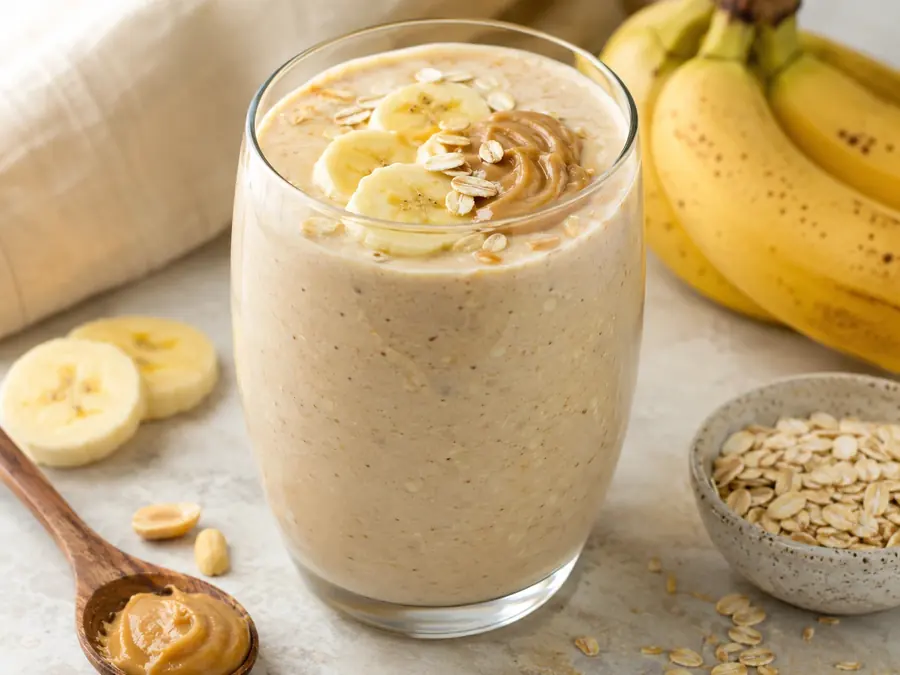
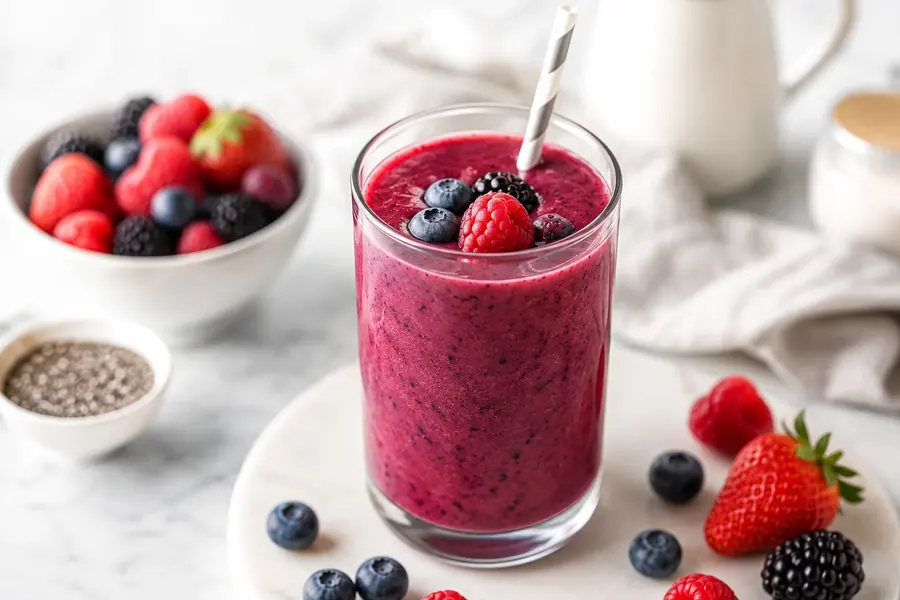
A thick berry smoothie made with frozen mixed berries, plain nonfat Greek yogurt, banana, reduced-fat milk, and rolled oats. The exact weights create a repeatable drink with a realistic protein and carbohydrate estimate.
Frozen fruit provides the cold texture, while Greek yogurt supplies most of the protein without requiring protein powder. Oats slightly thicken the drink and add a modest amount of fiber.
This high-protein berry smoothie uses measured ingredients, realistic quantities, and practical preparation steps for home cooking. It is a healthy meal idea, not a cure, guaranteed weight-loss method, or substitute for individualized nutrition care.
Why Readers May Like It
- 1Blends in about five minutes.
- 2Uses familiar supermarket ingredients.
- 3Can be adjusted with more or less liquid without changing the core recipe.
Recipe Summary and Estimated Nutrition
The values below are calculated for the exact ingredient weights listed in the base recipe. The four primary cards show calories, protein, carbohydrates, and total fat per serving; the detailed table shows how every ingredient contributes to the full recipe total.
1 large smoothie
Calculated from measured ingredient weights and divided by 1 serving. Values are evidence-informed estimates rather than laboratory-tested results.
Estimated energy per serving
Calculated from all listed ingredients
Includes fiber and naturally occurring sugars
Includes saturated and unsaturated fat
Values are calculated before display rounding. Product labels, produce size, drained weight, cooking loss, and substitutions can change the final result.
Ingredient-by-Ingredient Nutrition Breakdown
Household measurements and gram weights are shown together so readers can reproduce the recipe and compare the estimate with another reliable database or the labels on the exact products they buy.
| Ingredient | Amount used | Weight | Calories | Protein | Carbs | Fat |
|---|---|---|---|---|---|---|
| Unsweetened frozen mixed berries | 1 cup | 150 g | 75 kcal | 1.2 g | 18 g | 0.6 g |
| Plain nonfat Greek yogurt | 1 cup | 245 g | 145 kcal | 25.2 g | 8.8 g | 1 g |
| Banana | ½ medium banana | 59 g | 53 kcal | 0.6 g | 13.5 g | 0.2 g |
| Reduced-fat 2% milk | ½ cup | 122 g | 61 kcal | 4 g | 5.9 g | 2.4 g |
| Dry rolled oats | 2 tablespoons | 10 g | 38 kcal | 1.3 g | 6.8 g | 0.7 g |
| Ice | ½ cup | 75 g | 0 kcal | 0 g | 0 g | 0 g |
| Cinnamon or vanilla | Optional, to taste | 1 g | 0 kcal | 0 g | 0 g | 0 g |
| Calculated full-recipe total | 1 large smoothie | 662 g | 371 kcal | 32.4 g | 52.9 g | 4.8 g |
How This Nutrition Estimate Was Prepared
- Every ingredient is assigned a specific gram weight instead of relying only on a cup, spoon, or item count.
- Standard unbranded food-composition values are aligned with the closest matching foods in USDA FoodData Central.
- Ingredient values are added for the full recipe, divided by the listed yield, and rounded only for display.
- Optional ingredients are included only when the ingredient list says they are part of the estimate.
Accuracy note: These numbers are credible estimates, not laboratory analysis. For the closest personal result, weigh the ingredients and calculate from the labels on the exact brands used.
Ingredients
Smoothie base
Texture and optional additions
Professional Step-by-Step Preparation
Equipment
Have the listed equipment ready before preparing high-protein berry smoothie so measuring, cooking, and serving steps stay organized.
- High-speed blender
- Chef’s knife
- Measuring cups and spoons
Before You Start
Add liquid to the blender first to protect the blades and improve circulation. Read all steps once, measure the ingredients, and keep raw animal proteins separate from ready-to-eat foods when applicable.
Add the liquid first
About 1 minuteAdd liquid to the blender first.
Add yogurt berries banana oats and
About 1 minuteAdd yogurt, berries, banana, oats, and ice.
Blend until smooth
About 1 minuteBlend until completely smooth.
Finish and serve
About 1 minuteAdjust thickness with water or milk and serve immediately.
How to Know It Is Ready
The smoothie is ready when no visible berry or oat pieces remain and it pours in a thick, continuous stream.
Adjust texture with small amounts of milk or water instead of adding a large amount at once.
Divide the finished recipe into 1 equal serving so the nutrition estimate remains meaningful.
Potential Benefits and Things to Consider
Potential Benefits
- Greek yogurt contributes protein that can support muscle maintenance as part of a balanced diet.
- Berries, banana, and oats provide carbohydrate and fiber.
- Using unsweetened ingredients keeps added sugar at zero in the base recipe.
Things to Consider
- Milk and yogurt make the base recipe unsuitable for a milk allergy.
- Fruit and dairy naturally contribute sugar even though no sweetener is added.
- A smoothie may be less filling than a meal that requires chewing for some people.
Who May Enjoy This Recipe?
It May Work Well For
- People who need a quick breakfast.
- Active adults wanting a portable protein-and-carbohydrate option.
- Readers who prefer a recipe without protein powder.
Best Times to Eat It
- Breakfast on a busy morning.
- A snack between meals.
- After training when a solid meal is not immediately practical.
A recipe can be nutritious and still require changes for allergies, medical conditions, pregnancy, cultural preferences, medications, or a professionally prescribed eating plan.
How to Adjust It for Different Goals
For a lower-calorie version
Use nonfat milk and reduce the banana to one-quarter while keeping the full berry and yogurt portions.
For more energy
Add another 20 to 30 g oats or one measured tablespoon of nut butter.
For more protein
Increase Greek yogurt or use a verified protein powder and recalculate the nutrition from its label.
Any adjustment changes calories and macronutrients. Recalculate the recipe from the actual gram weights and product labels rather than assuming the original numbers still apply.
Substitutions, Dietary Notes, and Allergens
Practical Substitutions
- Use fortified unsweetened soy milk and dairy-free high-protein yogurt for a dairy-free version.
- Swap mixed berries for frozen cherries, peaches, or mango; nutrition will change.
- Use gluten-free oats when cross-contact with gluten must be avoided.
- Add water one tablespoon at a time if the smoothie is too thick.
Allergen Information
Contains milk in the base recipe. Oats may require a certified gluten-free label for people with celiac disease or medically necessary gluten avoidance.
Always check every packaged ingredient label because formulations and cross-contact statements can change.
Storage and Meal Preparation
Best consumed immediately.
A sealed smoothie can be refrigerated for several hours, but separation and thickening are normal; shake well before drinking.
For meal prep, freeze the fruit and oats in portions, then add milk and yogurt at blending time.
Discard food that has been held at unsafe temperatures, smells unusual, shows spoilage, or has exceeded a safe storage period. When in doubt, do not taste it to test safety.
Frequently Asked Questions
Best consumed immediately. A sealed smoothie can be refrigerated for several hours, but separation and thickening are normal; shake well before drinking.
Use fortified unsweetened soy milk and dairy-free high-protein yogurt for a dairy-free version. Swap mixed berries for frozen cherries, peaches, or mango; nutrition will change.
Increase Greek yogurt or use a verified protein powder and recalculate the nutrition from its label. Recalculate the nutrition using the label or database value for any changed ingredient.
The smoothie is ready when no visible berry or oat pieces remain and it pours in a thick, continuous stream.
Each ingredient is assigned a gram weight. Standard unbranded food-composition values are multiplied by those weights, added for the full recipe, and divided by the listed number of servings before display rounding. Brands and substitutions can change the result.
No. This recipe page provides general educational information and does not replace individualized guidance from a qualified health or nutrition professional.
Nutrition and Safety Note
This page is for general education. It does not diagnose, treat, or provide individualized diet advice. People with allergies, medical conditions, pregnancy, or specific nutrition requirements should seek qualified professional guidance.
Nutrition Data Source
For a clear explanation of ingredient weights, data sources, rounding, substitutions, and estimate limitations, read our Nutrition Calculation Methodology.