About This Turmeric Chicken Soup
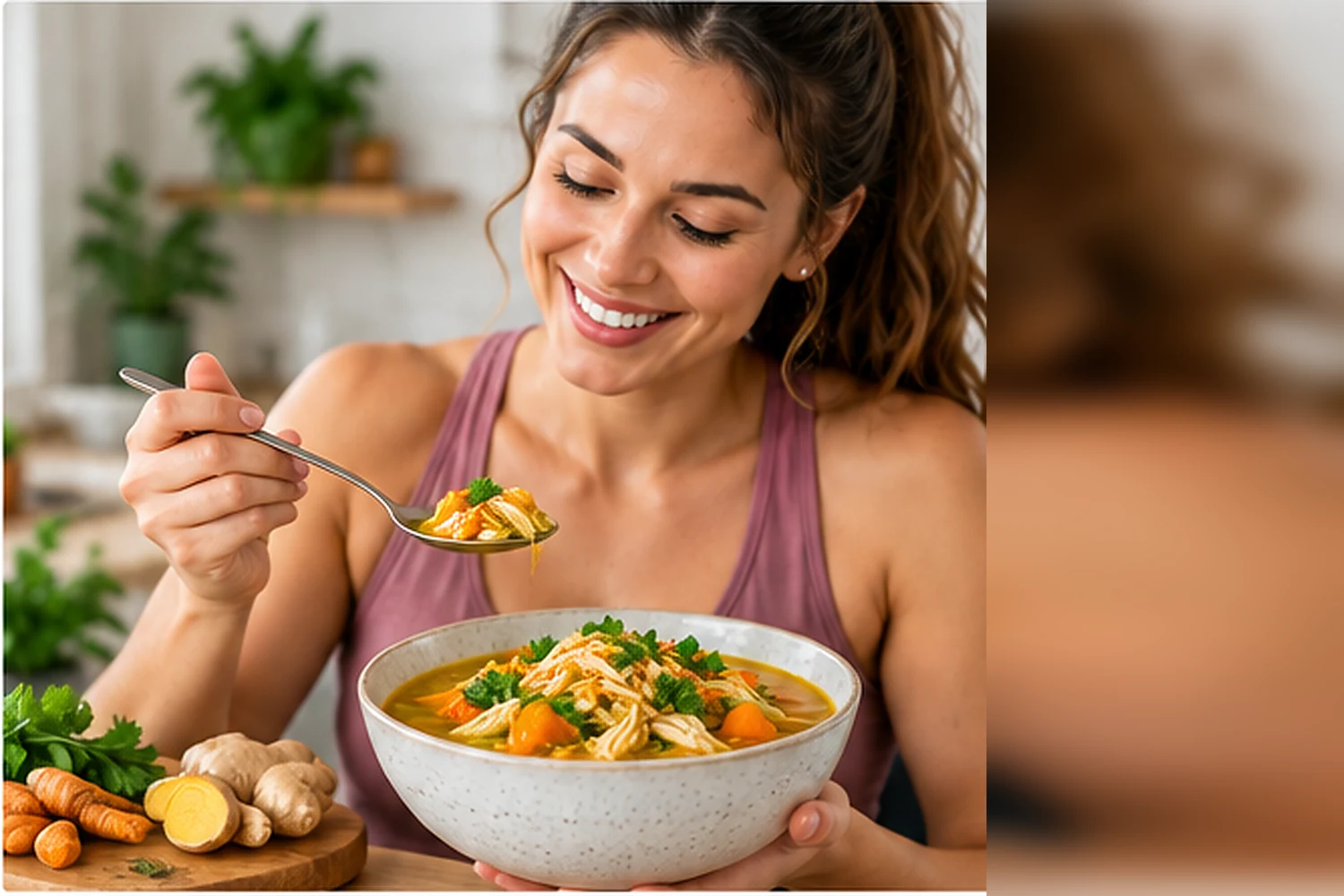
This turmeric chicken soup is built for people who want a warm, colorful meal that is easy to cook in one pot and easy to portion for the week. Lean chicken supplies most of the protein, while sweet potato, carrots, celery and spinach add texture, color and a mix of plant foods. Fresh ginger, turmeric, black pepper and lemon give the broth a bright, savory flavor without relying on heavy cream.
The phrase anti-inflammatory chicken soup describes the ingredient pattern, not a medical treatment. Turmeric, ginger, olive oil, vegetables and leafy greens are commonly used in balanced eating patterns, but no single recipe can prevent or treat chronic inflammation. The value of this meal comes from the overall combination: protein, vegetables, modest added fat and a broth-based cooking method.
If you searched for a ginger turmeric chicken soup that feels substantial without being overly heavy, this version is designed for that exact intent. The sweet potato thickens the broth slightly as it cooks, the lemon keeps the flavor fresh, and the spinach is added at the end so it stays bright rather than overcooked.
Why Readers May Like It
- 1One-pot preparation with simple supermarket ingredients.
- 2About 29 g protein per serving from lean chicken.
- 3Meal-prep friendly and freezer friendly.
Recipe Summary and Estimated Nutrition
The nutrition estimate is based on the measured base recipe and divided into six bowls. The numbers are practical estimates rather than laboratory-tested values, so brands, trimming, produce size, broth sodium and cooking loss can change the final result.
6 bowls
Calculated from measured ingredient weights and divided by 6 servings. Each bowl is roughly 2 to 2¼ cups depending on evaporation.
Estimated energy per serving
Mostly from lean chicken
Primarily from vegetables and sweet potato
Includes olive oil and naturally occurring fat
Sodium varies especially widely by broth brand and added salt. Check the label on the broth you use if sodium is important to you.
Ingredient-by-Ingredient Nutrition Breakdown
Approximate contributions below are for the full six-serving recipe before dividing into bowls.
| Ingredient | Amount used | Weight | Calories | Protein | Carbs | Fat |
|---|---|---|---|---|---|---|
| Chicken breast | 1½ lb boneless skinless | 680 g | 816 kcal | 153.0 g | 0 g | 17.7 g |
| Extra-virgin olive oil | 1 tablespoon | 15 g | 133 kcal | 0 g | 0 g | 15.0 g |
| Yellow onion | 1 medium | 180 g | 72 kcal | 2.0 g | 16.7 g | 0.2 g |
| Garlic | 4 cloves | 12 g | 18 kcal | 0.8 g | 4.0 g | 0.1 g |
| Fresh ginger | 1½ tablespoons | 20 g | 16 kcal | 0.4 g | 3.6 g | 0.2 g |
| Ground turmeric | 2 teaspoons | 6 g | 19 kcal | 0.6 g | 4.0 g | 0.2 g |
| Carrots | 3 medium | 250 g | 102 kcal | 2.2 g | 24.0 g | 0.5 g |
| Sweet potato | 1 medium | 300 g | 258 kcal | 4.8 g | 60.3 g | 0.3 g |
| Celery | 2 stalks | 120 g | 17 kcal | 0.8 g | 3.6 g | 0.2 g |
| Low-sodium chicken broth | 6 cups | 1.44 kg | 90 kcal | 6.0 g | 6.0 g | 3.0 g |
| Baby spinach | 4 packed cups | 120 g | 28 kcal | 3.5 g | 4.3 g | 0.5 g |
| Lemon juice | 2 tablespoons | 30 g | 7 kcal | 0.1 g | 2.1 g | 0.1 g |
| Calculated full-recipe total | 6 servings | — | 1,575 kcal | 174.2 g | 128.6 g | 37.9 g |
How This Nutrition Estimate Was Prepared
- Generic ingredient values were aligned with USDA FoodData Central or comparable standard food-composition data.
- Full-recipe totals were divided by six equal servings.
- Broth sodium is estimated from a typical low-sodium product; your label may differ substantially.
- Herbs, salt and very small seasoning amounts contribute minimal calories but can affect sodium and flavor.
Accuracy note: These figures are useful planning estimates, not medical nutrition prescriptions. For exact needs, use your product labels and individualized professional guidance.
Turmeric Chicken Soup Ingredients
The ingredient list keeps the primary turmeric chicken soup flavor clear: ginger and turmeric are noticeable, but the broth still tastes like chicken soup rather than a spice blend. Use the serving control if you want to batch-cook more.
Chicken and aromatics
Vegetables, broth and finish
How to Make Turmeric Chicken Soup
Equipment
Large Dutch oven or soup pot, cutting board, chef’s knife, microplane or fine grater, measuring spoons, tongs, clean plate, ladle and an instant-read food thermometer.
Before You Start
Cut the vegetables before heating the pot, keep raw chicken separate from produce that will be eaten without further cooking, and have a clean plate ready for the cooked chicken.
Sauté the aromatics
8 minutesHeat the olive oil in a large Dutch oven or soup pot over medium heat. Add the onion and celery and cook for 4 to 5 minutes, stirring occasionally, until softened but not browned.
Bloom the ginger and spices
1 minuteAdd the garlic, grated ginger, turmeric, thyme and black pepper. Cook for about 45 seconds, stirring constantly, until fragrant. This short step helps distribute the spices through the oil without scorching them.
Build the soup
4 minutesAdd the carrots, sweet potato, chicken pieces and low-sodium broth. Stir, bring just to a boil, then immediately reduce the heat to maintain a gentle simmer.
Simmer until the chicken is safe and the vegetables are tender
20–25 minutesPartially cover and simmer for 20 to 25 minutes, or until the sweet potato and carrots are fork-tender and the thickest chicken pieces reach 165°F (74°C) on an instant-read thermometer.
Shred the chicken
4 minutesTransfer the chicken to a clean plate. Let it rest for a few minutes, shred or chop it into bite-size pieces, then return it to the pot.
Finish with greens and lemon
2 minutesStir in the spinach and cook for 1 to 2 minutes, just until wilted. Add the lemon juice, taste, and adjust salt only if needed.
Serve
2 minutesDivide the turmeric chicken soup among six bowls. Finish with parsley or cilantro if desired. Serve hot, with extra lemon at the table for brightness.
Benefits and Considerations
Potential Strengths of This Meal
- High-protein base: about 29 grams of protein per bowl can help make the meal satisfying and can fit an active lifestyle.
- Vegetable variety: carrots, sweet potato, celery and spinach contribute fiber, potassium, carotenoids and other micronutrients.
- Measured added fat: one tablespoon of olive oil flavors the whole pot without making the broth heavy.
- Simple meal prep: the soup portions cleanly and reheats well for workday lunches.
- Flavor without cream: ginger, turmeric, thyme, pepper and lemon create depth without a cream-based broth.
What to Keep in Mind
- Turmeric is not a treatment: NCCIH notes that evidence is not strong enough to conclude turmeric or curcumin is beneficial for most health purposes.
- Sodium varies: broth brands differ widely, so the actual sodium can be higher or lower than the estimate.
- Portion needs vary: 262 calories may be a light main meal for some adults; add a whole grain or beans if you need more energy.
- Spice tolerance differs: ginger and turmeric can taste strong to people who are not used to them.
In other words, the best reason to make this healthy turmeric chicken soup is that it is a convenient, protein-rich soup with a useful variety of whole-food ingredients. The “anti-inflammatory” label should describe the recipe style rather than promise a health outcome.
Who May Enjoy This Recipe?
This soup works well for adults who want a warm lunch or dinner with lean protein and vegetables, especially during cooler weather or busy meal-prep weeks. Because the broth is light and the sweet potato provides most of the starch, the bowl feels substantial without being as rich as a cream soup.
It may also be useful after training when you want both protein and carbohydrate in one meal. Pair it with fruit, whole-grain toast or a simple side salad if your appetite and energy needs are higher. If you are following a medically prescribed diet, have kidney disease, need strict sodium control, take medications that interact with supplements, or have another condition affecting food choices, use individualized guidance rather than treating this page as a therapeutic diet plan.
How to Adjust It for Different Goals
For more protein
Increase the chicken by 4 to 6 ounces across the pot or add rinsed white beans. Recalculate nutrition if exact intake matters.
For more energy
Serve each bowl with cooked brown rice, quinoa, farro or whole-grain bread.
For a lighter meal
Use a slightly smaller serving and pair it with a large non-starchy vegetable side rather than extra grains.
For more fiber
Add one drained 15-ounce can of cannellini beans or chickpeas during the final 10 minutes of simmering.
Substitutions, Dietary Notes, and Allergens
Practical Substitutions
- Use boneless skinless chicken thighs for a richer, more tender version.
- Swap butternut squash for sweet potato if that is what you have.
- Use kale instead of spinach; add it a few minutes earlier because it takes longer to soften.
- Use 1 tablespoon grated fresh turmeric in place of the ground turmeric.
- For a thicker soup, mash a few sweet potato cubes against the side of the pot before serving.
Allergen and Dietary Notes
The base recipe is naturally dairy-free and does not intentionally include gluten, but packaged broth can contain allergens or gluten-containing ingredients depending on the brand. Always check labels if you need strict avoidance.
This recipe contains poultry. Use separate utensils and surfaces for raw chicken, wash hands after handling it, and sanitize food-contact areas before preparing ready-to-eat ingredients.
Storage and Meal Preparation
Cool leftover turmeric chicken soup promptly and refrigerate it in shallow containers. For food safety and best quality, use refrigerated leftovers within 3 to 4 days.
For freezing, portion fully cooled soup into freezer-safe containers, leaving a little headspace. Freeze for up to about 3 months for best quality. Thaw in the refrigerator overnight when possible.
Reheat leftovers until steaming hot throughout; USDA guidance commonly uses 165°F (74°C) for reheating leftovers. Add a squeeze of fresh lemon after reheating if the flavor tastes muted.
If you plan to meal prep this soup, portion it into single-serving containers once it has cooled. Keeping the parsley or cilantro separate until serving helps the fresh garnish stay brighter.
Frequently Asked Questions
This recipe uses turmeric, ginger, vegetables, olive oil and leafy greens—foods often included in anti-inflammatory eating patterns. However, one bowl does not treat inflammation or a medical condition. The overall eating pattern matters more than any single ingredient.
Yes. Use about 1 tablespoon finely grated fresh turmeric in place of 2 teaspoons ground turmeric. Fresh turmeric can stain cutting boards and hands, so handle it carefully.
Yes. Cool it promptly, refrigerate it in shallow containers, and use it within 3 to 4 days. The flavor often becomes more blended after a night in the refrigerator.
Yes. Freeze cooled soup in meal-size containers for up to about 3 months for best quality. Leave a little headspace for expansion and thaw safely in the refrigerator before reheating.
Yes. Boneless skinless chicken thighs work well and usually stay especially tender. Nutrition will change because thighs generally contain more fat than breast meat.
Serve it with a small portion of cooked quinoa, brown rice, farro or whole-grain bread, or stir in rinsed white beans near the end of cooking. Those additions increase carbohydrate, fiber and total calories.
Nutrition and Safety Note
This recipe is general nutrition and cooking information, not medical treatment. “Anti-inflammatory” describes the recipe’s whole-food ingredient pattern; it does not mean the soup has been clinically shown to reduce inflammation in an individual. If you have medical conditions, allergies, pregnancy-related concerns, or medication questions, seek individualized professional guidance.
Nutrition and Ingredient References
For how ingredient weights, databases, rounding and substitutions are handled across the site, read our Nutrition Calculation Methodology.