Published by Best Fitness Routine. Editorial standards · Report a correction. Educational guidance; no individual clinical review is claimed unless a qualified reviewer is named.
About This Healthy Recipe
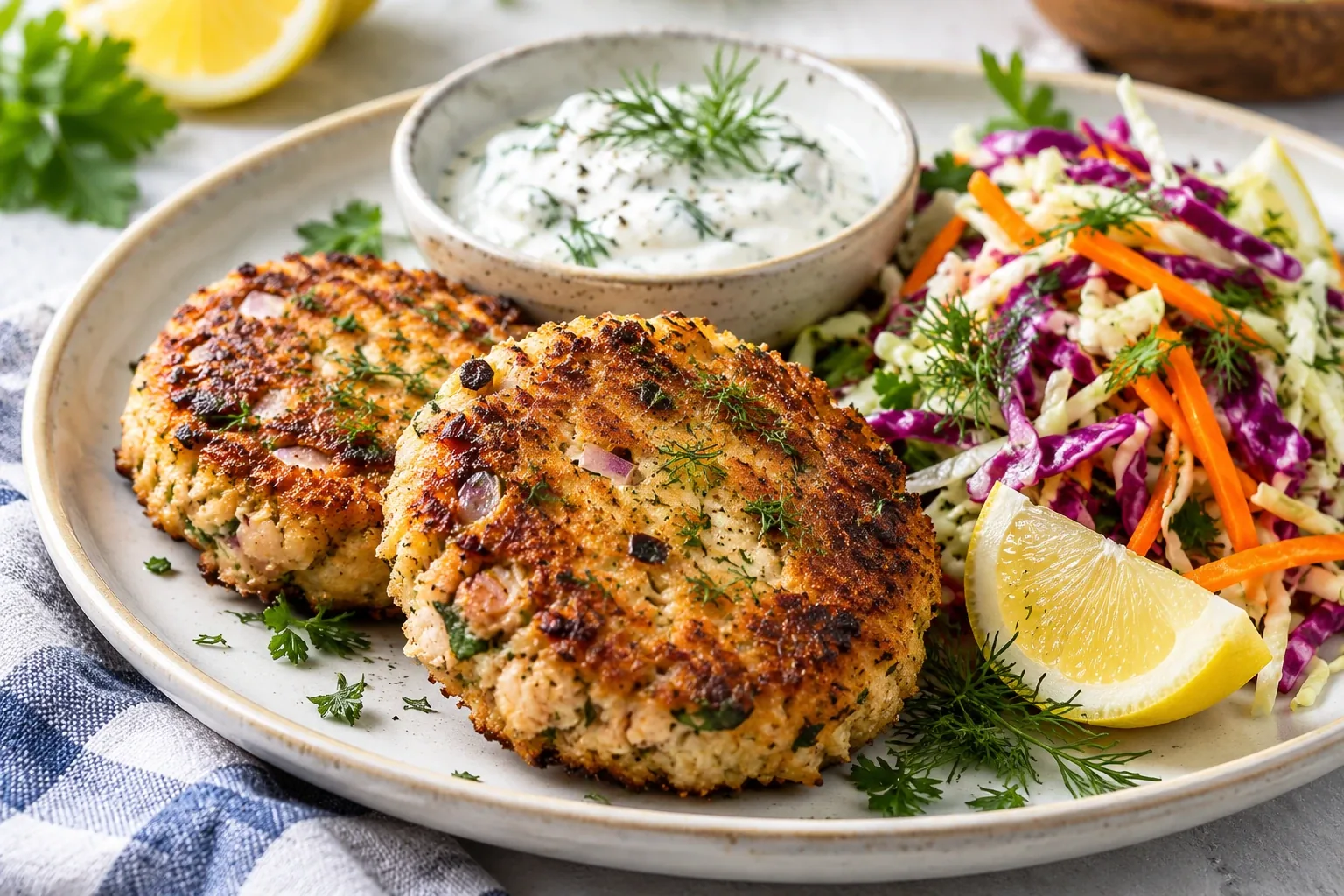
Canned tuna is convenient, but it does not have to become another sandwich. These patties mix tuna with egg, oats, herbs, and lemon, then cook in the air fryer until the edges are browned and the centers are hot.
A cool lemon-dill yogurt sauce and crunchy cabbage slaw make the plate feel fresh. The patties are also useful for meal prep because they reheat better than many breaded fish cakes.
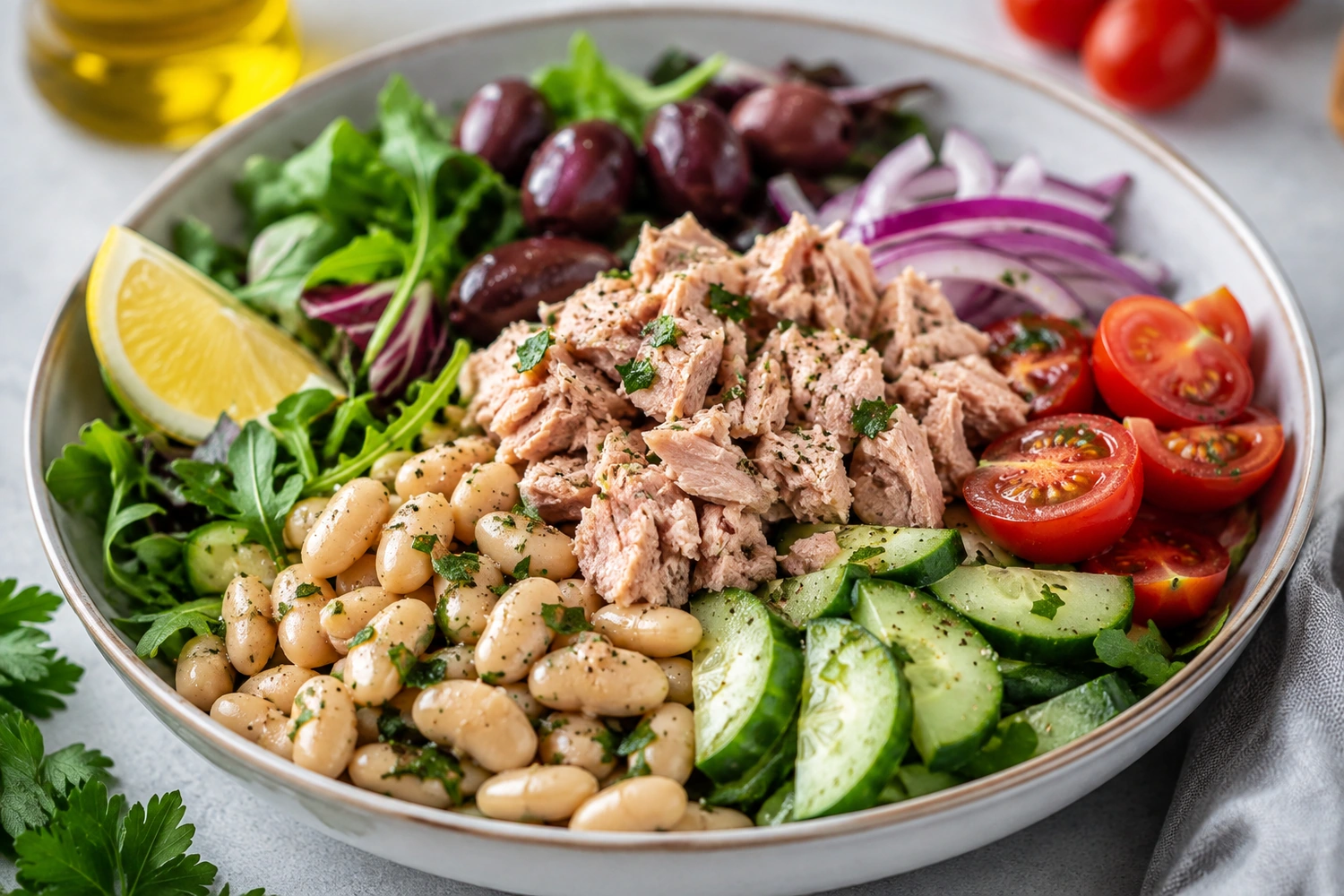
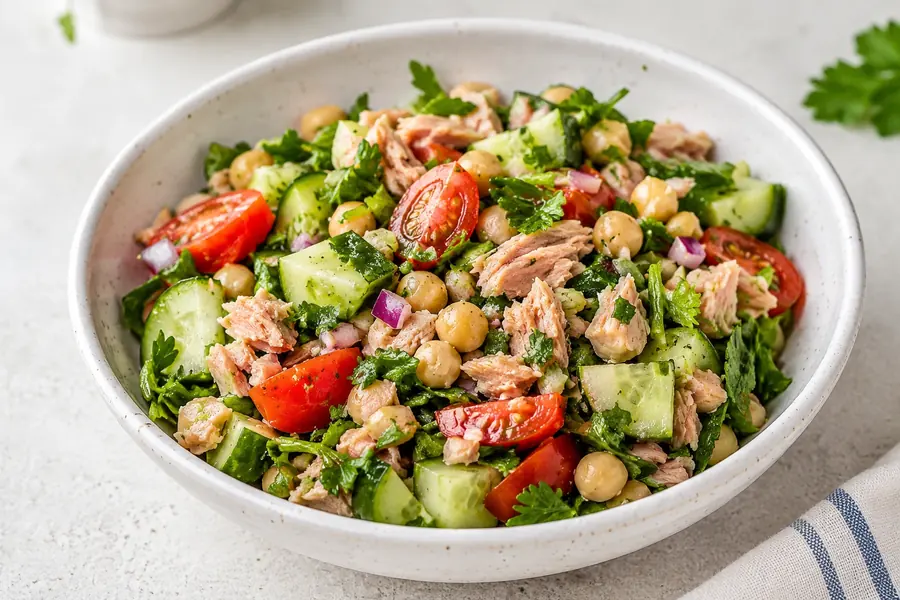
This recipe is written with familiar supermarket ingredients, measured quantities, and practical home-kitchen methods. It is intended as general food and fitness education rather than individualized diet treatment. If you like this style of meal, you may also enjoy Mediterranean Tuna White Bean Salad Bowl or Healthy Tuna Chickpea Salad from our healthy-meals library.
Why Readers May Like It
- 1Canned tuna provides a large amount of protein with minimal prep.
- 2Air frying creates crisp edges with a measured amount of oil.
- 3Cabbage slaw adds vegetable volume and crunch.
Recipe Summary and Estimated Nutrition
Values are calculated from the listed ingredient weights and divided by 4 servings. Product labels, produce size, cooking loss, drained weight, and substitutions can change the result.
4 servings
USDA-aligned generic food estimates divided by the listed yield.
Estimated energy per serving
Calculated from listed ingredients
Includes fiber and sugars
Includes unsaturated and saturated fat
Ingredient-by-Ingredient Nutrition Breakdown
| Ingredient | Amount used | Weight | Calories | Protein | Carbs | Fat |
|---|---|---|---|---|---|---|
| Tuna in water, drained | 4 cans drained | 452 g | 526 kcal | 116 g | 0 g | 5 g |
| Eggs | 2 large | 100 g | 143 kcal | 12.6 g | 0.7 g | 9.5 g |
| Rolled oats, pulsed | 3/4 cup | 68 g | 258 kcal | 8.8 g | 45.5 g | 4.8 g |
| Lemon juice | 2 tablespoons | 30 g | 7 kcal | 0.1 g | 2 g | 0 g |
| Fresh dill and parsley | 2 tablespoons | 16 g | 6 kcal | 0.5 g | 1 g | 0.1 g |
| Plain nonfat Greek yogurt | 1 cup | 227 g | 133 kcal | 24 g | 8 g | 0.7 g |
| Shredded cabbage and carrot | 4 cups | 280 g | 93 kcal | 4 g | 20 g | 0.7 g |
| Extra-virgin olive oil | 1 tablespoon | 14 g | 124 kcal | 0 g | 0 g | 14 g |
| Olive oil spray equivalent | 1 teaspoon | 5 g | 44 kcal | 0 g | 0 g | 5 g |
| Total of listed ingredient estimates | 4 servings | 1192 g | 1334 kcal | 166 g | 77.2 g | 39.8 g |
How This Nutrition Estimate Was Prepared
- Each ingredient has an explicit gram weight.
- Generic food-composition estimates are aligned with USDA FoodData Central.
- Full-recipe values are divided by the listed yield before display rounding.
- Optional ingredients are excluded unless measured in the base recipe.
Accuracy note: These values are approximate ingredient estimates, not independently verified nutrition analysis. Use exact package labels when precision is important.
These totals sum the displayed ingredient estimates and divide by the listed servings. They are approximate, not independently verified nutrition analysis. Raw versus cooked weights, brands, seasoning and substitutions can change the result.
Ingredients
Patties
Sauce
Slaw
Cooking
Professional Step-by-Step Preparation
As an Amazon Associate I earn from qualifying purchases. Tool links below are paid links.
Equipment
Cutting board, chef knife, measuring tools, mixing bowls (paid link), and the cookware described in the directions.
Before You Start
Wash produce, keep raw animal proteins separate from ready-to-eat foods, and use a food thermometer where appropriate. Read the whole method once before you begin so the meal comes together smoothly.
Mix the tuna patties
Combine well-drained tuna with eggs, oat crumbs, lemon juice, herbs, black pepper, and a small pinch of salt. Combine the ingredients in a mixing bowl (paid link) with enough room to avoid spilling. Weigh the listed ingredient quantities with a digital kitchen scale (paid link) before starting this step.
Success tip: Press excess water from the tuna so the patties hold together.
Shape and chill briefly
Shape into eight small patties and refrigerate 10 minutes while the air fryer (paid link) heats to 390°F (200°C).
Success tip: Smaller patties are easier to turn and develop more crisp surface area.
Air-fry until browned
Lightly oil the basket and patties. Cook 6 minutes, turn carefully, then cook 4 to 6 minutes more until hot and browned.
Success tip: Leave space between patties so air can circulate.
Make sauce and slaw
Mix yogurt with dill, lemon zest, and pepper. Toss cabbage and carrot with olive oil, lemon juice, and a splash of vinegar.
Success tip: Keep the yogurt sauce separate from the slaw until serving for the best texture.
Serve
Serve two patties per portion with slaw and a spoonful of lemon-dill yogurt.
Success tip: Add whole-grain crackers, potato, or fruit if you need more carbohydrate.
Potential Benefits and Things to Consider
Potential Benefits
- Tuna is rich in protein and provides vitamin B12 and selenium.
- Greek yogurt adds extra protein with a creamy texture.
- Cabbage and carrots add vegetables and fiber.
Things to Consider
- Tuna contains fish, yogurt contains milk, and eggs are present in the patties.
- People who are pregnant or limiting mercury exposure should follow local tuna-consumption guidance.
- Canned tuna can contribute sodium, so choose lower-sodium varieties if needed.
Healthy eating is about the overall pattern rather than one “perfect” dish. This recipe can fit into a varied diet when portions, sides, and frequency match your appetite, activity level, and individual needs.
Who May Enjoy This Recipe?
It May Work Well For
- Active adults looking for balanced, practical meals with a clear protein source.
- Health-conscious readers who value vegetables, whole foods, and transparent nutrition estimates.
- Busy households in the U.S., Canada, UK, Australia, and similar markets that want familiar grocery-store ingredients.
Best Times to Eat It
- Lunch at home or packed for later when storage is appropriate
- Meal prep when the components can be cooled and refrigerated safely
- Before or after training according to individual preference, timing, and energy needs
How to Adjust It for Different Goals
For More Protein
Increase the main protein-rich ingredient by about 20–25% or add a measured protein-rich side. Recalculate nutrition if precise tracking matters.
For Lower Calories
Keep vegetables generous and reduce calorie-dense oil, cheese, nuts, seeds, or grain portions slightly rather than removing the protein source.
For More Carbohydrate
Add a measured serving of whole grains, potatoes, fruit, or whole-grain bread around training or higher-energy days.
Substitutions, Dietary Notes, and Allergens
Practical Substitutions
- Use canned salmon instead of tuna.
- Use whole-wheat breadcrumbs instead of oats.
- Replace Greek yogurt with an unsweetened dairy-free yogurt if required.
Allergen Information
Contains fish, egg, and milk. Oats should be certified gluten-free if needed.
Always check packaged ingredient labels because formulations and cross-contact statements can change between brands and countries.
Storage and Meal Preparation
Refrigerate cooked patties for up to 3 days and reheat in the air fryer for best texture. Store sauce and slaw separately.
Cool cooked food promptly, refrigerate within 2 hours, and reheat leftovers until steaming hot where appropriate. When packing food for work or travel, keep cold components at 40°F (4°C) or below.
Frequently Asked Questions
Refrigerate cooked patties for up to 3 days and reheat in the air fryer for best texture. Store sauce and slaw separately.
Increase the main protein-rich ingredient modestly or add a measured side such as Greek yogurt, cottage cheese, edamame, eggs, beans, poultry, seafood, or tofu that fits the recipe.
Use canned salmon instead of tuna.
Each listed ingredient is assigned a generic USDA-aligned food-composition estimate by gram weight. Ingredient values are totaled for the full recipe and divided by the stated yield.
It is a general healthy-meal idea. Individual nutrition needs differ, especially with allergies, medical conditions, pregnancy, prescribed diets, or sport-specific fueling requirements.
No. This page is educational and does not diagnose, treat, or provide individualized nutrition advice.
Nutrition and Safety Note
This page is for general education. It does not diagnose, treat, or provide individualized diet advice. People with allergies, medical conditions, pregnancy, or specific nutrition requirements should seek qualified professional guidance.
Nutrition Data Source
Read our Nutrition Calculation Methodology for details on weights, estimates, rounding, and limitations.
General Nutrition References
Recipe development note: this page does not claim independent kitchen testing. The image is illustrative and does not document a tested result. Ingredient-based nutrition estimates can change with brands, weighing state, preparation and serving size; use exact labels when precision matters.