Published by Best Fitness Routine. Editorial standards · Report a correction. Educational guidance; no individual clinical review is claimed unless a qualified reviewer is named.
What This Wall Pilates Workout for Beginners Guide Should Accomplish
The goal is practical: improve control and confidence while keeping the workout accessible and low impact. A useful Pilates session should feel deliberate rather than rushed. You should be able to identify what each exercise is asking you to control, choose a version that matches your current ability, and finish with enough confidence to repeat the plan.
This article focuses on using a wall as a stable reference for alignment, balance and beginner-friendly resistance. That means the session is not built around burning as many calories as possible or forcing extreme flexibility. Pilates can be challenging, but the challenge should come from precision, leverage, time under tension and coordination rather than random complexity.
If you are new to this style of training, compare the ideas here with Pilates for Beginners: 10 Exercises and a Simple Starting Routine. For another way to organize a session, see Pilates Workout at Home: 20-Minute Full-Body Routine. Those guides use the same site-wide approach: clear setup, controlled progression and realistic recovery.
Six Priorities That Keep the Pilates Session Focused
For wall pilates workout, keep the first few sessions intentionally manageable. A smaller range or easier variation is still productive when it lets you feel the target movement and repeat it with consistent control.
Start With Position, Breath and a Comfortable Range
Set up on a firm mat or stable surface. Let your breathing stay quiet and steady, and use the exhale to help organize the trunk during the harder part of a movement. You do not need to pull the abdomen in as hard as possible. Think about creating enough tension to control the ribs and pelvis while the arms or legs move.
Before the main wall pilates workout work, spend two to five minutes on easy mobility and breathing. If a movement feels pinchy, sharp or increasingly uncomfortable, reduce the range or choose a different exercise. Normal muscular effort is different from joint pain, numbness, dizziness or symptoms that continue after you stop.
Exercises and Practical Form Cues
| Exercise or focus | Starting dose | Practical cue |
|---|---|---|
| Wall breathing | 5 breaths | Stand tall with the back lightly contacting the wall. |
| Wall roll-down | 6 reps | Peel the spine away from the wall gradually. |
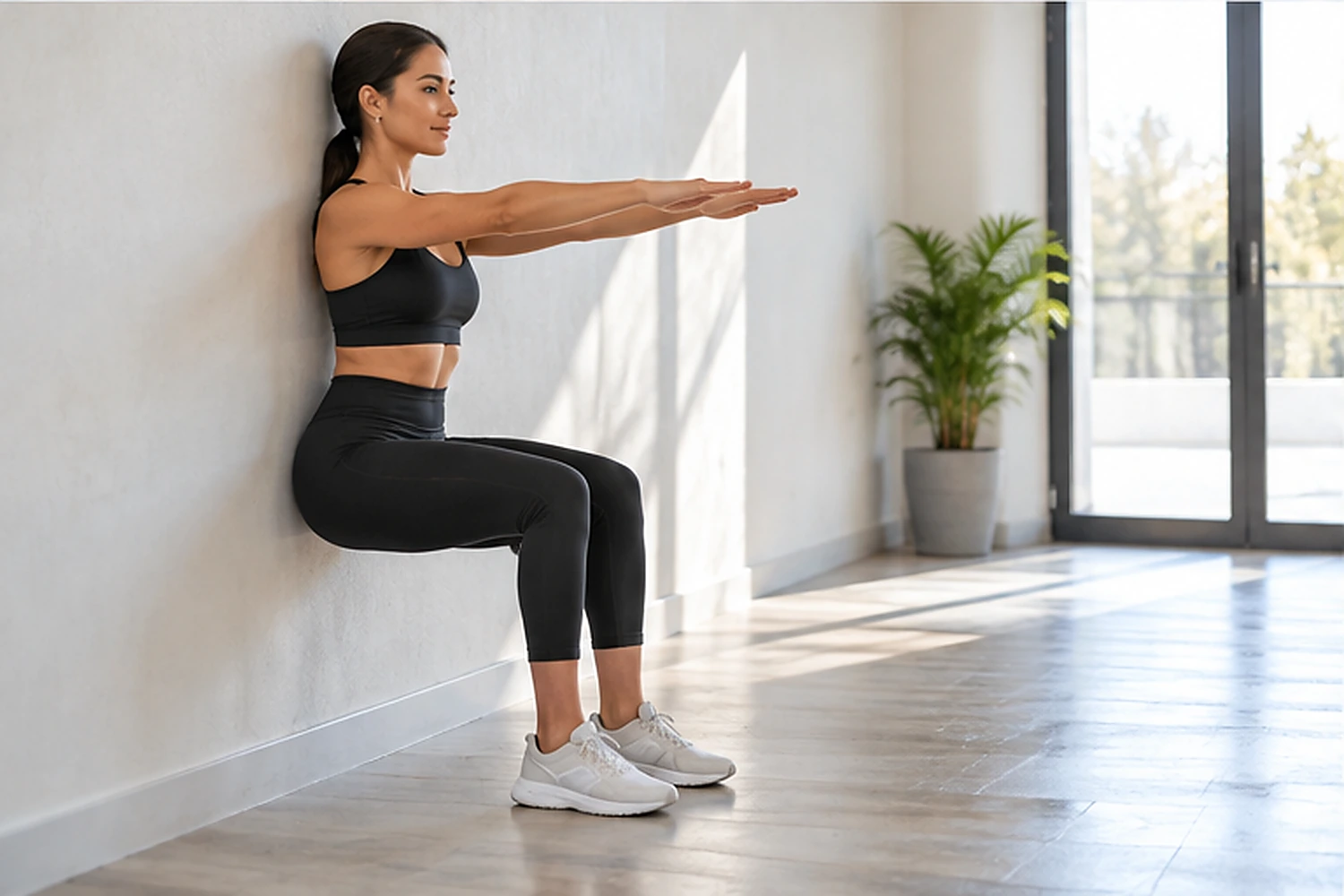
| Wall squat | 8–10 reps | Keep pressure even through both feet and stop at a comfortable depth. |
| Wall calf raise | 12 reps | Use the wall lightly rather than pulling on it. |
| Wall march | 8/side | Lift one knee without leaning sideways. |
| Wall push-up | 8–12 reps | Keep the body in one line from head to heels. |
| Wall-supported single-leg balance | 20 sec/side | Use fingertip contact as needed. |
| Wall bridge setup | 8 reps | Place feet on the wall only if the setup feels stable. |
| Standing side leg lift | 10/side | Keep the pelvis level as the leg moves. |
| Wall posture reset | 5 breaths | Finish with relaxed ribs and a long spine. |
The first few movements—Wall breathing, Wall roll-down, Wall squat, Wall calf raise, Wall march—give you enough variety to train without making the routine difficult to remember. Keep transitions simple. When you can repeat the sequence with consistent control, progress one movement rather than redesigning the entire workout.
How to Build a Repeatable Session
A practical wall pilates workout session can use two rounds of the exercises above. Rest briefly between movements when breathing or technique needs to settle. Beginners can choose six exercises and complete one or two rounds; more experienced readers can use the full list and add a third round only when form stays consistent. An optional exercise interval timer (paid link) can help you time the activity and rest periods described here.
For home training, Pilates for Posture: 9 Exercises for Better Alignment and Core Control can help you decide which movements need more trunk stability. If your main goal is lower-body control, compare the sequence with Pilates Leg Workout: 10 Exercises for Stronger Legs and Stability. Keeping related pages connected makes it easier to build a routine without mixing unrelated exercises.
Sample Weekly Structure
| Day | Training focus | Practical plan |
|---|---|---|
| Monday | Wall Pilates Workout | Complete the main routine at a moderate effort and record which exercises felt most controlled. |
| Tuesday | Easy movement | Walk, cycle gently or use a short mobility session. |
| Wednesday | Strength or rest | Use resistance training if it fits your goals, or take a full recovery day. |
| Thursday | Pilates technique | Repeat the routine with slightly fewer repetitions and focus on smoother technique. |
| Friday | Easy movement | Choose comfortable activity that does not create significant fatigue. |
| Saturday | Optional Pilates | Use a short session, a reformer class, or a targeted core, leg or mobility block. |
| Sunday | Rest | Recover and review the week before increasing volume. |
Technique, Tempo and Breathing
Move slowly enough to notice when the pelvis, ribs or shoulders start compensating. A controlled tempo—roughly two seconds into a movement and two seconds back—is a useful starting point. Some exercises naturally use a different rhythm, but speed should not be used to hide loss of control.
Breathing should support the movement rather than dominate it. In many Pilates exercises, an exhale during the more demanding phase can help you organize the trunk. If breathing becomes strained, shorten the set. For more trunk-control ideas, Pilates Benefits: What Regular Pilates Can Do for Strength, Mobility and Balance provides a useful companion guide.
Use a Simple Progression System
Progress only after the current version feels stable. Start by adding one or two repetitions. Next, increase range slightly. After that, use a more demanding lever, less external support, a light resistance band, or a small dumbbell when the exercise is designed for it. Changing several variables at once makes it hard to know what caused a technique breakdown.
For wall pilates workout, keep a simple note after each session: exercises completed, repetitions, any modifications, and how the body felt later that day. That information is more useful than judging a workout only by soreness.
A Four-Week Implementation Roadmap
Week 1
Learn the setup and use conservative ranges. Stop every set while technique still feels organized.
Week 2
Repeat the same structure and add a small number of repetitions to the easiest movements.
Week 3
Progress one or two exercises by adding range, a longer hold, or a modest resistance challenge. Keep your session notes in a workout logbook (paid link) so you can compare the activity and recovery discussed here.
Week 4
Keep the best-performing exercises, remove awkward variations, and decide whether to repeat the block or move to a more specific Pilates goal.
Recovery, Frequency and Other Training
Two to four Pilates sessions per week can fit many schedules, but the right frequency depends on session difficulty and what else you do. A challenging reformer class and a gentle mobility-focused mat session do not create the same demand. Count total lower-body, upper-body and core work across the week rather than treating every Pilates session as “recovery.”
Sleep, regular meals and adequate hydration support training quality. Pilates does not require a special diet. If you are also lifting weights or running, place harder sessions where you can recover between them.
Common Mistakes and Better Replacements
- Moving too fast. Slow down until you can control both the effort phase and the return.
- Using a larger range than you can own. Shorten the range and build it gradually.
- Holding the breath. Reduce effort enough to keep breathing comfortable.
- Forcing the low back flat in every exercise. Use the spinal position that the exercise calls for and that you can maintain comfortably.
- Choosing advanced variations for appearance. Use the version that lets you feel the intended muscles and keep stable joints.
- Changing the routine every session. Repeat a core group of movements long enough to measure progress.
How to Adjust the Routine for Your Level
To make the routine easier, reduce range, use fewer repetitions, choose a supported variation, or rest longer. To make it harder, add a pause, slow the lowering phase, use a longer lever, or introduce light resistance. The best adjustment keeps the same movement goal while changing the amount of challenge.
If you are working around a previous injury, recent surgery, pregnancy, pelvic-floor symptoms, osteoporosis, persistent back pain or another medical concern, use individualized guidance rather than assuming a general online progression is appropriate.
Frequently Asked Questions
Two to four sessions per week can be practical for many people, depending on session difficulty, recovery and other training.
Many Pilates exercises can be done on a mat. Reformer-specific work requires a machine, while bands, balls or light weights are optional for some routines.
It can feel challenging, especially through longer controlled sets, but pain and uncontrolled strain are not goals.
Yes. Start with the easiest variations, fewer repetitions and smaller ranges, then progress gradually.
Pilates can build strength and muscular endurance, but heavier resistance training may still be useful when maximal strength or muscle growth is a primary goal.
Stop or modify the movement. Seek qualified medical or rehabilitation guidance for persistent, sharp, worsening or concerning symptoms.
Safety and Scope
This guide provides general educational fitness information. It does not diagnose injuries, replace medical care or provide an individualized exercise prescription. Use stable equipment, work within a comfortable range, and stop any exercise that causes sharp, worsening or concerning pain.