Published by Best Fitness Routine. Editorial standards · Report a correction. Educational guidance; no individual clinical review is claimed unless a qualified reviewer is named.
Patient education only. This article has not been reviewed by a qualified clinician and does not provide an individual diagnosis, treatment decision or exercise programme.
A Practical Starting Point
As an Amazon Associate I earn from qualifying purchases. This guide includes paid Amazon links.
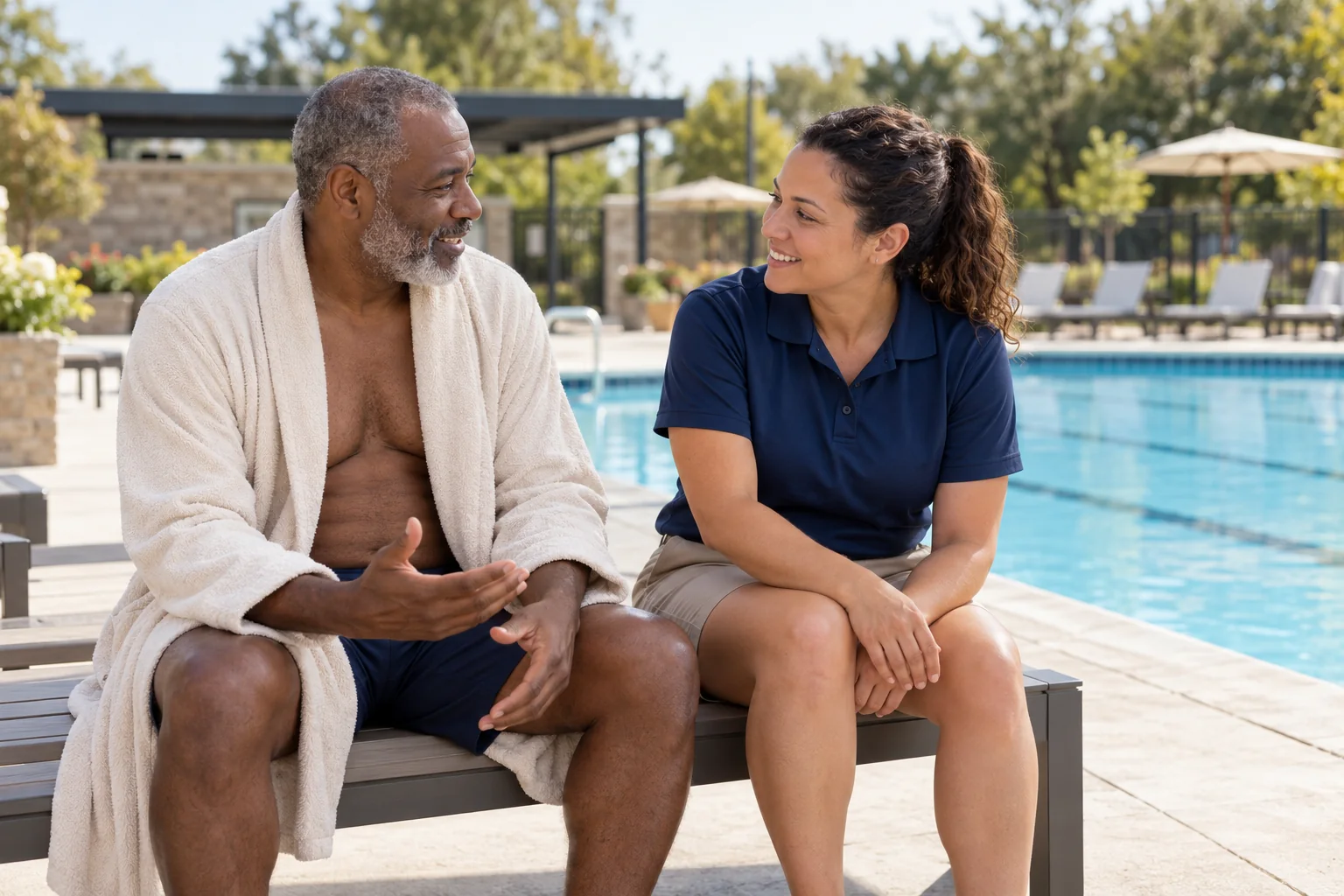
Swimming may be an activity you enjoy or want to discuss after an osteoporosis diagnosis. It can have value for fitness and participation, but being supported by water changes the forces involved. Enjoyment and bone-loading effects are different questions.
This guide explains that distinction and helps prepare a conversation about water-based activity. It does not prescribe strokes, lengths, pool exercises or recovery stages. A pool's accessibility and your individual health history still matter.
Separate fitness benefits from bone-loading claims
Swimming can contribute to aerobic fitness and an enjoyable activity routine. Water's buoyancy reduces weight-bearing compared with many land activities. That is why swimming should not be presented as a stand-alone replacement for a bone-health activity plan.
The Victorian osteoporosis and exercise resource explains this limitation. It does not make swimming pointless. Ask which role the activity would serve for you and whether another part of the plan still needs attention. A claim that water activity is gentle cannot establish a guaranteed effect on bone density or fracture risk.
Identify the kind of water activity being discussed
Lane swimming, a general pool class and individually supervised aquatic rehabilitation are different services. They may involve different instructions, supervision and access arrangements. The same swimming-pool building can host all three, so the venue name does not explain what you are signing up for.
Ask the provider what the session actually involves and what information it needs from you. If you are seeking rehabilitation, ask which qualified professional is responsible for the assessment and plan. Do not treat an ordinary class or a video of water exercises as a substitute for that individual service.
Make pool access part of the discussion
Getting to and from the water can be as relevant as the activity itself. Changing rooms, wet surfaces, steps, handrails, ladders and access equipment deserve consideration if you have balance concerns or a recent fracture. Ask staff what the facility provides instead of assuming every entrance is suitable.
These are questions to resolve before a visit, not instructions to practise a transfer on your own. Tell the relevant professional about any difficulty and ask who can assess access if needed. This page cannot guarantee that a pool, floor mat or piece of footwear will prevent a fall.
A question notebook (paid link) can hold the access questions you want answered by the facility; an existing phone note works.
Discuss fracture history and current advice
Explain any recent fracture, pain, treatment or restriction from another service. An activity that feels supported in water may still involve movements or entry demands that need individual consideration. Pool activity is not automatic clearance during fracture recovery.
The Osteoporosis Canada activity information encourages an appropriate overall approach rather than replacing its different components with one favourite activity. Our activity-assessment questions can help structure that discussion. If you are recovering from a spinal fracture, use the follow-up preparation guide to organise questions for the treating team.
Ask how it fits with the rest of care
Water-based activity and land-based strength or balance work can have different roles. A clinician or appropriately qualified exercise professional can explain which components apply to you. Do not decide that a swim has replaced a prescribed treatment, assessment or individually advised exercise simply because it was enjoyable or tiring.
The BHOF exercise resource offers broader education. If walking is another interest, our walking comparison of roles explains its limits too. Neither article sets a complete weekly plan. There is no universal number of pool visits, lengths or land sessions on this page.
Get a clear answer before buying equipment
Ask whether the provider supplies equipment and whether anything specific is needed for the actual service. A bag of pool accessories cannot establish that an activity suits your medical circumstances. Equipment sold with words such as rehabilitation or bone strength still needs a relevant professional explanation.
You can write down access and supervision questions for a call before committing to a membership. A useful answer should name the service, what it can provide and any individual assessment needed. If that remains unclear, seek clarification rather than buying a course because its description promises universally safe exercise.
If you need a pool bag (paid link), compare ordinary storage only after learning what the provider requires; it has no therapeutic role.
Questions and Appointment Checklist
- Identify whether the service is swimming, a general class or rehabilitation.
- Ask what fitness role it would have in your overall plan.
- Discuss fracture history, current symptoms and any existing advice.
- Check the actual access arrangements and assessment support.
- Clarify the service and requirements before buying equipment or sessions.
Discussion Points at a Glance
| Topic | What to ask | What not to assume |
|---|---|---|
| Activity type | Is this swimming, a class or clinical rehabilitation? | All pool sessions provide the same service |
| Bone-health role | Which parts of my plan does it contribute to? | Water activity replaces all bone-loading needs |
| Access | How are entry, exit and changing-room difficulties assessed? | Buoyancy removes every practical risk |
| Equipment | What does the actual provider require? | A therapeutic product label provides clearance |
Misunderstandings to Avoid
Fitness benefits and bone-loading roles differ.
Discuss access as well as what happens in the water.
Get the provider's requirements and appropriate individual advice first.
Frequently Asked Questions
No. It can contribute to fitness and enjoyment. Its limitations for bone loading mean it should not be treated as a complete replacement for other recommended care.
No. Your history, movement demands and access arrangements still matter.
Not necessarily. Ask what service is offered, who assesses you and who is responsible for the plan.
This page cannot prescribe that. Ask about an appropriate activity plan based on your circumstances and the service involved.
Scope and Personal Care
This article provides general patient education, not a diagnosis, treatment decision or personalised exercise programme. No exercise routines, doses or individual activity clearance are provided. Discuss personal results, fracture history, changing symptoms and medicine questions with the appropriate treating professional. Do not alter prescribed treatment from website information. For urgent or emergency symptoms, use an appropriate local medical service rather than waiting for a routine appointment.
Sources and Further Reading
- Victoria Better Health osteoporosis and exercise
- Osteoporosis Canada Too Fit To Fracture
- BHOF exercise and safe movement
Prepared by the Best Fitness Routine Editorial Team. Sources checked October 24, 2026. This source-based patient education has not been reviewed by a qualified clinician and does not provide an individual assessment. Images are AI-generated illustrations.