
Protein for Active Adults: Amounts, Timing, and Food-First Tips: What This Guide Covers
A practical U.S.-focused guide to daily protein, meal timing, food choices, and realistic strategies for strength, recovery, and healthy aging.
This guide is written for U.S. adults who want practical, evidence-aware health and fitness information without turning everyday wellness into a complicated set of rules. It is general education, not individualized medical care, diagnosis, or treatment. Your age, health history, medications, symptoms, pregnancy status, and training background can change what is appropriate.
For related practical guidance, see our strength training for healthy aging, then adapt the ideas to your current ability and goals.
Key Priorities
Keep these priorities simple for several weeks before adding more tracking, supplements, or advanced tactics. Good health routines are usually built from repeatable basics rather than constant optimization.
Start With a Realistic Baseline
Before changing your routine, look at a normal week. Record what you already do, what feels difficult, how you sleep, how often you exercise, and which barriers repeatedly get in the way. A baseline gives you something useful to compare against instead of guessing from one good or bad day.
If you are returning after surgery, illness, pregnancy, a significant injury, or a long period of inactivity—or if you have a chronic condition that affects exercise or nutrition—individual guidance may be more appropriate than a generic online plan.
A Practical Weekly Structure
| Day / Block | Focus | Practical Plan |
|---|---|---|
| Monday | Breakfast | Add eggs, Greek yogurt, cottage cheese, tofu, or milk. |
| Tuesday | Lunch | Build around chicken, tuna, turkey, beans, lentils, tofu, or tempeh. |
| Wednesday | Snack | Use yogurt, milk, edamame, cheese, or a measured protein shake if needed. |
| Thursday | Dinner | Include a protein-rich main food plus vegetables and a quality carbohydrate. |
| Friday | Training days | Keep meals regular; add a protein-containing snack near training if useful. |
| Weekend | Rest days | Protein still supports recovery; total needs do not disappear on days off. |
This is an example framework, not a prescription. Rearrange it around work, family, climate, training preferences, and recovery. The useful part is the pattern: do the important basics often enough to create a trend, then adjust one variable at a time.
Start With Your Daily Pattern
Before adding shakes or bars, look at a normal day. Many people eat very little protein at breakfast and lunch, then try to make up the difference at dinner. A steadier distribution can make meals more satisfying and may better support muscle protein synthesis across the day.
Food Sources That Work in Real Life
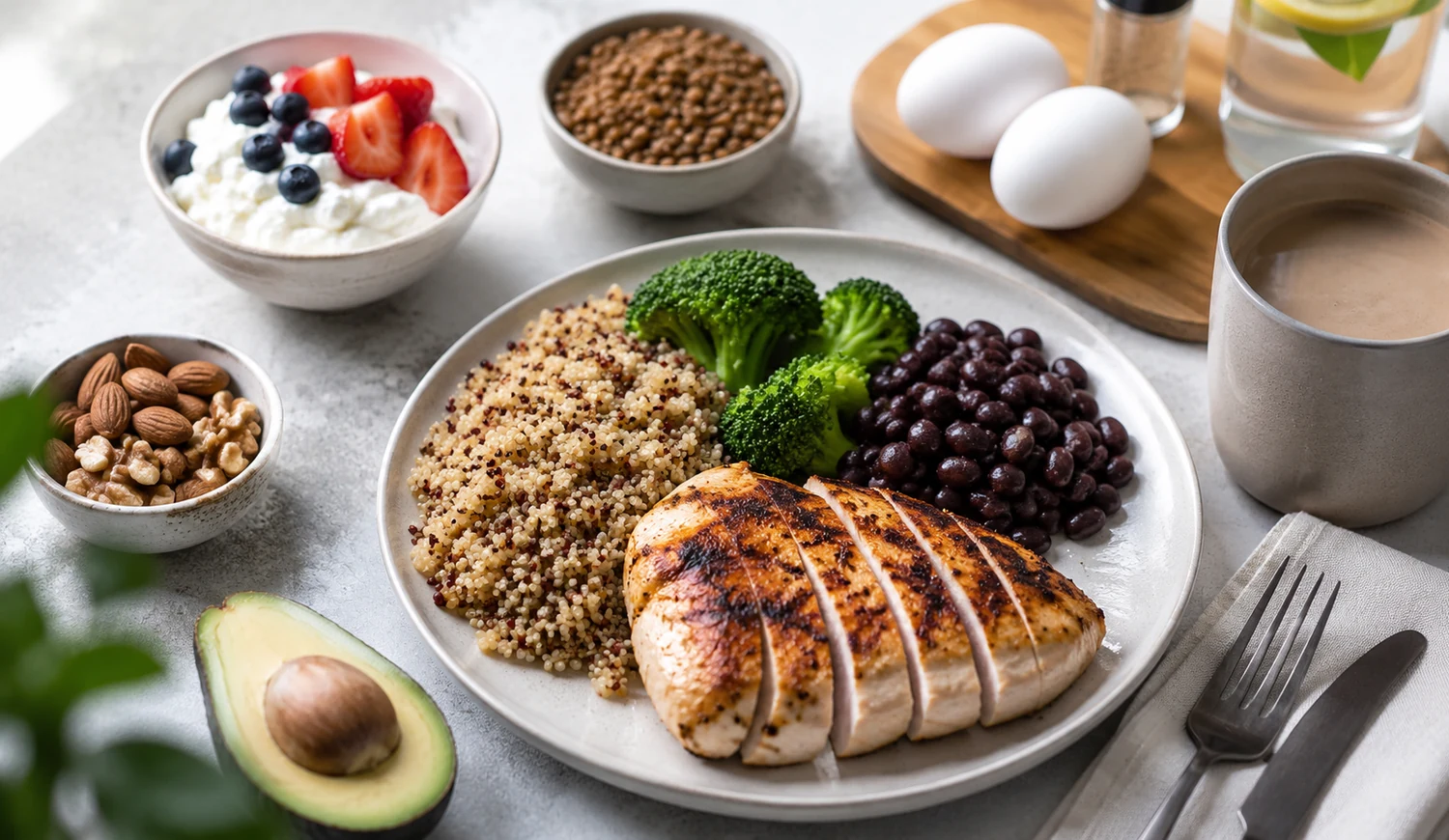
Common U.S. grocery-store options include Greek yogurt, cottage cheese, eggs, chicken, turkey, tuna, salmon, tofu, tempeh, edamame, beans, lentils, milk, soy milk, and lean beef. A serving does not need to be enormous; combining foods across a meal adds up.
You can compare this with our muscle-gain workout planning guide for another way to build the bigger picture.
Protein Timing Around Workouts
A meal containing protein within a few hours before or after training is a practical target for most recreational exercisers. There is no need to panic about a tiny post-workout “window.” Consistency across the full day matters more than chasing an exact minute.
When Supplements Are Convenient
Protein powder can be useful when appetite, travel, work schedules, or food access make a regular meal difficult. It is a convenience product, not a requirement. Look for transparent labeling and consider third-party testing if you use supplements regularly.
For another practical next step, read our healthy meal ideas.
A Four-Week Implementation Roadmap
Week 1
Observe your current routine and make the smallest useful change. Keep notes on what is realistic rather than trying to be perfect.
Week 2
Repeat the same structure. Improve consistency and remove friction—prepare equipment, schedule sessions, or make the healthy choice easier to access.
Week 3
If recovery and comfort are good, progress one variable. Add a little time, resistance, frequency, or food variety rather than changing everything at once.
Week 4
Review the month. Keep what improved function, energy, performance, or confidence. Remove steps that added complexity without changing decisions.
What to Track—and What to Ignore
- How consistently you follow the core behavior
- Energy and perceived effort across the week
- Sleep quality and general recovery
- Performance or comfort during normal activities
- Digestive or physical symptoms that change with the routine
- Whether the plan fits your real schedule
Tracking should reduce guesswork, not create pressure. If a number does not change a decision, you probably do not need to watch it every day. Trend data is usually more useful than isolated readings.
Common Mistakes and Better Replacements
- Changing everything at once: Change one or two variables so you can tell what actually helps.
- Copying someone else’s target: Use your own baseline, health status, and goals.
- Treating discomfort as proof of effectiveness: Challenge and pain are not the same thing.
- Ignoring sleep and life stress: Training and nutrition happen inside the rest of your life.
- Using a device as a diagnosis: Wearables and calculators are tools, not replacements for clinical care.
- Quitting after one imperfect week: Review trends over several weeks before judging the plan.
How Needs Change Across Ages and Ability Levels
Healthy adults can use the general principles here, but younger people, older adults, pregnant people, and people with chronic conditions may need different targets or precautions. Older adults often benefit from extra attention to strength, balance, medication effects, hydration, and recovery. People with disabilities may use seated, supported, assisted, or lower-impact options that preserve the purpose of the activity.
General health information cannot account for every diagnosis or medication. If a symptom is new, worsening, or concerning, use appropriate medical guidance instead of trying to solve it by pushing harder through a workout or making a drastic diet change.
A Simple Decision Rule for Real Life
If the problem is consistency, simplify the plan. If the problem is fatigue, reduce volume or intensity. If the problem is lack of progress and recovery is good, progress one variable. If the problem is pain, fainting, chest symptoms, severe shortness of breath, confusion, or another concerning change, stop and seek appropriate assessment.
To place this topic inside a broader routine, use our exercise and recovery article as a companion guide.
Frequently Asked Questions
Needs vary with body size, age, energy intake, and training. Many active adults benefit from more than the basic minimum, but an individualized target is best set with a qualified nutrition professional when precision matters.
No. A protein-containing meal within a few hours around training is practical for most people; total daily intake and consistency matter more than a very narrow timing window.
No. It is a convenient food supplement, but many people can meet their needs with regular foods.
Yes, with planning. Soy foods, beans, lentils, peas, seitan, whole grains, nuts, and seeds can contribute protein across the day.
No. Muscle gain also depends on progressive resistance training, adequate energy, recovery, and time.
Yes. Protein and resistance training are especially important for maintaining muscle and function with age, but medical conditions can change appropriate intake.
References and Further Reading
These references provide public-health or professional background for the general principles discussed in this article. They are not a substitute for personal medical advice.
Educational health and fitness information only. If you have symptoms, a diagnosed condition, take medication that affects exercise or nutrition, or need an individualized plan, consult an appropriate licensed healthcare professional.