Published by Best Fitness Routine. Editorial standards · Report a correction. Educational guidance; no individual clinical review is claimed unless a qualified reviewer is named.
What This Core Workout Should Accomplish
Good core training should feel challenging without requiring you to hold your breath or push through sharp discomfort. The goal is repeatable control, not the longest possible set or the most dramatic exercise variation. This guide uses the search topic plank workout as the main focus while naturally covering related questions such as beginner plank workout and plank variations for core strength. The exercises are written for real training rather than for a photo-perfect demonstration.
Learn plank form with beginner variations and progressions that build core endurance without turning every set into an all-out test. A useful session should improve control without leaving your lower back, neck or hips irritated. If you are new to exercise, begin with fewer sets than you think you need and build consistency first.
Before You Start
Clear enough floor space to move safely and use a mat if the surface is hard or slippery. For home workouts, a sturdy wall, chair or countertop can make many exercises easier. When equipment is used, select a resistance that lets you keep the same posture through the whole set.
Warm up with two to five minutes of easy walking, marching or mobility work. During the routine, aim for an effort around 5–7 out of 10 rather than maximal strain. Stop if you develop sharp pain, new numbness, dizziness, chest pain or symptoms that feel unusual for you. An optional exercise interval timer (paid link) can help you time the activity and rest periods described here.
Exercise-by-Exercise Guide
Wall Plank
Start with hands on a wall and step back until the body forms one long line. Keep the ribs stacked and glutes lightly active. Start with 1–2 sets and leave a few good repetitions in reserve while you learn the movement.
Incline Plank
Place hands on a bench or counter and hold a straight body line while breathing steadily. Start with 1–2 sets and leave a few good repetitions in reserve while you learn the movement.
Knee Forearm Plank
Use forearms and knees as contact points, keeping the hips between the shoulders and knees. Start with 1–2 sets and leave a few good repetitions in reserve while you learn the movement.
Forearm Plank
Set elbows under shoulders and hold a strong line from head to heels without sagging or piking. Start with 1–2 sets and leave a few good repetitions in reserve while you learn the movement.
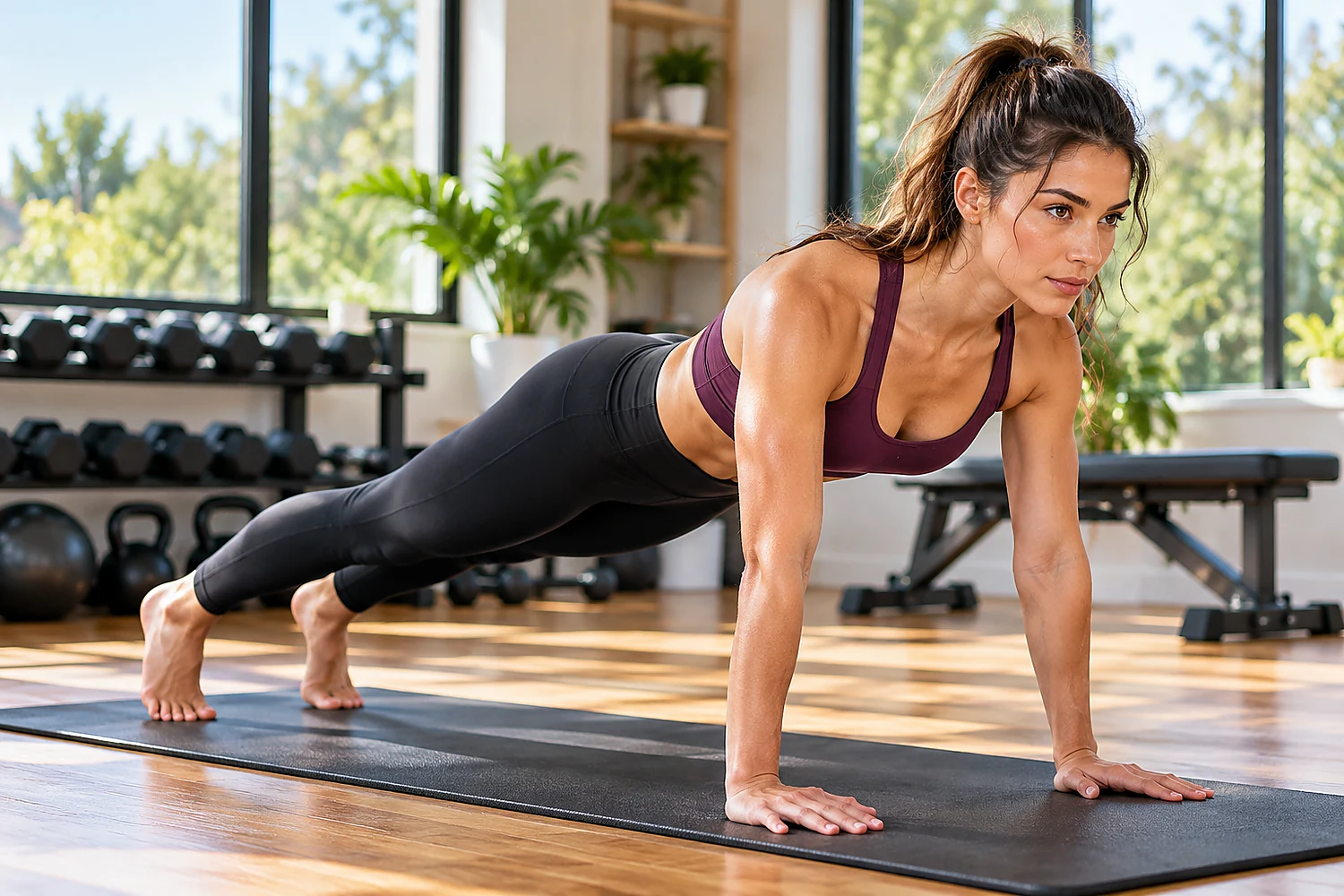
High Plank
Use a push-up position and spread the floor with the hands to keep the shoulder blades controlled. Start with 1–2 sets and leave a few good repetitions in reserve while you learn the movement.
Plank Shoulder Tap
Widen the feet, lift one hand to the opposite shoulder and minimize side-to-side hip movement. Start with 1–2 sets and leave a few good repetitions in reserve while you learn the movement.
Sample Core Routine
Complete the following sequence for one round the first week. If form stays consistent and recovery is good, progress to two or three rounds. The routine can be used on its own or after a shorter strength session. Keep your session notes in a workout logbook (paid link) so you can compare the activity and recovery discussed here.
| # | Exercise | Starting Dose | Execution Note |
|---|---|---|---|
| 1 | Wall plank | 30 sec | Controlled pace; rest 20–40 seconds as needed. |
| 2 | Incline plank | 25 sec | Controlled pace; rest 20–40 seconds as needed. |
| 3 | Knee forearm plank | 20 sec | Controlled pace; rest 20–40 seconds as needed. |
| 4 | Forearm plank | 15–30 sec | Controlled pace; rest 20–40 seconds as needed. |
| 5 | High plank | 20 sec | Controlled pace; rest 20–40 seconds as needed. |
| 6 | Shoulder tap | 6/side | Controlled pace; rest 20–40 seconds as needed. |
For a beginner, the routine should feel like practice rather than a test. You should finish knowing that you could have completed a little more. That margin helps you repeat the workout often enough to improve.
How to Progress the Routine
Progress only after you can complete the current version with steady breathing and similar form on both sides. Add two repetitions, five to ten seconds of hold time, or a small increase in resistance. Another useful progression is to move the support point farther from your center of mass—for example, moving from a wall plank to a bench plank before going to the floor.
Do not automatically progress by making every movement faster. Slower repetitions, pauses and controlled breathing can make a basic exercise more demanding without adding impact. If a new progression causes compensation, return to the prior version for another week.
Adjustments for Different Ages and Fitness Levels
Beginners can shorten the range, use a wall or chair, and work in 10–20 second bouts. Older adults may prefer standing or chair-supported options and more time between sets. More experienced exercisers can increase lever length, add light resistance, or pair two exercises back-to-back while preserving form.
People returning after a long break should treat the first two weeks as a re-entry phase. Keep the total volume low enough that normal daily movement still feels comfortable the next day. During pregnancy, after surgery, or with persistent back/pelvic symptoms, individualized guidance may be appropriate before using harder abdominal exercises.
Common Mistakes and Better Replacements
- Rushing the repetitions. Slow down until you can tell which muscles are working and where your trunk begins to compensate.
- Holding your breath for the entire set. Use brief natural breaths and reduce the difficulty if you cannot breathe without losing position.
- Choosing a variation that is too advanced. Move to a wall, bench, bent-knee or shorter-range version and earn the harder progression.
- Training only the front of the abdomen. Include side-plank, bird-dog, carry or anti-rotation work so the trunk is trained in several directions.
- Using fatigue as the only measure of quality. Judge the set by control, repeatability and whether the intended muscles are doing the work.
- Ignoring recovery. Leave at least a day between harder core sessions when soreness or trunk fatigue would reduce your main workout quality.
How Often Should You Train Your Core?
Two to four short core sessions per week works well for many adults because the total training dose can be spread across the week. You do not need a long separate ab workout every day. Core work can also be attached to strength sessions, warm-ups or running days when the volume is modest.
A balanced fitness plan still needs whole-body strength training and aerobic activity. Core exercises support those goals rather than replacing them. If you want a broader routine, compare this guide with Beginner Workout Plan Home Workout Plan Functional Fitness and Mobility Strength Training Yoga Workouts and Poses.
Related Search Questions This Guide Answers
People often search for core workout, plank workout, beginner plank workout and plank variations for core strength. These phrases describe closely related needs, so they are addressed together here instead of repeating the same keywords unnaturally. The important part is that the page answers the question behind the search: what to do, how to do it, how much to do, and how to make it easier or harder.
Frequently Asked Questions
Ten to twenty minutes is enough for a focused session when the exercises are selected well. Longer is not automatically better.
Mild muscular work around the trunk can be normal, but sharp or increasing back discomfort is a reason to reduce the range, change the exercise or stop.
Very light practice can be frequent, but harder sessions usually benefit from recovery. Two to four focused sessions each week is enough for most beginners.
Core exercises strengthen the muscles underneath, but they cannot selectively remove fat from one area. Overall energy balance, diet, activity and genetics influence body-fat change.
Progress when you can complete the current version with steady breathing, controlled tempo and no significant form breakdown.
Safety and Scope
This article is general educational fitness information, not medical diagnosis or individualized treatment. Stop if an exercise causes sharp pain, dizziness, new numbness, chest pain or worsening symptoms. People with recent surgery, pregnancy-related restrictions, significant osteoporosis, hernia concerns, uncontrolled cardiovascular conditions or persistent back/pelvic pain may need individualized advice.