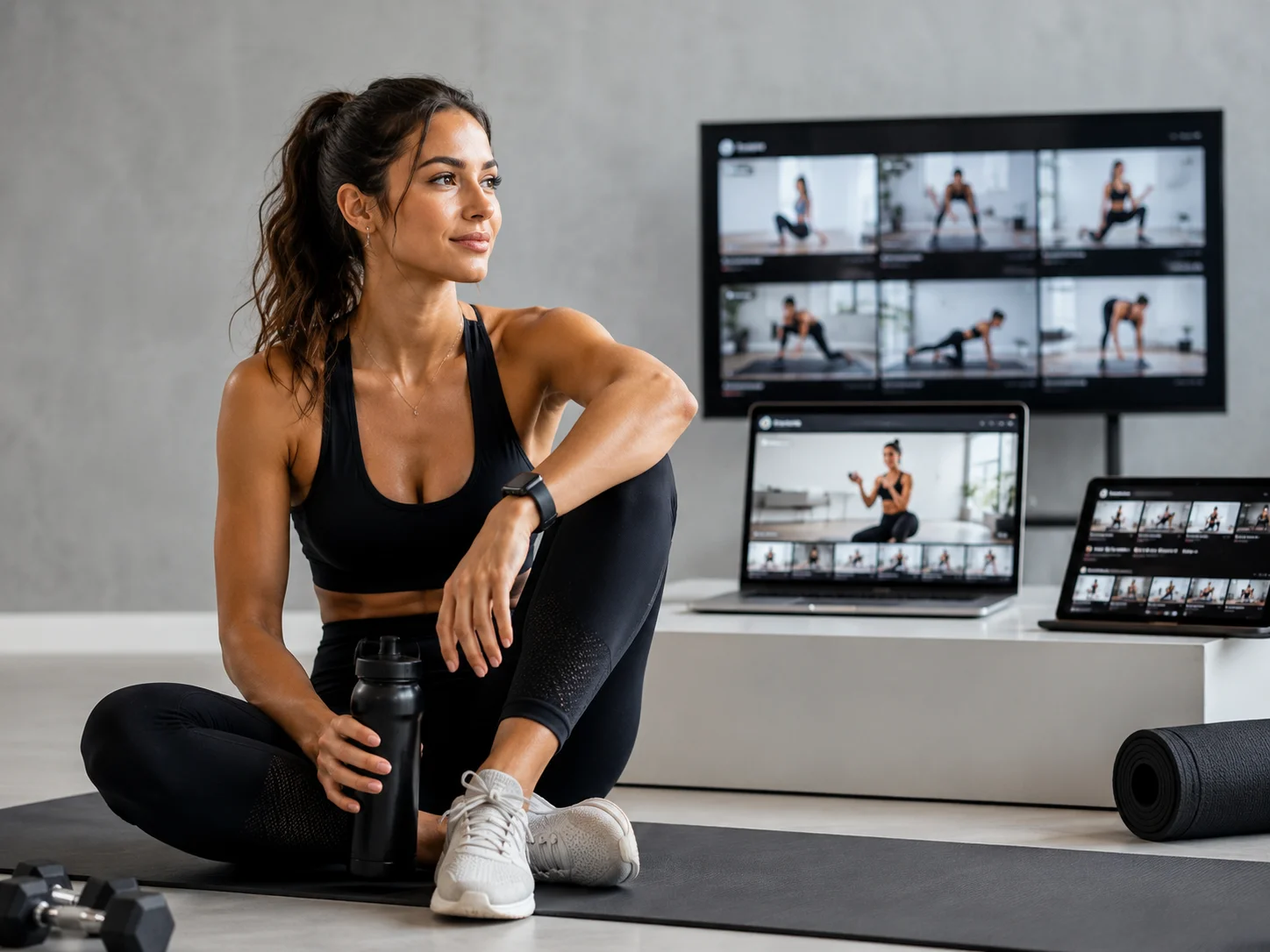

Online Workout Programs for Busy Schedules: A Flexible 6-Week Training System For the online workout programs for busy schedules, provides a structured starting point that can be adjusted for individual ability, schedule, equipment, recovery, and qualified professional advice.
The primary keyword is online workout programs. For the online workout programs for busy schedules, the guide focuses on repeatable training, realistic progression, safety, and habits that can continue after the program ends.
Why Online Programs Need a Personal Schedule
Online workout programs provide convenience, demonstrations, and a large library of sessions, but a library is not automatically a plan. Busy users often choose a different video every day, train hard when time is available, and then miss several days because the workload was not organized. For a useful comparison, see our Best Online Workout Programs.
A useful system begins with weekly training slots rather than individual videos. Choose two required sessions and one optional session. The required sessions protect consistency during difficult weeks, while the optional session allows progress when time and recovery are good.
This six-week framework can be applied to many platforms. It does not rank subscriptions or claim that one brand is universally best. The user evaluates whether the program provides clear progression, appropriate exercise options, realistic session lengths, and safety information.
Evaluate Coaching, Progression, and Exercise Options
Look beyond production quality. Qualified instruction should explain exercise setup, common errors, easier variations, and the intended training effect. A program should identify whether a session is strength, cardio, mobility, recovery, or mixed training instead of using vague labels such as “toning” without structure.
Progression may appear as additional repetitions, heavier resistance, longer intervals, more sets, or harder exercise variations. Random difficulty is not progression. The platform should make it possible to repeat a training phase and understand what changes from one week to the next.
Check whether the exercise library includes substitutions for common equipment and ability differences. A home user may need band, dumbbell, and bodyweight options. A traveler may need sessions that require no floor work or jumping.
Build Three Session-Length Versions
Create a twenty-minute minimum session, a thirty-five-minute standard session, and a fifty-minute extended session. All three versions should train the same weekly priority. When time is short, remove accessory exercises or optional cardio rather than skipping the entire workout.
For example, a full-body strength day may use squat, push, pull, and hinge movements. The twenty-minute version completes two sets of each. The standard version adds core work. The extended version adds a third set and a short aerobic finish.
Saving these versions in advance prevents time from being spent browsing. Write the specific video or module names in a weekly calendar. A busy schedule becomes easier when the decision has already been made.
Choose Equipment and Training Locations
List the equipment available at home, the gym, and during travel. A program may be excellent but unsuitable when every session assumes a barbell, cable machine, or large floor area. Match the program to the location used most often.
For home training, common tools include adjustable dumbbells, bands, a stable bench, and a mat. Gym users can follow machine or free-weight modules. Travel sessions may rely on bodyweight, bands, walking, or hotel equipment.
Keep substitutions consistent. Replace a barbell squat with a goblet squat, a cable row with a band row, or running with cycling when needed. Repeating the same substitution makes progress easier to track.
The Six-Week Flexible Framework
Weeks one and two establish two required full-body sessions. Week three adds an optional cardio or mobility session. Week four increases repetitions or resistance in the required sessions. Week five introduces a third strength or mixed session when recovery is good. Week six consolidates the schedule.
Use a weekly deadline rather than rigid weekdays. The two required sessions must be completed before the week ends, but they can move around meetings, travel, and family responsibilities. Avoid placing demanding sessions back to back when possible.
The optional session should remain optional. It is not a hidden requirement that creates guilt. A successful minimum week is more valuable than an ambitious plan that is repeatedly abandoned. For the online workout programs for busy schedules, if you want another way to structure the same goal, compare this approach with our Best Online Fitness Programs.
Sample Weekly Plan
During the online workout programs for busy schedules, reduce sets or intensity when several recovery signals worsen together. In the online workout programs for busy schedules schedule, use an easier day to maintain movement without adding fatigue before the next priority session.
| Week | Required Sessions | Optional Session |
|---|---|---|
| 1 | Two 20–35 minute full-body sessions | Easy walk or mobility |
| 2 | Repeat and record loads | Easy aerobic session |
| 3 | Two strength sessions | One cardio or mobility class |
| 4 | Add repetitions or resistance | Recovery session |
| 5 | Two required sessions | Third strength or mixed session |
| 6 | Consolidate the best schedule | Optional enjoyable activity |
Exercise Guide
To measure progress in the online workout programs for busy schedules, keep the same core movement long enough to compare repetitions, load, range, and effort. While following the online workout programs for busy schedules, progress only one training variable at a time so the response remains easy to evaluate.
| Training Need | Online Session Type | Minimum Version |
|---|---|---|
| Full-body strength | Squat, push, pull, hinge | Two sets of four main movements |
| Aerobic fitness | Walking, cycling, low-impact cardio | Twenty minutes conversational pace |
| Mobility | Focused joint or movement session | Five to ten minutes |
| Travel training | Bodyweight or resistance-band class | One circuit of major patterns |
| Recovery | Easy movement and breathing | Short walk or gentle mobility |
| Progression | Repeated training series | Add one variable at a time |
Use Video Instruction Without Losing Technique
Watch the exercise demonstration before beginning the working set. Trying to copy the screen while moving can reduce attention to balance and equipment. Pause the video when the instructor transitions too quickly or when additional rest is needed.
Camera angles may hide important details. Use a mirror or record a short private technique clip when appropriate, but do not rely on visual appearance alone. Comfortable range, stable balance, controlled repetitions, and absence of concerning symptoms are more important than matching the instructor exactly.
Online coaching cannot evaluate every individual condition. Sharp pain, dizziness, chest discomfort, or worsening symptoms require stopping and appropriate professional guidance. Generic modifications may not address a specific injury or medical restriction.
Progression When the Platform Changes Videos
Some platforms release new sessions constantly. Continue using a selected training series for several weeks instead of switching whenever a new class appears. Record the weights, repetitions, and effort for the main movements even when the video does not request it.
When the program uses timed intervals, progression can come from a slightly heavier weight, better range, more controlled repetitions, or reduced unnecessary pauses. Do not increase speed at the expense of technique.
If the platform does not provide a progression path, build one manually. Repeat the same weekly schedule for two weeks, then add one small progression. A large content library can still support structured training when the user supplies consistent tracking.
Missed Workouts, Travel, and Unpredictable Weeks
Do not double the next workout to compensate for a missed session. Complete the next required session and continue the sequence. When only one training window is available, perform one full-body minimum session rather than two partial high-intensity workouts.
During travel, use a saved bodyweight or band session. Download the video when internet access may be unreliable. A brisk walk and a short strength circuit can maintain the routine without recreating the normal gym.
After illness or several missed weeks, restart with lighter resistance and fewer sets. Fitness may return quickly, but immediately repeating the previous workload can create excessive soreness and reduce motivation.
Track Results Beyond Completed Videos
A platform may celebrate streaks and completed classes, but completion alone does not show whether training is effective. Record the primary exercises, resistance, repetitions, session duration, and effort. Review the log every two weeks.
Useful improvements include greater resistance, smoother technique, lower effort at the same workload, more comfortable daily activity, or better aerobic pace. A shorter session completed consistently may produce more progress than occasional long sessions.
Avoid collecting too many metrics. Choose three or four measures connected to the goal. The purpose of tracking is to guide decisions, not to turn every workout into a test.
Cardio, Recovery, and Weekly Balance
Adults are generally encouraged to work toward regular aerobic activity and at least two days of muscle-strengthening work. An online schedule can combine both, but not every session needs to be high intensity. Easy walking, cycling, or recovery classes can contribute without creating excessive fatigue.
Separate demanding lower-body strength and interval workouts when possible. Sleep, work stress, and calorie intake affect recovery. When performance declines across several sessions, reduce optional training before removing the required foundation. For the online workout programs for busy schedules, when adjusting your weekly plan, you can also use the Online Workout Programs as a practical reference.
Mobility videos are useful when they address a real restriction or help the body feel prepared. Long stretching sessions are not mandatory. Five focused minutes may be enough on a busy day.
Subscription Features and Common Mistakes
Useful features may include filters for time, equipment, level, and training goal; saved calendars; progress tracking; captions; and clear cancellation terms. A more expensive platform is not automatically more effective. The best online workout programs are those that the user can follow safely and consistently.
Common mistakes include choosing sessions by calorie estimates, changing instructors daily, skipping warm-ups, and performing advanced exercises because the video labels them as challenging. Another mistake is paying for several programs while following none of them long enough to evaluate.
At the end of six weeks, review attendance, progress, enjoyment, and cost. Continue the system, select a new structured phase, or cancel a platform that does not support the actual schedule.
How to Audit the Plan After the First Month
Before a busy day interrupts the online workout programs for busy schedules, define a shorter fallback session that preserves the habit. When scheduling the online workout programs for busy schedules, place demanding sessions where sleep and preparation are usually most reliable.
Within the online workout programs for busy schedules approach, treat better technique or a fuller comfortable range as valid progress when adding weight is not appropriate.
How to Modify a Session Without Abandoning It
For smoother online workout programs for busy schedules sessions, record machine settings or band positions so the next workout starts efficiently. When equipment is unavailable during the online workout programs for busy schedules, replace the movement pattern rather than abandoning the session.
In the online workout programs for busy schedules week, separate sessions that directly support the goal from optional work that can be shortened. For the online workout programs for busy schedules, test the calendar against a normal workweek rather than an unusually quiet one.
Choose a Program Without Following Marketing Hype
Marketing pages often emphasize transformation photos, celebrity instructors, calorie burn, or a very large number of classes. These features do not show whether the program provides a coherent weekly schedule. Before subscribing, examine a sample week, the exercise progression, required equipment, session lengths, modification options, and the amount of coaching support.
A free trial is useful only when it is tested like a normal week. Complete the two required sessions, try the search filters, review how the platform records progress, and confirm that cancellation settings are clear. Avoid sampling ten unrelated classes and concluding that the program is effective because the workouts feel difficult.
Reviews can reveal technical problems, accessibility issues, or customer-service patterns, but another user’s favorite instructor may not match the current goal. The most relevant question is whether the program helps the user repeat appropriate training with less decision-making. Entertainment matters because enjoyment supports adherence, but entertainment without progression is not a complete training system.
When the platform recommends daily high-intensity sessions, compare that schedule with recovery, work, and existing activity. More content is not automatically more useful. A program that allows two or three high-quality sessions may fit a busy adult better than one that creates pressure to exercise every day.
Creating a Distraction-Free Online Training Setup
Place the screen where demonstrations are visible without twisting the neck or stepping over equipment. Silence nonessential notifications, open the selected class before the warm-up, and keep water, weights, and bands within reach. A simple setup protects the short training window from browsing and interruptions.
When several people share the home, communicate the planned session length and floor space. Headphones may improve focus, but the volume should still allow awareness of the surroundings. A stable screen position is safer than balancing a phone on furniture that may fall during movement. For the online workout programs for busy schedules, for more closely related training ideas, browse our online workout guides.
Four-Week Implementation Roadmap
For the online workout programs for busy schedules, learn the schedule, exercise setup, and realistic starting dose.
For the online workout programs for busy schedules, repeat the structure and improve consistency without adding unnecessary volume.
For the online workout programs for busy schedules, use one measured progression such as repetitions, load, time, or range.
For the online workout programs for busy schedules, review recovery and create the next sustainable training block.
Frequently Asked Questions
Begin with two required strength sessions and add optional cardio or mobility according to recovery.
They can be effective when they train the main movement patterns and are repeated consistently.
Look for clear setup, modifications, progression, safety guidance, and instruction that matches your level.
Not necessarily. Repeating a structured series makes technique and progression easier to measure.
They provide general instruction but cannot fully replace individualized assessment and coaching.
Save short bodyweight, band, or walking sessions and keep two weekly minimum workouts.
Compare structure, exercise options, session filters, progression, accessibility, cost, and cancellation terms.
Safety and Scope
This page provides general educational fitness information. It does not diagnose medical conditions or replace individualized advice from a physician, physical therapist, registered dietitian, or qualified exercise professional. Stop and seek appropriate care for concerning symptoms, persistent pain, or clinician-directed restrictions.