Full Body Workout for Beginners at Home: A 6-Week No-Gym Strength Plan is designed for the person who wants to get stronger but does not want to turn the living room into a miniature gym. The plan uses a small number of repeatable movement patterns, three strength days per week, and progressions that make sense when you are starting from scratch.
If you have already looked at our Beginner Workout Plan and want something specifically built for home training, this guide narrows the focus. You can begin with bodyweight, a chair, a wall, and floor space. A pair of dumbbells is optional, not a requirement on day one.
The aim is to build a routine you can repeat even when motivation is ordinary. That matters more than creating a dramatic first workout that leaves you too sore to train again for a week. For a useful comparison, see our Beginner Workout Plan.
Why Full-Body Training Works Well for Beginners
Beginners usually benefit from practicing the major movement patterns more than once each week. A full-body session lets you train the legs, hips, upper body, and trunk without needing a complicated split routine. You learn fewer exercises, repeat them often enough to improve technique, and still have recovery days between sessions.
There is also a practical advantage: if work, family, or travel causes you to miss one day, you have not skipped an entire body part for the week. Each session covers the basics. That makes full-body training particularly useful when consistency is still being built.
A good beginner session does not need twenty exercises. Squatting, hinging, pushing, pulling, carrying or holding, and simple trunk work cover a large amount of everyday strength. Those patterns are the backbone of this plan.
What You Need Before the First Workout
Start with a clear patch of floor, a stable chair or couch edge, supportive shoes if you prefer them, and water nearby. If you own dumbbells, place them within reach, but do not buy equipment just to start. A backpack loaded with books can eventually provide resistance for squats, hinges, and carries.
Choose a training space where you can step backward safely and extend your arms without hitting furniture. Good lighting helps you notice posture and foot position. A mirror is optional; a phone camera can be more useful if you want to check a few repetitions from the side.
If home training is likely to become your long-term preference, the Home Workout Plan explains broader scheduling options once you move beyond the beginner phase.
Begin With a Simple Readiness Check
Before week one, think about your current activity level and any recent injuries, surgeries, dizziness, chest discomfort, unexplained shortness of breath, or pain that changes how you move. A new exercise plan should not be used to test symptoms that need medical attention.
For the first session, deliberately choose easy variations. Sit to a chair for squats, push against a wall instead of the floor, and use a supported hip hinge. Finish the workout feeling as if you could have done more. That gives you useful information without creating unnecessary fatigue.
Write down the variation you used and how many controlled repetitions you completed. Progress is easier to manage when you are not trying to remember what happened last Tuesday.
Your Weekly Schedule
Three strength days is enough to create a useful beginner structure. Monday, Wednesday, and Friday is simple, but any three nonconsecutive days can work. The days between sessions are not wasted. They are where recovery, walking, normal daily activity, and adaptation happen.
If three days feels like too much in week one, begin with two. Add the third day when the first two feel manageable. The plan is a framework, not a test of discipline.
Sample Weekly Plan
| Day | Session | Focus |
|---|---|---|
| Monday | Workout A | Squat, push, row, hinge, core |
| Tuesday | Easy walk or rest | Recovery and light movement |
| Wednesday | Workout B | Split stance, incline push-up, hip bridge, row, carry |
| Thursday | Mobility or rest | Comfortable movement only |
| Friday | Workout A or C | Repeat patterns and build confidence |
| Saturday | Optional easy activity | Walk, bike, or recreation |
| Sunday | Rest | Prepare for the next week |
Workout A: Your Basic Full-Body Session
Warm up for five minutes with easy marching, arm circles, ankle rolls, and a few slow chair squats. The goal is to feel warmer and more coordinated, not tired.
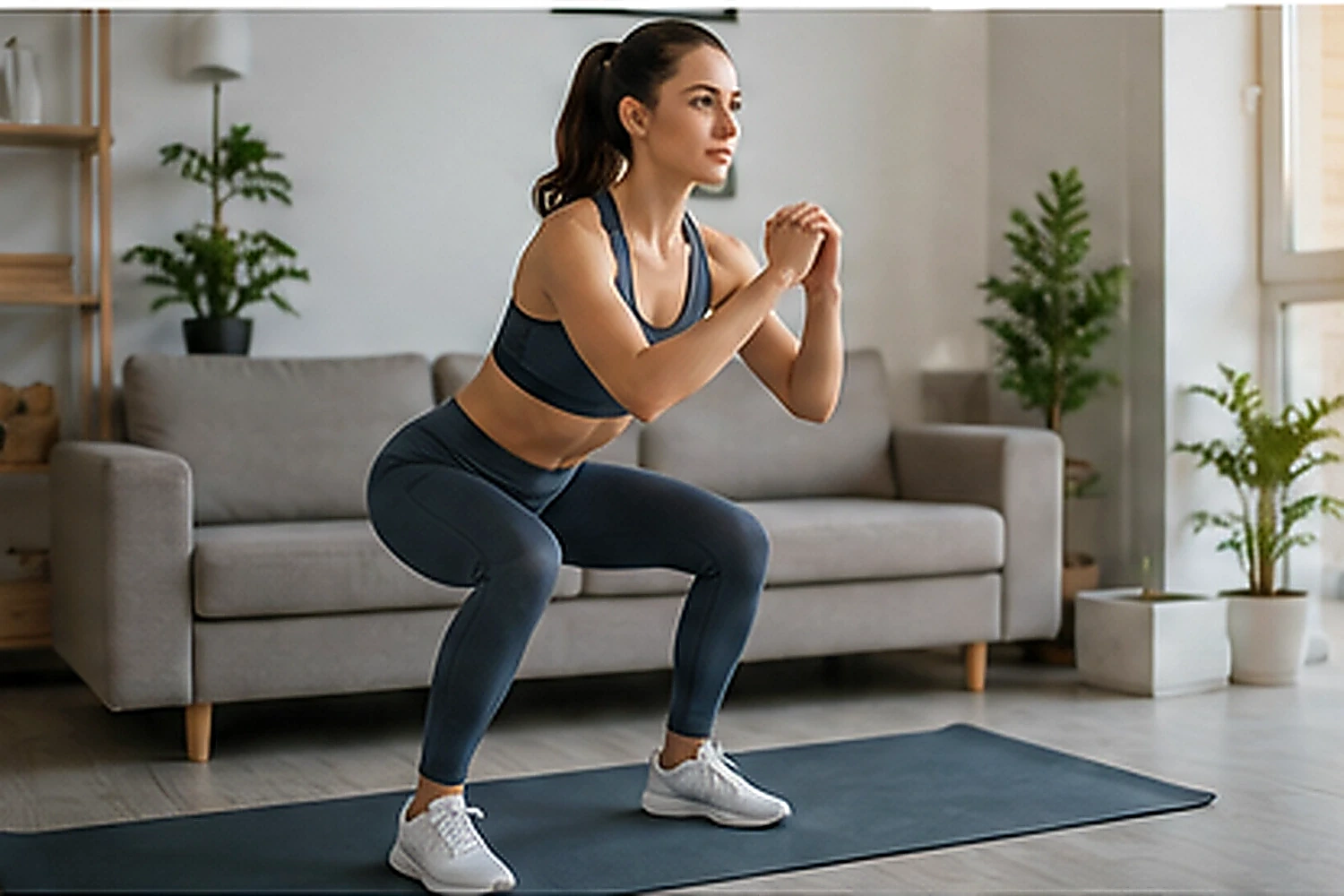
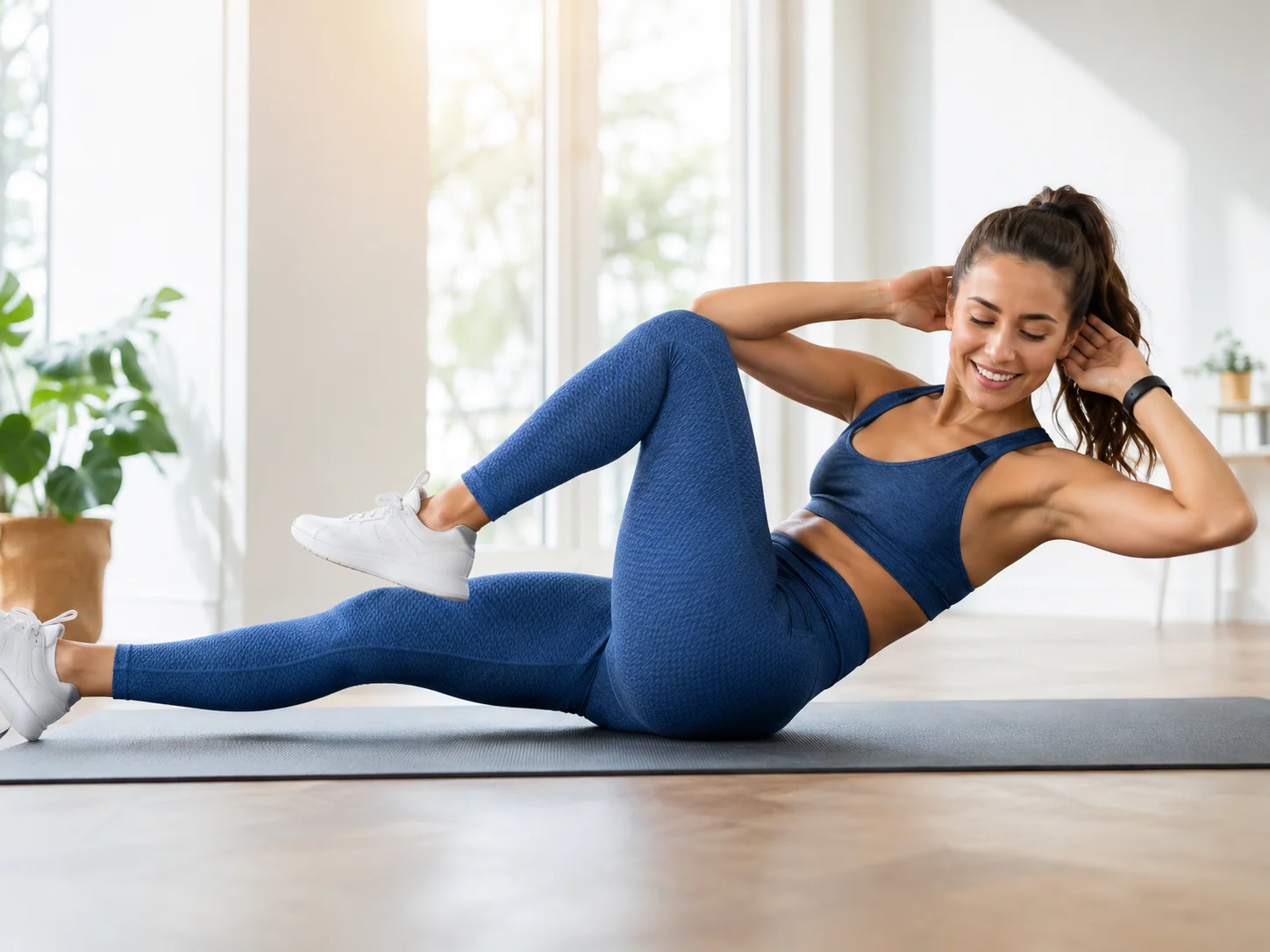
Perform chair squats for two sets of eight to twelve repetitions. Follow with wall or countertop push-ups for two sets of six to twelve. Use a backpack row or one-arm dumbbell row for two sets of eight to twelve per side, then practice a hip hinge for two sets of eight to ten. Finish with a dead bug or standing march for two controlled sets.
Rest long enough that your breathing settles and the next set looks similar to the first. Sixty to ninety seconds works for many beginners, but there is no prize for rushing.
Exercise Guide
| Movement | Beginner Version | Progression | Main Cue |
|---|---|---|---|
| Squat | Chair squat | Bodyweight squat or goblet squat | Sit between the hips and keep the whole foot supported |
| Push | Wall push-up | Countertop, bench, then floor push-up | Keep the body in one line and move the chest toward the support |
| Pull | Backpack row | One-arm dumbbell row | Pull the elbow toward the ribs without shrugging |
| Hinge | Wall hip hinge | Backpack or dumbbell Romanian deadlift | Move the hips back while keeping the spine comfortable |
| Core | Standing march | Dead bug or plank variation | Move slowly without letting the trunk twist |
| Carry | Light grocery-bag carry | Suitcase carry | Stand tall and avoid leaning toward the weight |
Workout B: Build Stability and Single-Leg Strength
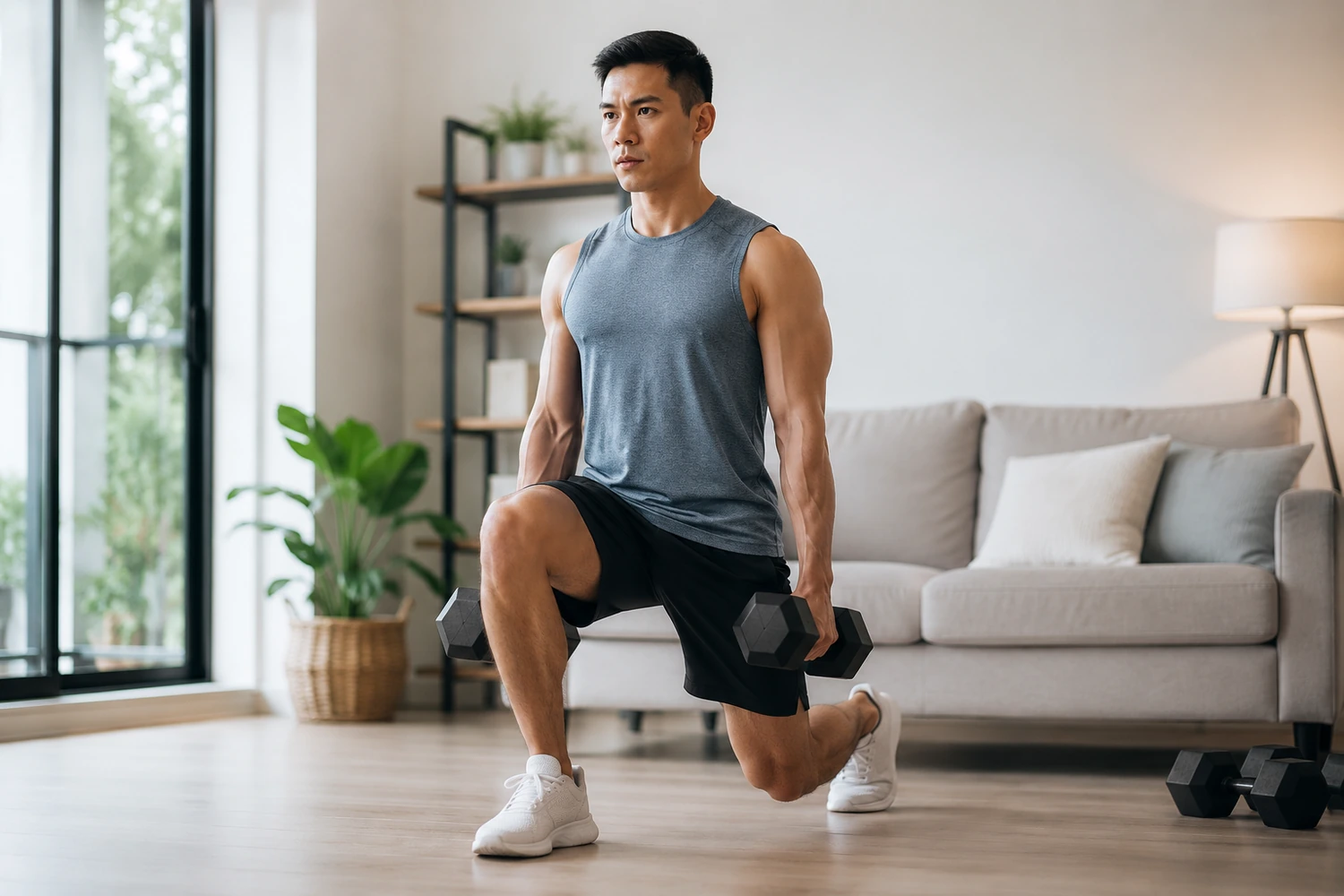
Workout B changes the exercises without changing the movement goals. Start with a supported reverse lunge or split squat to a short range. Use a sturdy chair or wall for balance so the legs, not wobbling, receive the training.
Perform incline push-ups, glute bridges, a backpack or dumbbell row, and a suitcase carry. Add a side plank from the knees or a bird dog if floor work feels comfortable. Two sets of each exercise is enough for the first two weeks. For the full body workout for beginners at home, if you want another way to structure the same goal, compare this approach with our Dumbbell-Only Home Workout Plan for Strength and Muscle.
If you want a more equipment-focused version later, the Dumbbell-Only Home Workout Plan is a natural next step because it keeps the same basic patterns while making load progression easier.
Workout C: A Simple Optional Variation
Workout C is useful from week three onward when you want variety without learning an entirely new program. Use a squat to a slightly lower chair, a shoulder press with light dumbbells or water bottles, a supported one-arm row, a single-leg glute bridge or regular bridge, and a slow mountain-climber variation using a countertop.
Keep the session controlled. Beginners often mistake novelty for progress and change exercises every few days. Progress usually comes from repeating movements long enough to become better at them.
How Hard Should the Sets Feel?
Most working sets should finish with two or three good repetitions still available. If you could easily perform ten more, the exercise may be too light. If the last repetition becomes a struggle that changes your technique, make the variation easier or stop the set earlier.
Bodyweight exercises can be progressed by changing leverage, range of motion, tempo, or total repetitions. For example, a wall push-up can become a countertop push-up, then a bench push-up. A chair squat can move to a lower chair, then to a free squat, then to a loaded squat.
This is progressive overload without requiring a barbell. The challenge increases gradually while the movement remains recognizable.
Six-Week Progression
Week 1: learn the exercises and complete two sessions if needed. Use one or two sets, conservative ranges, and slow repetitions.
Week 2: aim for three sessions. Keep the same variations and add repetitions before making the exercises harder.
Week 3: move most exercises to two or three sets. Add Workout C as an option for the third day.
Week 4: choose one progression for each major movement. Lower the push-up surface, use a slightly lower chair, or add a light backpack.
Week 5: keep the new variations and build toward the top of the repetition range. Add an easy ten- to twenty-minute walk after one or two sessions if you enjoy it.
Week 6: repeat your strongest clean week. Do not test maximum repetitions. Finish the cycle with a clear record of the variations, loads, and repetitions you can now perform comfortably.
Six-Week Implementation Roadmap
| Weeks | Main Goal | What to Change |
|---|---|---|
| 1–2 | Learn technique | Use easy variations and 1–2 sets |
| 3–4 | Build training volume | Add a third set or a modest progression |
| 5–6 | Build confidence | Use slightly harder variations while keeping form stable |
What to Do When an Exercise Does Not Feel Right
Discomfort is information. If a squat bothers your knees, reduce depth, use a higher chair, or try a supported split stance. If floor push-ups bother the wrists or shoulders, raise the hands and use a neutral hand position. If hinges bother the lower back, shorten the range and practice moving the hips backward without weight.
The Low-Impact Workout Plan for Beginners has additional joint-friendly options for people who need gentler starting variations.
Sharp pain, increasing swelling, numbness, or symptoms that change your gait are different from normal muscular effort. Stop the movement and seek appropriate professional advice rather than trying to push through.
Walking, Cardio, and the Rest of the Week
Strength training does not need to replace walking. Easy walks on nonlifting days can support general activity without turning recovery days into hard workouts. If you are starting from a sedentary baseline, even ten-minute walks are useful practice.
Current U.S. physical-activity guidance encourages adults to work toward 150 to 300 minutes of moderate aerobic activity per week plus muscle-strengthening activity on at least two days. A beginner does not need to reach the full amount immediately; building up over time is appropriate.
Keep most additional cardio easy enough that it does not make the next strength session noticeably worse. The purpose of the first six weeks is to establish a routine you can continue. For the full body workout for beginners at home, when adjusting your weekly plan, you can also use the Resistance Band Full-Body Workout as a practical reference.
Recovery, Sleep, and Food
Your muscles adapt between sessions, not only during them. Give yourself enough sleep, eat regular meals, and avoid treating every workout as a reason to dramatically restrict food. Protein, carbohydrate, dietary fat, produce, and fluids all have a place in a balanced routine.
On weeks when sleep is poor or life is unusually stressful, reduce a set or use easier variations. Flexibility is not failure. It is one of the skills that makes a plan sustainable.
If consistency is the main challenge, our guide on how to stay consistent with workouts focuses on scheduling, expectations, and recovery from missed days rather than relying on motivation alone.
Common Beginner Mistakes
The first mistake is doing too much too soon. Five hard sessions are not automatically better than three repeatable ones. Excess soreness often disrupts the exact consistency that a beginner needs most.
The second mistake is changing exercises constantly. Keep the main patterns for several weeks so you can actually see improvement. Variety can come later.
The third mistake is ignoring easy progress. One more controlled repetition, a lower push-up surface, a deeper comfortable squat, or a slightly heavier backpack are all legitimate improvements.
Finally, do not compare a first month of training with someone else's fifth year. Your job is to make next week slightly more capable than this week.
How to Make Home Training Feel Like a Real Appointment
Put the workout on the calendar before the week begins. Home training is convenient, but convenience also makes it easy to postpone. A specific start time removes one decision. Lay out the mat, chair, and weights beforehand so the session does not begin with ten minutes of searching.
Keep a short version of the workout for busy days. One set of squats, push-ups, rows, hinges, and core work is better than abandoning the routine because the full session will not fit. The short version keeps the habit connected to the schedule and makes it easier to return to normal volume next time.
Use the same training area when possible. Familiar setup reduces friction and helps the brain recognize that this part of the room has a purpose beyond ordinary household activity.
When to Add Equipment
Equipment becomes useful when the easiest ways to progress bodyweight exercises stop being practical. A pair of adjustable dumbbells can add years of progression to squats, hinges, presses, rows, and carries without requiring a large home gym.
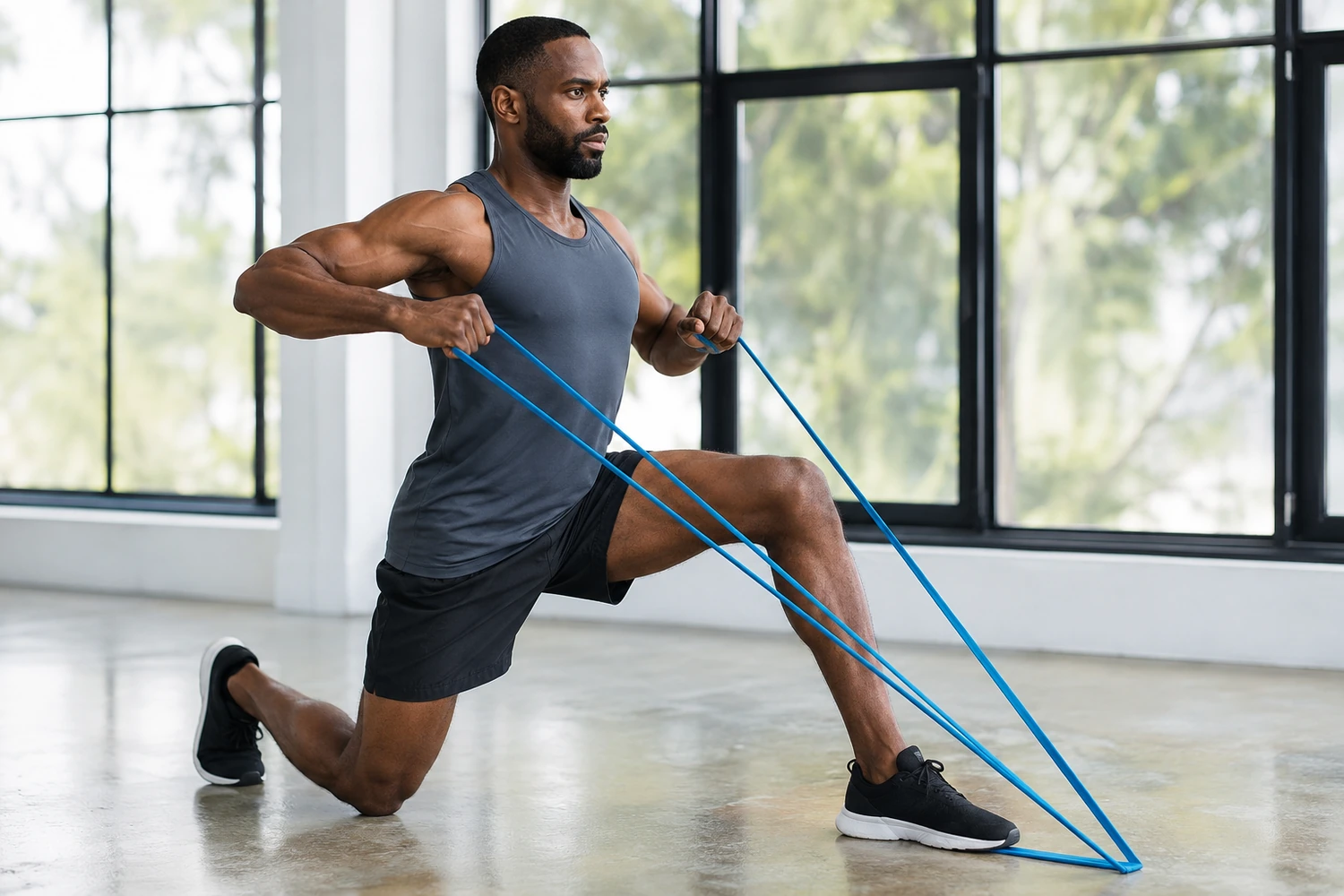
Resistance bands are another compact option. They work well for rows, pulldown-style movements, shoulder exercises, and assisted variations. If bands interest you, the Resistance Band Full-Body Workout shows how to organize them into a complete session.
Do not buy equipment to solve a consistency problem. First prove that you can train regularly with the space and tools you already have. Then purchase only what supports the next stage of progression.
Frequently Asked Questions
Yes. Start with the easiest exercise variations, one or two sets, and a pace that lets you maintain control. Progress only after the sessions feel repeatable.
No. The first version of every movement can be done with bodyweight or household support. Dumbbells become useful when bodyweight variations stop feeling challenging.
Most sessions take about thirty to forty-five minutes, including a short warm-up. Beginners can shorten the session by doing two sets instead of three.
The strength sessions are designed for three nonconsecutive days each week. Easy walking and mobility can be added on other days when recovery is good.
Use a wall, countertop, sturdy table, or bench to raise your hands. Lower the incline gradually as your strength improves.
Exercise can support weight management, but no workout guarantees weight loss. Nutrition, total activity, sleep, medical factors, and long-term consistency also matter.
Repeat the plan with slightly harder variations or light dumbbells, or move into a more specific strength plan while keeping the same squat, hinge, push, pull, and core patterns.
Safety and Scope
This guide is general fitness education, not individualized medical care. People with chronic conditions, pregnancy, recent surgery, significant balance problems, cardiovascular symptoms, or persistent pain may need modifications or professional guidance before starting.
Use stable furniture, keep the floor clear, and avoid improvised equipment that can slip or break. Progress only when the current version feels controlled.
Evidence-Based Resources
Related Fitness Articles
A Practical First-Month Mindset
Beginners often expect every session to feel like proof that they are getting fitter. Real progress is quieter. You may notice that the chair squat feels less awkward, that you need less rest between sets, or that you remember the exercise order without checking the plan. Those are useful signs.
Keep the first month boring enough to learn from. If a movement works, keep it. If the schedule works, protect it. Save major changes for a clear reason rather than reacting to a single difficult workout. For the full body workout for beginners at home, for more closely related training ideas, browse our home workout guides.
At the end of each week, write one sentence about what went well and one adjustment for next week. That small review keeps the plan personal without turning it into a complicated tracking project.