Best At Home Workout Program for Two People: An 8-Week Partner Strength Plan For the best at home workout program for two people, provides a structured starting point that can be adjusted for individual ability, schedule, equipment, recovery, and qualified professional advice.
The primary keyword is best at home workout program. For the best at home workout program for two people, the guide focuses on repeatable training, realistic progression, safety, and habits that can continue after the program ends.
Why Partner Training Can Work at Home
The best at home workout program is not necessarily the one with the most exercises. It is the one that fits the available room, equipment, schedule, and ability to recover. Training with another person can make the routine easier to start because the session has a clear appointment and both partners share responsibility for preparing the space. For a useful comparison, see our Dumbbell-Only Home Workout Plan for Strength and Muscle.
Partner training also creates immediate feedback. One person can observe whether a bench is stable, count controlled repetitions, or remind the other to slow the lowering phase. This is not a substitute for professional coaching, but simple observation can improve attention and consistency. The partners should avoid turning every set into a competition.
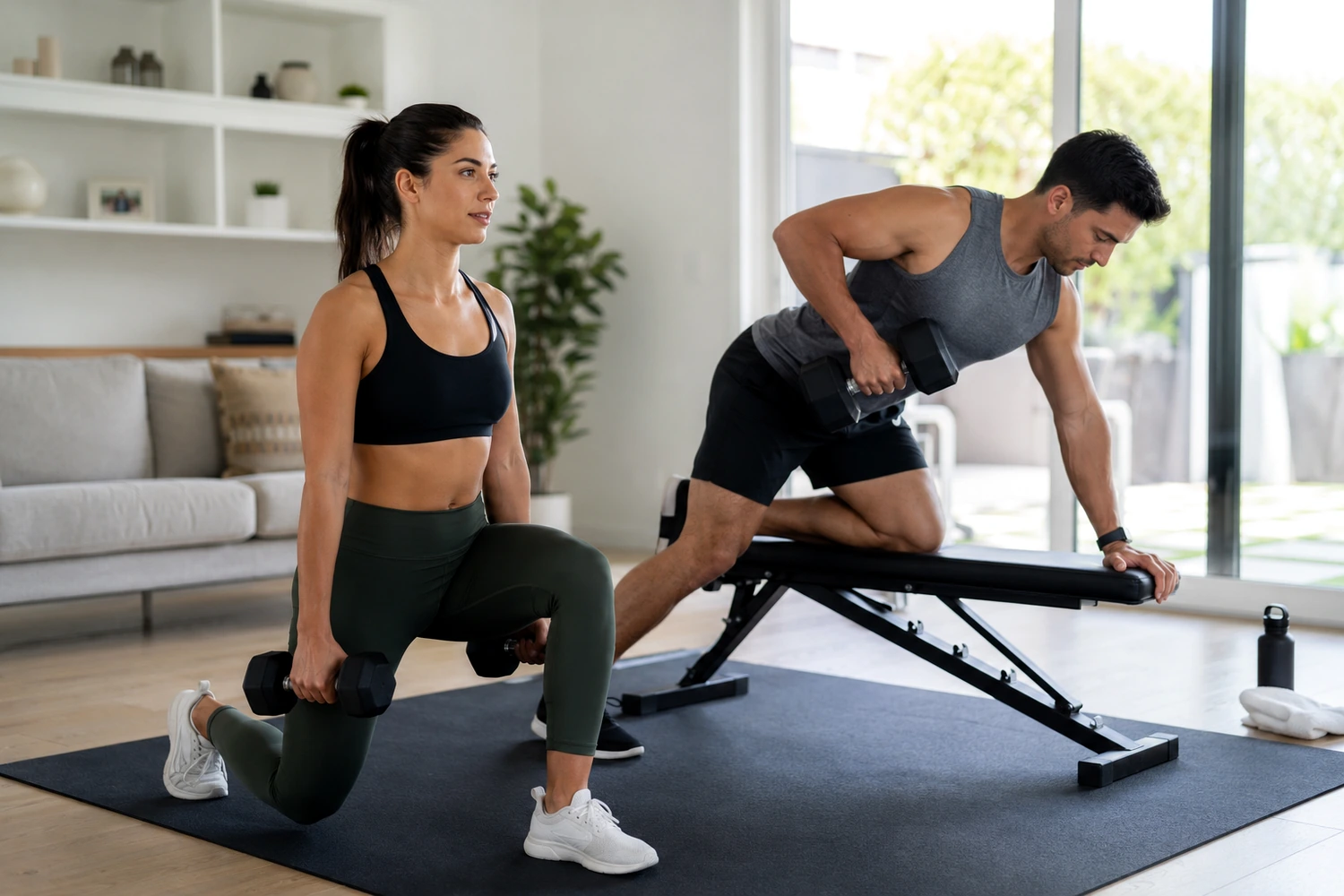
This eight-week plan uses three full-body sessions each week. The partners may perform the same exercise with different loads or use different variations. The objective is shared structure, not identical performance. Each person records individual weights, repetitions, comfort, and progression.
Set Up a Safe Shared Training Space
Choose a clear floor area with enough space for both people to move without crossing paths. Remove loose rugs, cables, fragile furniture, and objects that may roll. A stable bench or chair can support rows, step-ups, squats, and incline push-ups, but lightweight folding furniture may not be suitable.
Keep dumbbells and resistance bands at the edge of the training area rather than between the partners. Place water nearby and use a towel or mat only when it does not slide. When one person performs a moving exercise such as a lunge, the other should stand outside the travel path.
Agree on a stop signal before the first session. Sharp pain, dizziness, chest discomfort, loss of balance, or an unstable piece of equipment requires an immediate pause. People with health conditions, recent injury, pregnancy, or clinician-directed restrictions may need individualized guidance before starting.
Choose Individual Starting Levels
Partners often begin with different experience, mobility, and strength. Use the same movement category with an appropriate variation. One person may perform a goblet squat while the other uses a chair squat. One may complete floor push-ups while the other uses a countertop. Both are following the same program.
Select a starting load that allows eight controlled repetitions with approximately three additional repetitions available. The final repetitions may feel challenging, but the range and posture should remain recognizable. Record the dumbbell weight and variation separately for each person.
Avoid matching the stronger partner’s load or repetitions. Progress is individual. The person using a lighter weight may improve faster because technique is new, while the more experienced person may need smaller increases. The shared goal is completing the scheduled sessions safely and consistently.
The Eight-Week Schedule
Train on three nonconsecutive days, such as Monday, Wednesday, and Saturday. Workout A emphasizes squatting, horizontal pushing, and rowing. Workout B emphasizes hip hinging, vertical pulling or band pulling, and single-leg strength. Workout C combines full-body variations with a short conditioning circuit.
During weeks one and two, complete two sets per exercise and learn the partner rotation. In weeks three and four, add repetitions or a small resistance increase. Weeks five and six introduce a third set for selected movements. Weeks seven and eight consolidate progress and allow slightly more challenging variations.
On recovery days, use walking, mobility, or ordinary daily activity. Partners do not need to perform every optional session together. The three strength workouts are the core of the program, while cardio and mobility can be scheduled individually.
Workout A: Squat, Push, and Row
Begin with five minutes of marching, easy step-ups, arm circles, and unloaded squats. Partner One performs a squat variation while Partner Two rests, observes, or prepares the next load. Switch after the set. This alternating format creates natural rest without leaving one person inactive for long.
Use a goblet squat or chair squat, dumbbell floor press or incline push-up, one-arm dumbbell row, glute bridge, and farmer carry. Keep the repetitions controlled and stop before technique changes. The observer can count a three-second lowering phase or confirm that the working area remains clear. For the best at home workout program for two people, if you want another way to structure the same goal, compare this approach with our Resistance Band Full-Body Workout.
Finish with a six-minute easy circuit of marching, low step-ups, or stationary cycling if available. Conditioning should not reduce the quality of the next strength session. Beginners may skip the circuit during the first week.
Sample Weekly Plan
In the best at home workout program for two people schedule, use an easier day to maintain movement without adding fatigue before the next priority session. Before increasing the best at home workout program for two people workload, review sleep, soreness, stress, and recent training demand.
| Day | Session | Partner Format |
|---|---|---|
| Monday | Workout A | Alternate complete sets |
| Tuesday | Recovery | Walk together or separately |
| Wednesday | Workout B | Alternate sets and individual loads |
| Thursday | Mobility | Optional 10-minute routine |
| Friday | Rest | Normal daily activity |
| Saturday | Workout C | Calm circuit with safe spacing |
| Sunday | Recovery | Plan the next week |
Exercise Guide
While following the best at home workout program for two people, progress only one training variable at a time so the response remains easy to evaluate. Within the best at home workout program for two people approach, treat better technique or a fuller comfortable range as valid progress when adding weight is not appropriate.
| Exercise | Sets × Reps | Partner Option |
|---|---|---|
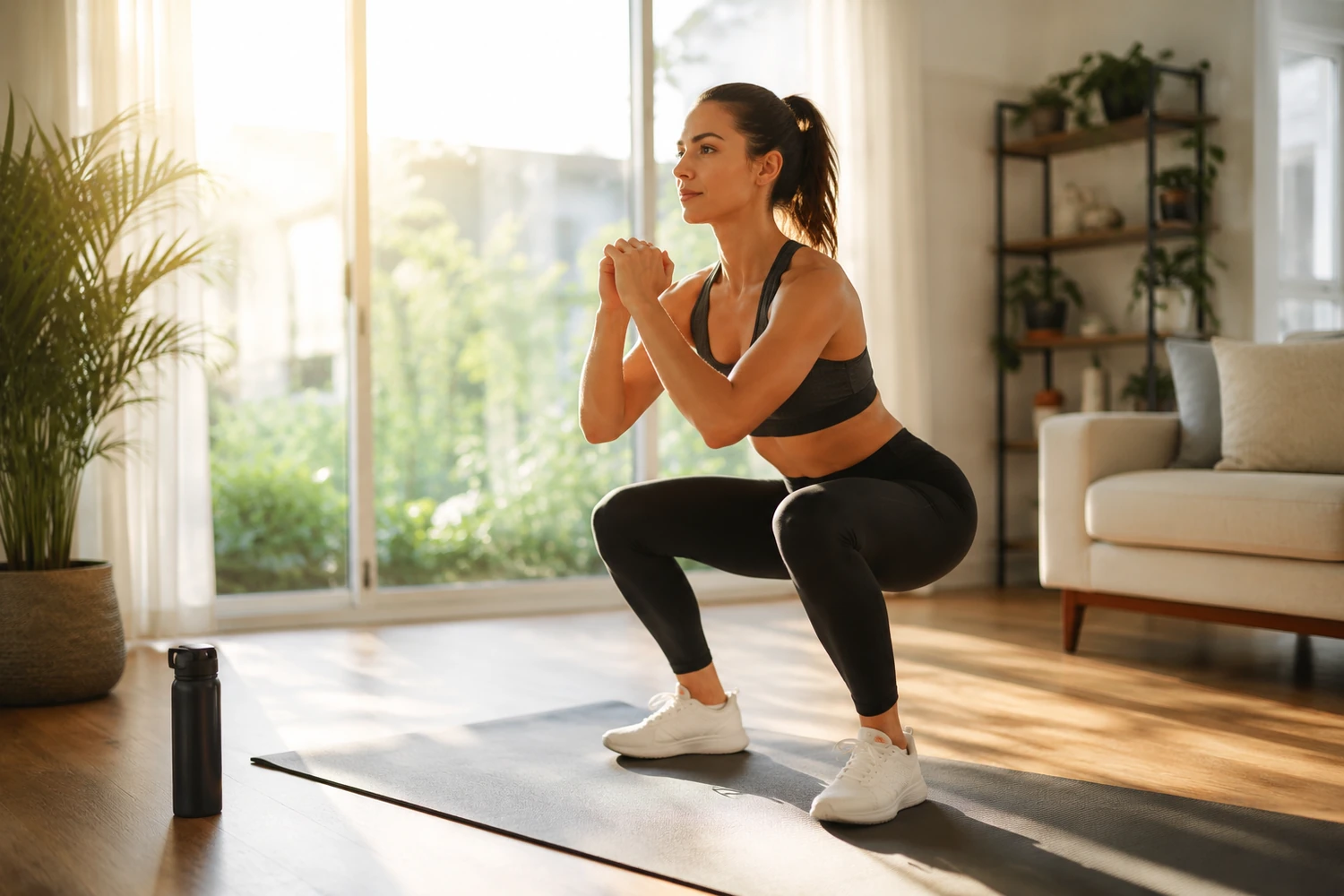
| Goblet or chair squat | 2–3 × 8–12 | Use different loads or chair heights |
| Floor press or incline push-up | 2–3 × 8–12 | Choose floor, bench, or counter |
| One-arm dumbbell row | 2–3 × 8–12 each side | One trains while one rests |
| Romanian deadlift | 2–3 × 8–10 | Use separate dumbbell weights |
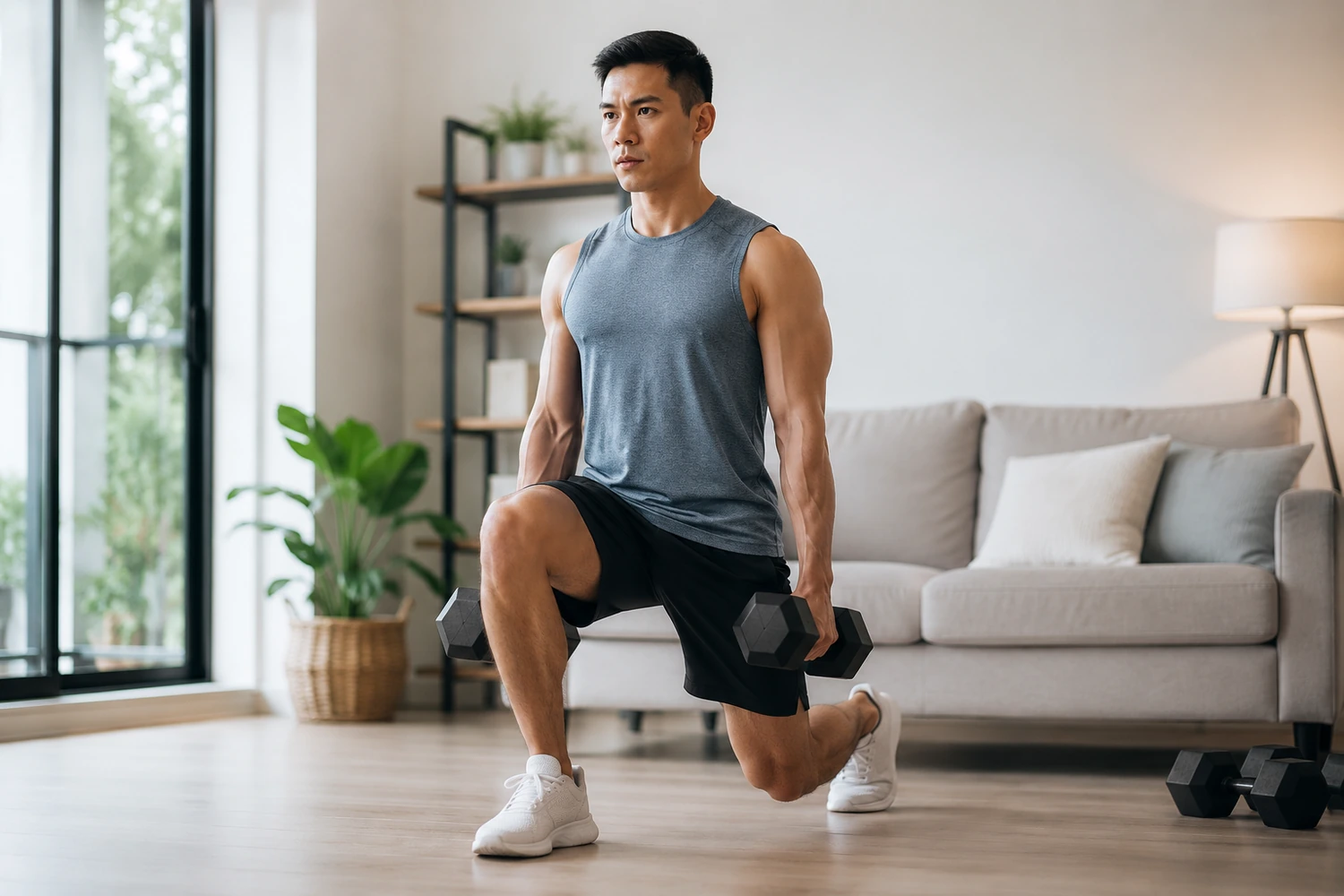
| Supported reverse lunge | 2 × 6–10 each side | Use a chair for balance |
| Farmer carry | 2 × 20–40 seconds | Walk separate lanes |
Workout B: Hinge, Pull, and Single-Leg Strength
Workout B begins with a dumbbell Romanian deadlift or supported hip hinge. Keep the weights close to the legs, move the hips backward, and stop before the lower back rounds. The partner can stand to the side and observe whether the dumbbells remain close.
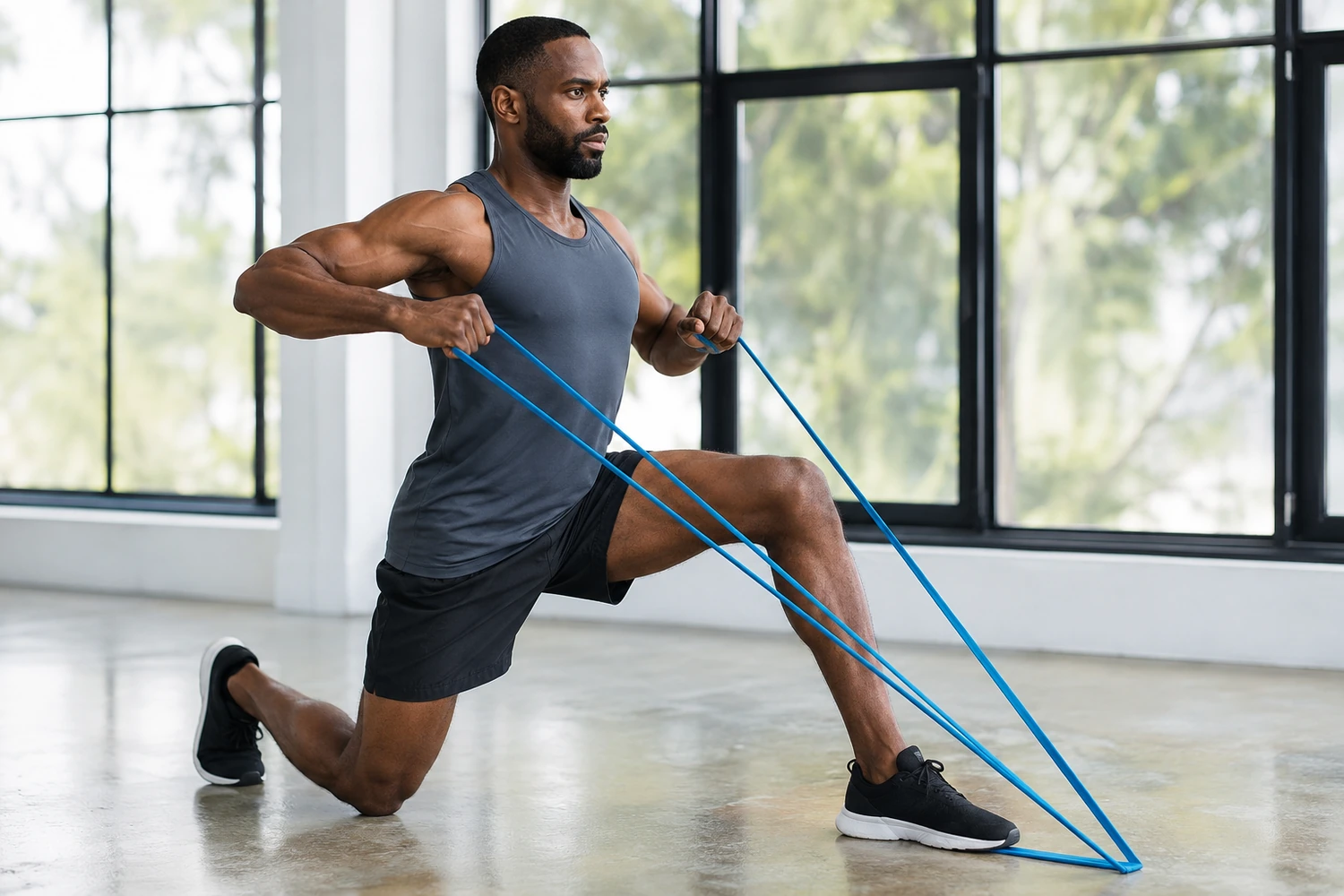
Follow with a resistance-band pulldown, anchored band row, or dumbbell pullover depending on available equipment. Add supported reverse lunges, dumbbell shoulder presses, and a Pallof press or suitcase carry. Each partner chooses a range that feels stable.
If balance differs significantly, the more stable partner should not remove the other person’s support. A chair, wall, or rail can make a single-leg exercise safer and more effective. Reducing support becomes a later progression rather than a requirement.
Workout C: Full-Body Circuit and Core Control
Workout C uses five exercises performed in a calm circuit: step-up or sit-to-stand, dumbbell row, incline push-up, dumbbell deadlift, and dead bug or elevated plank. Complete one set of each exercise, rest for two minutes, and repeat.
Partners can start at different stations when the room is large enough, but alternating one exercise at a time is safer in a small space. Do not pass dumbbells through the movement area. Place them on the floor before changing positions.
The circuit should feel like strength training with a modest cardiovascular effect, not a race. Use a pace that allows normal technique. If either partner becomes rushed, return to ordinary sets with full rest.
Progression From Week One to Week Eight
Progress one variable at a time. First, increase repetitions within the stated range. Then increase the dumbbell weight by the smallest available amount. A harder variation, additional set, or slower lowering phase can be used when heavier equipment is unavailable.
Weeks one and two prioritize setup and technique. Weeks three and four aim for the top of the repetition range. Weeks five and six add a third set to the first two exercises of each workout. Weeks seven and eight may use a slightly harder variation while total volume remains stable.
Partners should review their logs separately. One person may increase load while the other repeats the same week. The program remains shared even when progression is different. Matching each other is not required for accountability.
Partner Communication and Coaching Boundaries
Use short, specific cues such as “slow the lowering,” “keep the chair behind you,” or “stop with two repetitions available.” Avoid giving several corrections during one set. The person exercising should be able to concentrate without constant conversation.
Do not physically push a partner deeper into a stretch or manually force a joint position. Spotting heavy free-weight exercises requires training and appropriate equipment; this home plan avoids exercises that depend on an untrained spotter.
Discuss preferences after the session. One partner may enjoy verbal encouragement, while the other prefers quiet counting. Good communication supports consistency and prevents the workout from becoming a source of pressure. For the best at home workout program for two people, when adjusting your weekly plan, you can also use the 20-Minute Morning Workout Routine for Busy Adults as a practical reference.
Cardio, Mobility, and Recovery
Adults are generally advised to work toward a combination of aerobic activity and muscle-strengthening activity across the week. This plan provides three strength sessions, while brisk walking, cycling, or another preferred activity can supply aerobic work. Start with manageable durations and increase gradually.
Use five to ten minutes of mobility for ankles, hips, upper back, and shoulders when it improves comfort. Mobility does not need to be competitive. Each partner uses an individual range and avoids bouncing or forcing a painful position.
Sleep, regular meals, hydration, and rest days support progress. When one partner is ill, unusually fatigued, or unable to train, the other can complete the session alone. Consistency does not require both people to have identical availability every week.
Nutrition and Common Partner-Workout Mistakes
A balanced eating pattern supports training better than treating exercise as punishment for food. Meals may include a protein source, vegetables or fruit, fiber-rich carbohydrate, and measured fats according to individual needs. Protein powder is optional convenience food, not a requirement.
Common mistakes include selecting exercises only because they look entertaining, comparing weights, rushing transitions, and adding too many circuits. Another mistake is allowing the more experienced partner to redesign the plan every session. Repeatable structure is important for measuring progress.
Review the program after eight weeks. Continue it, change a few exercise variations, or move to individual plans while keeping one shared session. The best result is a sustainable training habit, not simply finishing the calendar.
How to Audit the Plan After the First Month
Before a busy day interrupts the best at home workout program for two people, define a shorter fallback session that preserves the habit. When scheduling the best at home workout program for two people, place demanding sessions where sleep and preparation are usually most reliable.
Before advancing the best at home workout program for two people, complete two controlled sessions and then make one small increase.
How to Modify a Session Without Abandoning It
For the best at home workout program for two people, choose equipment that supports a stable setup and a repeatable range of motion. For the best at home workout program for two people, use the simplest tool that creates a controlled challenge for the intended muscles.
In the best at home workout program for two people week, separate sessions that directly support the goal from optional work that can be shortened.
Shared Equipment and Load Management
When two people share one pair of dumbbells, organize the session so the person using the heavier load completes a set while the other performs a bodyweight or mobility drill that does not interfere with recovery. Another option is to keep the exercise order the same but use slower repetitions, a pause, or a more difficult range for the partner who needs greater challenge. The program does not require buying duplicate equipment immediately.
Adjustable dumbbells are convenient, but weight changes should occur while both partners are stationary and the floor is clear. Fixed dumbbells reduce transition time and may be safer when the adjustment mechanism is unfamiliar. Resistance bands should be checked for cracks, wear, and secure anchoring before every session. A closed door is not automatically a safe anchor unless the equipment is designed for that use.
Plan equipment purchases according to the exercises that have already become too easy. A heavier pair for squats and hinges may be more useful than several small accessories. Progress can continue through repetitions, additional sets, slower tempo, and unilateral variations while the equipment collection develops. For the best at home workout program for two people, for more closely related training ideas, browse our home workout guides.
Four-Week Implementation Roadmap
For the best at home workout program for two people, learn the schedule, exercise setup, and realistic starting dose.
For the best at home workout program for two people, repeat the structure and improve consistency without adding unnecessary volume.
For the best at home workout program for two people, use one measured progression such as repetitions, load, time, or range.
For the best at home workout program for two people, review recovery and create the next sustainable training block.
Frequently Asked Questions
No. Use the same movement categories with different loads, ranges, or variations.
A stable chair, open floor space, and one or two dumbbell pairs are enough to start.
Nonconsecutive strength days usually provide better recovery during the first eight weeks.
They can, but the person exercising should stop when technique changes even if the target count is not reached.
It can support a broader weight-management plan that includes nutrition, aerobic activity, sleep, and consistency.
The available partner can train alone and both people resume the shared schedule at the next session.
No. The plan uses exercises that do not depend on an untrained spotter.
Safety and Scope
This page provides general educational fitness information. It does not diagnose medical conditions or replace individualized advice from a physician, physical therapist, registered dietitian, or qualified exercise professional. Stop and seek appropriate care for concerning symptoms, persistent pain, or clinician-directed restrictions.